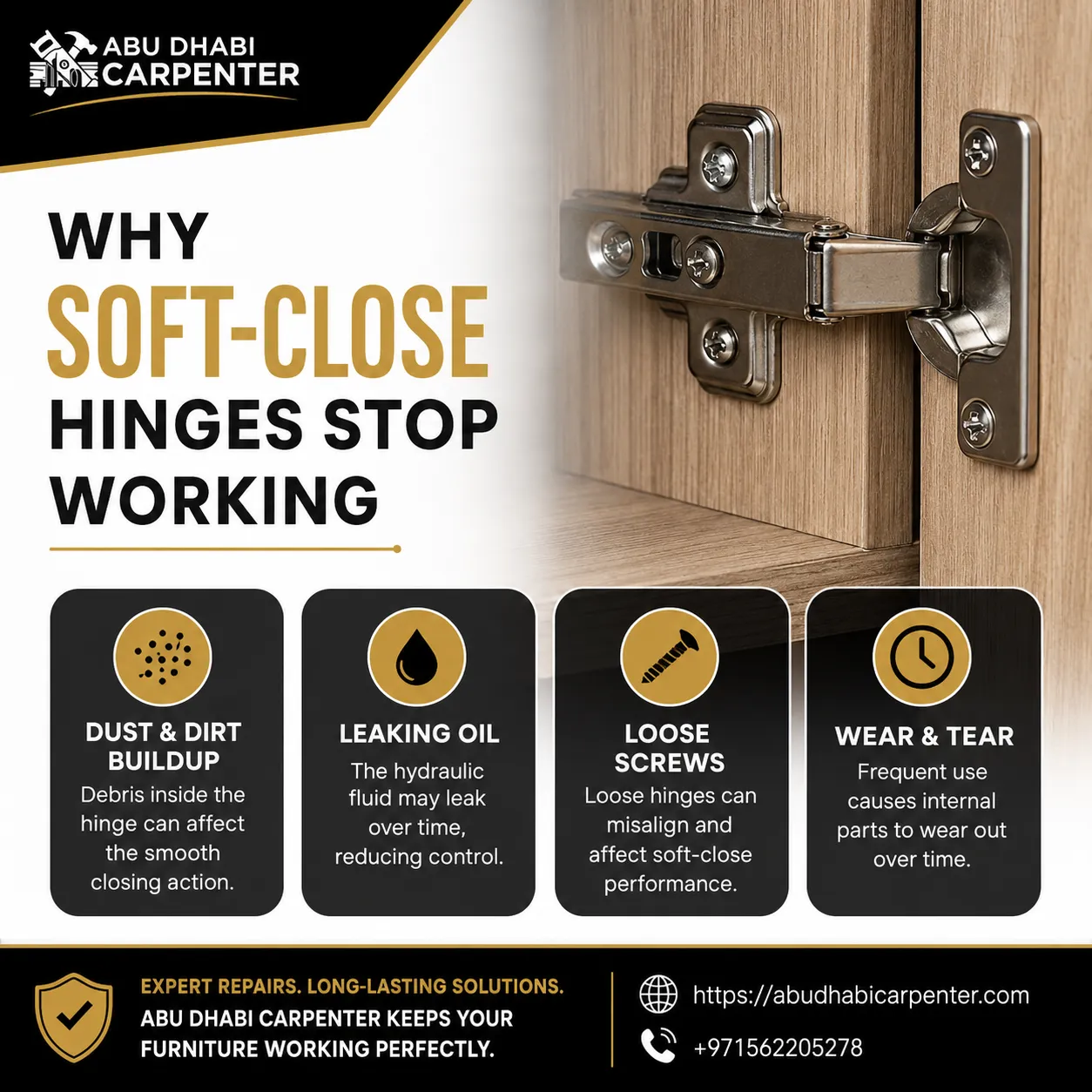

Install day, and soft-close hinges feel like a small miracle. Cabinets glide. Doors settle without a sound. Nice touch.
Give it a few months, though. That magic fades fast. Doors start slamming again. Some won't shut all the way, no matter how hard you push.
As Carpenter Abu Dhabi homeowners call in the moment cabinets start misbehaving, this pattern shows up again and again. Hinge failure has a cause — it never just happens. Below: what's really going on inside these hinges, why Abu Dhabi's climate speeds up the wear, and what's worth trying before a repair call gets booked.
Carpenter Abu Dhabi Explains How Soft-Close Hinges Actually Work
Inside every soft-close hinge sits a compact hydraulic or pneumatic damper. This little component controls the last stretch of a door's swing, slowing everything down so the door settles instead of banging.
- A small piston forces fluid or air through a narrow channel
- Resistance ramps up right as the door approaches the frame
- The door eases shut instead of slamming
Simple in concept. Precise in execution. And precision doesn't need much to go sideways.
Why This Matters Over Time
- Dampers ship sealed — once something breaks inside, no external fix exists
- Dust and moisture that creep in accelerate wear quickly
- Misalignment loads the damper unevenly, burning through its lifespan faster
What Actually Causes Soft-Close Hinges to Fail
1. Dust and Grit Buildup
Abu Dhabi air carries fine sand particles. Kitchens aren't sealed environments. Over time, particles work into hinge cups and around dampers.
- Grit interferes with smooth piston movement
- Combined with kitchen grease, dust becomes a paste — and that paste bogs everything down
- Hinges near stovetops and extractor fans collect this buildup fastest
2. Heat
- High indoor heat thins the hydraulic fluid inside the damper
- Thinner fluid means less resistance — doors close faster and land harder
- Poorly ventilated kitchens, or ones exposed to afternoon sun, suffer this most
3. Misaligned Doors
- Even a small shift in the cabinet frame changes the angle the door meets the hinge at
- That misalignment forces uneven pressure onto the damper
- Months of this wear pattern, and the mechanism gives out early
4. Just... Ordinary Wear
- Hinges carry a rated number of open-close cycles — nothing lasts indefinitely
- Cabinets near the sink or stove get used constantly, hitting that limit first
- Once the damper wears past a certain point, cleaning won't restore it
5. Cheap Hardware
- Budget hinges rely on thinner metal and simpler dampers
- These degrade faster once heat and humidity get involved
- Original, branded hinges typically outlast generic replacements by years
Signs Something's Off
- Doors slamming instead of easing shut
- A visible gap between door and frame even when supposedly closed
- Squeaking or grinding sounds during opening
- One side of a door sagging lower than the other
- Soft-close functioning on some doors but not others — same kitchen
What Carpentry Abu Dhabi Pros Actually Do
New hardware isn't automatically the fix. Often, the solution is simpler.
Clean It First
- Wipe hinge cups and arms down with a dry cloth
- Compressed air reaches corners a cloth can't
- Skip liquid cleaners near the damper — moisture is the enemy here, not the cure
Adjust Before Replacing
- Most hinges include tiny screws for lateral, depth, and height adjustment
- A few turns can stop a door from slamming if misalignment is the actual culprit
- This resolves a surprising share of the cases seen across Carpentry Abu Dhabi projects — more than expected
When Replacement Actually Makes Sense
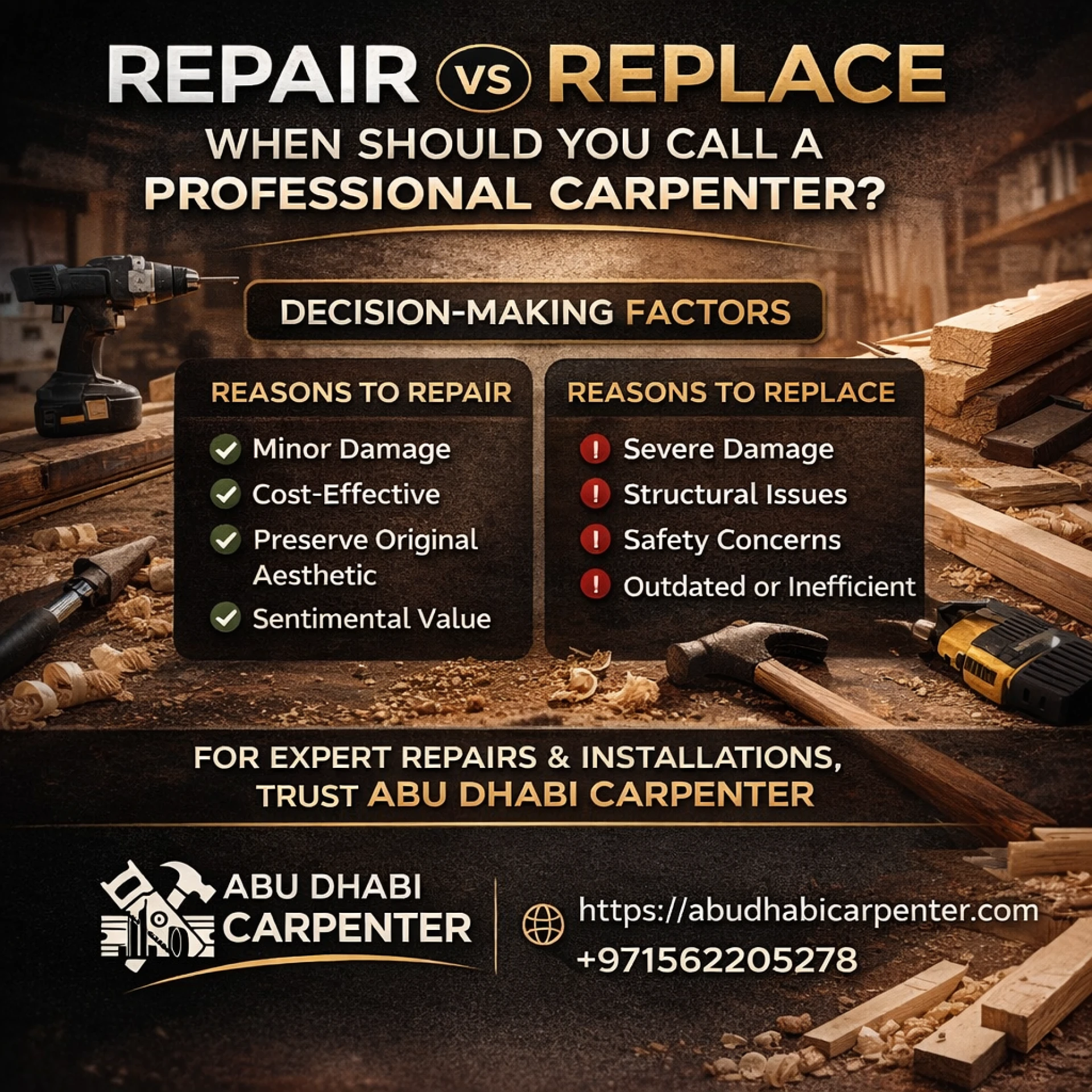
- A stiff damper that won't return to position is worn beyond saving
- Usually a single hinge needs swapping, not the entire set
- Match brand and model exactly, or the swing motion feels inconsistent
Keeping Hinges From Failing Again
- Clean hinges every few months — kitchens especially
- Run the extractor fan while cooking to reduce grease buildup near hinges
- Stop slamming doors even once weakening starts — it only speeds up the damage
- Spend a little more on branded hardware during renovations. Worth it.
FAQs
1. Can soft-close hinges be repaired, or is replacement always necessary?
Often the culprit is dust or misalignment — neither needs new hardware. Replacement enters the picture only once the internal damper has genuinely worn out.
2. Why do only some cabinet doors lose soft-close function?
The most-used doors — stove, sink, trash bin — wear out first. Uneven sun exposure or heat across a kitchen plays a role too.
3. Does Abu Dhabi's climate really speed up hinge wear?
Genuinely, yes. Heat and airborne dust both accelerate wear on the internal mechanism, so hinges here tend to need attention sooner than in cooler, drier climates.
4. How often should cabinet hinges be cleaned?
Every three to four months works as a baseline. Cooking areas need more frequent attention — grease and dust accumulate quicker there.
5. Is this a handyman job, or does it call for a carpenter?
Cleaning, sure — DIY-friendly. But alignment work and damper swaps go a lot smoother with a carpenter's tools and experience, especially on custom or built-in cabinet frames.
Final Thoughts
Soft-close hinges aren't flimsy, but precision is baked into the design — and precision wears down under dust, heat, and daily use. Abu Dhabi's climate doesn't make it easier. Catching the early warning signs — a slight slam, a small gap, an odd sound — saves both time and money down the road.
Not sure what's actually wrong? Carpenter Abu Dhabi handles diagnosis and repair, whether that means a quick realignment or a full hinge swap. Reach out to Abu Dhabi Carpenter, and get those doors closing quietly again.
























Sign in to leave a comment.