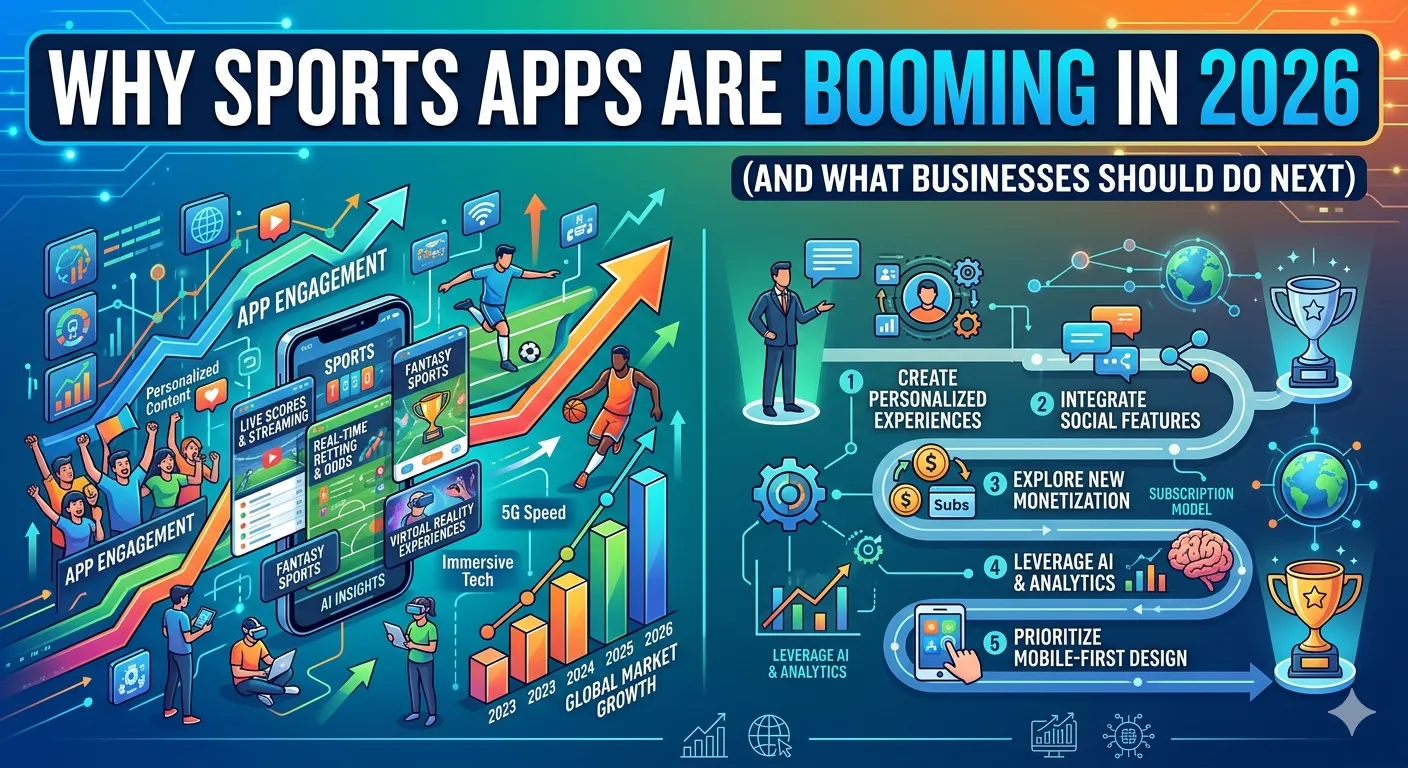

The global sports industry has undergone a profound digital transformation over the past decade, but 2026 marks a tipping point. Sports apps are no longer just companion tools for checking scores—they have evolved into immersive ecosystems that blend real-time data, fan engagement, monetization, and community interaction. From fantasy leagues and live streaming to AI-driven insights and gamification, sports apps are redefining how fans consume, interact with, and even influence sports.
For businesses, this surge represents both an opportunity and a challenge. The market is crowded, user expectations are higher than ever, and technology is advancing rapidly. Companies that fail to adapt risk falling behind, while those who strategically invest in sports app development can unlock significant revenue streams and user engagement.
This blog explores why sports apps are booming in 2026 and outlines actionable strategies businesses should adopt to capitalize on this trend.
The Rise of Digital Sports Consumption
Shift from Traditional Media to Mobile
The decline of traditional broadcasting and the rise of mobile-first consumption have played a crucial role in the growth of sports apps. Fans no longer rely solely on television to follow games. Instead, they use mobile apps to access live scores, highlights, commentary, and analytics in real time.
Smartphones have become the primary device for sports consumption, especially among younger audiences. This shift has pushed sports organizations and businesses to prioritize sports mobile app development as a core part of their digital strategy.
On-Demand and Personalized Content
Modern users demand content that is tailored to their preferences. Sports apps now offer personalized feeds, notifications, and recommendations based on user behavior, favorite teams, and viewing habits. This level of customization enhances user satisfaction and keeps fans engaged for longer periods.
Key Drivers Behind the Sports App Boom
1. Real-Time Data and Analytics
One of the most significant factors driving the growth of sports apps is the availability of real-time data. Advanced APIs and data pipelines allow apps to deliver live updates, player statistics, and predictive analytics instantly.
Users are no longer passive viewers—they actively analyze performance metrics, track player stats, and make informed decisions in fantasy sports and betting platforms.
2. Integration of Artificial Intelligence
AI is transforming sports apps by enabling smarter recommendations, automated highlights, and predictive insights. Machine learning algorithms analyze user behavior to deliver personalized experiences.
AI-powered features include:
- Match outcome predictions
- Player performance analysis
- Automated video clipping
- Chatbots for user interaction
3. Growth of Fantasy Sports and Betting
Fantasy sports platforms and sports betting apps have seen exponential growth. These apps gamify sports engagement, allowing users to create teams, compete with others, and win rewards.
The integration of secure payment systems and blockchain technology has further enhanced trust and transparency in these platforms.
4. Live Streaming Capabilities
Live streaming has become a standard feature in sports apps. With advancements in 5G and edge computing, users can stream matches in high definition with minimal latency.
This has reduced reliance on traditional broadcasters and opened new monetization opportunities through subscriptions and advertisements.
5. Social and Community Features
Sports are inherently social, and apps are leveraging this by integrating community features such as:
- Live chats during matches
- Fan forums
- Social media sharing
- User-generated content
These features create a sense of belonging and increase user retention.
Emerging Trends in Sports App Development
1. Augmented Reality (AR) and Virtual Reality (VR)
AR and VR are redefining fan experiences by offering immersive viewing environments. Users can watch matches from virtual stadiums or access interactive overlays that display player stats in real time.
2. Wearable Integration
Sports apps are increasingly integrating with wearable devices to provide fitness tracking, performance analysis, and health insights. This is particularly relevant for amateur athletes and fitness enthusiasts.
3. Blockchain and NFTs
Blockchain technology is being used to create digital collectibles, secure transactions, and enable decentralized sports ecosystems. NFTs allow fans to own unique digital assets related to their favorite teams and players.
4. Voice and Conversational Interfaces
Voice assistants and chat-based interfaces are becoming more common in sports apps. Users can check scores, get updates, and interact with the app using voice commands.
Challenges Businesses Must Address
1. High Development Costs
Building a feature-rich sports app requires significant investment in technology, infrastructure, and talent. Businesses must carefully plan their budgets and prioritize features that deliver maximum value.
2. Data Accuracy and Latency
Real-time data is critical for sports apps. Any delay or inaccuracy can lead to poor user experiences and loss of trust. Ensuring reliable data sources and efficient data processing is essential.
3. Security and Compliance
With the rise of sports betting and financial transactions, security has become a major concern. Apps must comply with regulations and implement robust security measures to protect user data.
4. User Retention
Acquiring users is only half the battle. Retaining them requires continuous engagement, regular updates, and innovative features.
Monetization Strategies for Sports Apps
1. Subscription Models
Premium subscriptions offer users access to exclusive content, ad-free experiences, and advanced features.
2. In-App Advertising
Advertising remains a major revenue source. Targeted ads based on user behavior can significantly increase revenue.
3. Freemium Models
Basic features are offered for free, while advanced functionalities are available through in-app purchases.
4. Sponsorships and Partnerships
Collaborations with brands, teams, and leagues can generate additional revenue and enhance app credibility.
What Businesses Should Do Next
1. Invest in Scalable Infrastructure
As user bases grow, apps must handle increased traffic and data loads. Cloud-based infrastructure and microservices architecture can ensure scalability and performance.
2. Focus on User Experience (UX)
A seamless and intuitive user experience is critical for success. Businesses should invest in UI/UX design to create engaging and easy-to-navigate apps.
3. Leverage Data and Analytics
Data-driven decision-making can help businesses understand user behavior, optimize features, and improve engagement.
4. Adopt Agile Development Practices
Agile methodologies enable faster development cycles, continuous improvement, and quicker adaptation to market changes.
5. Prioritize Security
Implementing strong security measures and ensuring compliance with regulations is essential for building user trust.
The Role of Custom Development vs. Off-the-Shelf Solutions
Businesses often face the dilemma of choosing between custom-built apps and off-the-shelf solutions.
Custom Development
Pros:
- Tailored features
- Scalability
- Competitive advantage
Cons:
- Higher costs
- Longer development time
Off-the-Shelf Solutions
Pros:
- Lower initial cost
- Faster deployment
Cons:
- Limited customization
- Scalability issues
In 2026, custom development is increasingly preferred due to the need for unique features and scalability.
Future Outlook of Sports Apps
The future of sports apps looks promising, with continued advancements in technology and increasing user demand. Key developments to watch include:
- Hyper-personalization using AI
- Integration with smart devices
- Expansion of esports apps
- Enhanced immersive experiences
Businesses that stay ahead of these trends will be well-positioned to succeed in the competitive sports app market.
How JPLoft Can Help Businesses Succeed
In a rapidly evolving sports app landscape, choosing the right development partner is crucial. JPLoft has established itself as a reliable technology provider in the mobile app development space.
They specialize in building high-performance sports applications tailored to business needs. Their expertise includes real-time data integration, scalable backend architecture, and user-centric design.
JPLoft focuses on delivering end-to-end solutions, from concept development to deployment and maintenance. They leverage the latest technologies such as AI, cloud computing, and blockchain to create innovative and future-ready sports apps.
By collaborating with JPLoft, businesses can ensure:
- Faster time-to-market
- Robust and scalable applications
- Enhanced user engagement
- Secure and compliant platforms
Their team works closely with clients to understand their goals and deliver customized solutions that drive growth and success.
Conclusion
The boom in sports apps in 2026 is driven by technological advancements, changing consumer behavior, and new monetization opportunities. From real-time data and AI to immersive experiences and community engagement, sports apps are transforming the industry.
For businesses, this is a critical moment to invest in sports app development. Success requires a strategic approach that focuses on innovation, scalability, and user experience.
By leveraging the right technologies, adopting effective monetization strategies, and partnering with experienced development companies like JPLoft, businesses can capitalize on this growing market and build impactful sports applications that resonate with modern users.



























Sign in to leave a comment.