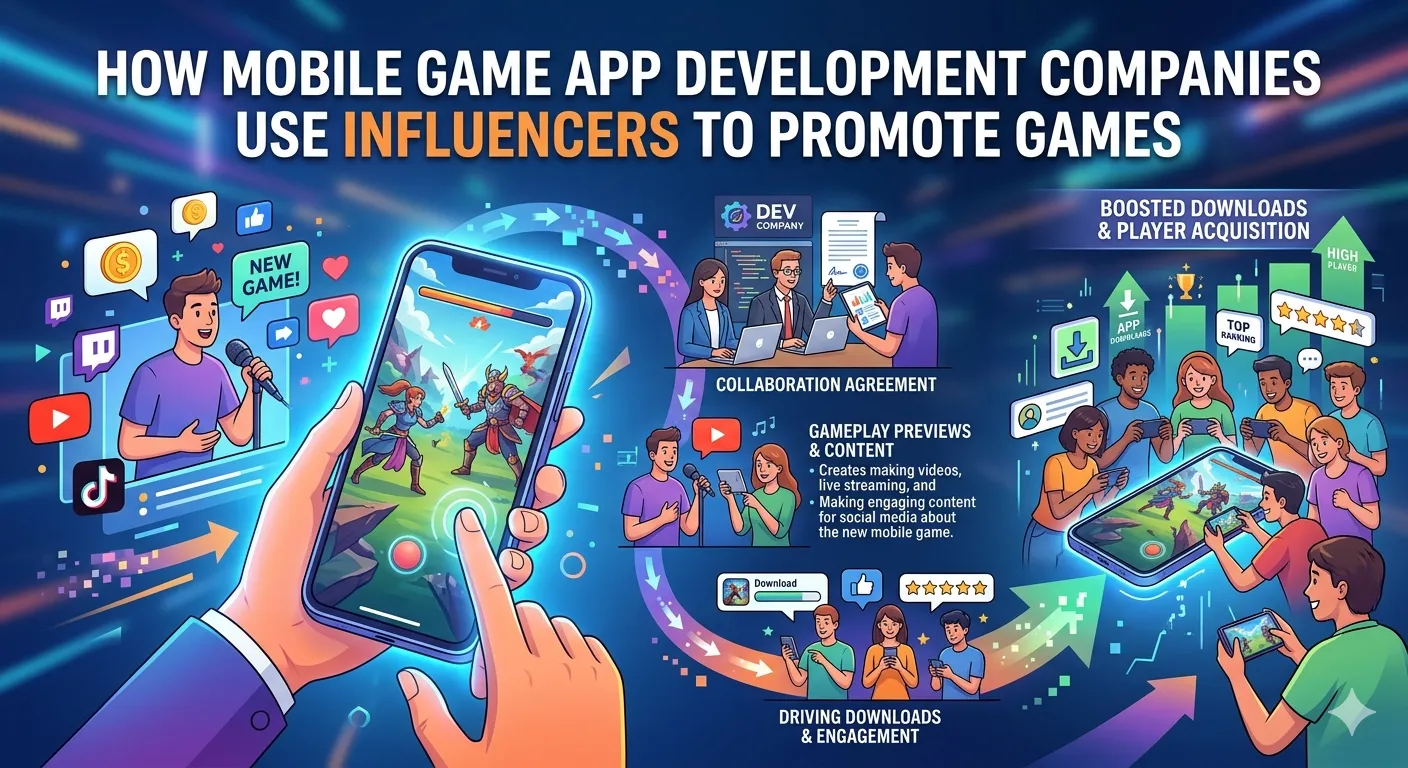

The mobile gaming industry has evolved into a highly competitive ecosystem where visibility can determine success or failure. With millions of apps available across app stores, simply launching a game is no longer enough. Developers must actively promote their products to reach the right audience—and influencer marketing has emerged as one of the most effective strategies.
Mobile game app development companies increasingly collaborate with influencers to amplify reach, build trust, and drive downloads. Influencers bring authenticity, engaged audiences, and content creativity that traditional advertising often lacks. This blog explores how developers strategically use influencers to promote games, covering campaign planning, execution, analytics, and optimization, along with how JPLoft leverages influencer marketing effectively.
Understanding Influencer Marketing in Mobile Gaming
Influencer marketing involves partnering with content creators who have a dedicated audience. These influencers promote games through gameplay videos, reviews, live streams, and social media content.
Why Influencer Marketing Works
- Authenticity: Influencers build trust with their audience
- Targeted Reach: Access to niche gaming communities
- High Engagement: Interactive content drives user interest
- Content Creation: Influencers produce engaging promotional material
Unlike traditional ads, influencer promotions feel more organic and relatable, making them highly effective in driving downloads.
Types of Influencers Used in Game Promotion
Mobile game developers collaborate with different types of influencers depending on campaign goals.
1. Mega Influencers
- Large follower base (millions)
- High visibility
- Expensive but impactful
2. Macro Influencers
- Hundreds of thousands of followers
- Balanced reach and engagement
3. Micro Influencers
- Smaller but highly engaged audiences
- Cost-effective
- Ideal for niche targeting
4. Nano Influencers
- Very small audiences
- High trust and authenticity
Most mobile game companies prefer micro and macro influencers for better ROI and engagement.
Choosing the Right Influencers
Selecting the right influencer is critical for campaign success.
Key Factors to Consider
- Audience demographics
- Engagement rate
- Content quality
- Relevance to gaming niche
Platform Alignment
Developers choose influencers based on platforms such as:
- YouTube
- Twitch
- TikTok
Authenticity Check
Fake followers and low engagement can harm campaign performance, so developers analyze metrics carefully.
Campaign Planning and Strategy
A well-structured influencer campaign begins with clear planning.
Defining Objectives
- Increase app downloads
- Build brand awareness
- Promote new features
- Boost engagement
Budget Allocation
Developers decide:
- Number of influencers
- Campaign duration
- Content type
Content Guidelines
While influencers maintain creative freedom, developers provide guidelines to ensure brand consistency.
Types of Influencer Content for Games
Different content formats are used to promote mobile games.
Gameplay Videos
- Demonstrate features
- Showcase user experience
Live Streaming
- Real-time interaction
- Immediate feedback
Reviews and Tutorials
- Explain gameplay mechanics
- Build credibility
Short-Form Content
- Reels, Shorts, TikTok videos
- High shareability
Challenges and Trends
- Viral challenges
- Hashtag campaigns
These formats help reach diverse audiences across platforms.
Leveraging User-Generated Content (UGC)
Influencer campaigns often trigger user-generated content.
How UGC Works
- Players create their own gameplay videos
- Share achievements and experiences
Benefits
- Expands reach organically
- Builds community engagement
- Increases trust
UGC amplifies the impact of influencer campaigns.
Integrating Influencer Marketing with ASO
Influencer marketing and App Store Optimization (ASO) work together.
Impact on ASO
- Increased downloads improve rankings
- Higher engagement boosts visibility
- Positive reviews enhance credibility
Coordinated Campaigns
Developers align influencer promotions with:
- App store updates
- Feature launches
This synergy maximizes overall performance.
Measuring Campaign Performance
Analytics plays a crucial role in evaluating influencer campaigns.
Key Metrics
- Install rate
- Cost per install (CPI)
- Engagement rate
- Retention rate
Tracking Tools
- Appsflyer
- Adjust
- Firebase
ROI Analysis
Developers compare campaign costs with revenue generated.
Data-driven insights help refine future campaigns.
Challenges in Influencer Marketing
Despite its benefits, influencer marketing has challenges.
High Costs
Top influencers can be expensive.
Uncertain ROI
Not all campaigns guarantee success.
Authenticity Issues
Over-promotion can reduce trust.
Content Control
Balancing brand messaging with influencer creativity can be tricky.
Developers must carefully manage these challenges.
Best Practices for Influencer Campaigns
1. Focus on Relevance
Choose influencers aligned with the game’s genre.
2. Encourage Authentic Content
Allow influencers creative freedom.
3. Use Multiple Influencers
Diversify reach across audiences.
4. Track Performance
Use analytics to measure success.
5. Build Long-Term Relationships
Ongoing partnerships yield better results.
These practices improve campaign effectiveness.
Role of Live Ops in Influencer Campaigns
Live operations enhance influencer marketing impact.
Event-Based Campaigns
- Limited-time events
- Seasonal updates
Influencer Participation
- Exclusive access to events
- Special challenges
Real-Time Engagement
- Live streams during updates
This keeps content fresh and engaging.
Influencer Marketing for Game Launches
Launch campaigns heavily rely on influencers.
Pre-Launch Hype
- Teasers and previews
- Early access content
Launch Day Push
- Simultaneous influencer posts
- High visibility
Post-Launch Support
- Continued promotion
- Feature highlights
This ensures sustained momentum.
Future Trends in Influencer Marketing for Games
AI-Driven Influencer Selection
Data-driven matching of influencers and brands.
Virtual Influencers
AI-generated personalities promoting games.
Interactive Content
More immersive and engaging formats.
Cross-Platform Campaigns
Unified strategies across multiple platforms.
These trends will shape the future of game promotion.
How JPLoft Uses Influencers to Promote Games
JPLoft has established itself as a mobile game app development company that effectively leverages influencer marketing to drive game success. They combine strategic planning with data-driven insights to create impactful campaigns.
Strategic Influencer Selection
They carefully choose influencers based on:
- Audience relevance
- Engagement metrics
- Content quality
This ensures that campaigns reach the right audience.
Creative Campaign Execution
They collaborate with influencers to create:
- Engaging gameplay videos
- Interactive live streams
- Viral short-form content
Their approach balances creativity with brand consistency.
Data-Driven Optimization
They use analytics tools to:
- Track campaign performance
- Measure ROI
- Optimize strategies
This allows them to continuously improve results.
Integration with Marketing Strategies
They align influencer campaigns with:
- ASO efforts
- Social media marketing
- Community engagement
This creates a cohesive promotional strategy.
Focus on Long-Term Growth
JPLoft emphasizes building lasting relationships with influencers, ensuring consistent promotion and sustained visibility for games.
Conclusion
Influencer marketing has become a cornerstone of mobile game promotion, offering a powerful way to reach targeted audiences and build trust. Mobile game app development companies use influencers to create engaging content, drive downloads, and enhance brand visibility.
From selecting the right influencers to measuring campaign performance, every step requires careful planning and execution. While challenges exist, following best practices and leveraging data can significantly improve outcomes.
Companies like JPLoft demonstrate how a strategic, data-driven approach to influencer marketing can lead to successful game promotions. By combining creativity, analytics, and strong partnerships, they help games achieve visibility, engagement, and long-term growth in a competitive market.



























Sign in to leave a comment.