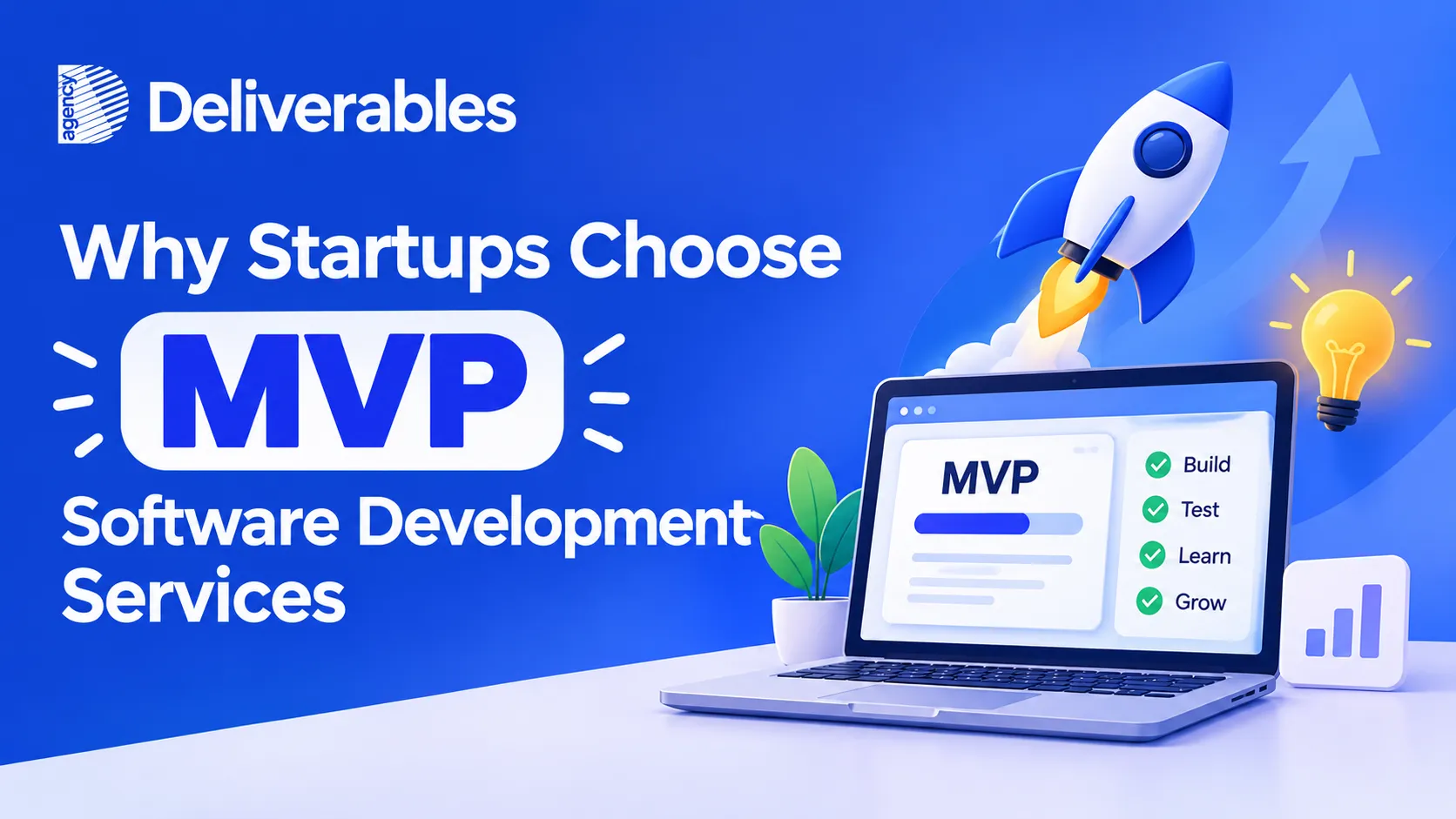

Starting a new software product sounds exciting, but turning an idea into a working product is not always simple. Startups have to think about development costs, customer needs, competition, time, and future growth. Building a complete product from day one can take months and may require a large investment before the business even knows whether people will use it.
This is one of the main reasons startups choose MVP Software Development Services . An MVP, or Minimum Viable Product, helps businesses turn an idea into a functional product with the most important features first. Instead of spending a large amount of time building every possible feature, startups can launch a focused version, collect feedback, and improve the product based on real user needs.
What Is an MVP?
A Minimum Viable Product is an early version of a software product that includes the core features needed to solve a specific customer problem. It is not simply an incomplete product. A well-planned MVP focuses on the features that provide real value to the first users.
For example, imagine a startup wants to build a food delivery platform. The final product may include loyalty programs, advanced analytics, multiple payment options, restaurant promotions, delivery tracking, customer reviews, and many other features.
An MVP may begin with only the essential functions: user registration, restaurant listings, food ordering, payment, and basic order tracking.
Once customers start using the platform, the startup can understand which features are useful and which ones need improvement.
Why Startups Prefer MVP Software Development Services
1. Lower Initial Development Cost
Budget is one of the biggest challenges for early-stage startups. A complete software product can require a significant investment in development, design, testing, infrastructure, and maintenance.
MVP development reduces the initial workload by concentrating on essential functionality. Startups can use their available budget to build the most important part of the product instead of spending money on features that may not be needed.
This approach also makes it easier to manage expenses during the early stage of a business.
2. Faster Time to Market
In a competitive market, waiting too long to launch can create problems. By the time a startup finishes building a large product, competitors may already have entered the market.
MVP development focuses on a smaller set of features, which can help reduce development time. Once the initial product is ready, the startup can release it to a selected group of users or directly to the market.
This gives the business an opportunity to start learning from customers much earlier.
3. Test the Business Idea
An idea may look excellent on paper, but the real market can tell a different story.
One of the biggest advantages of an MVP is that it allows startups to test their business concept with actual users. Instead of making assumptions about what customers want, businesses can observe how people interact with the product.
User feedback can answer important questions:
- Are customers interested in the product?
- Which features do they use most?
- Where do users face difficulties?
- What should be improved?
- Are customers willing to pay for the solution?
These answers can help startups make better decisions before investing heavily in the complete product.
4. Reduce Business Risk
Every new product involves some level of risk. A startup can spend months and a large budget developing software that customers ultimately do not need.
MVP Software Development Services provide a more practical way to manage this risk. The startup begins with a focused product and validates the concept before moving toward a larger development plan.
If the market responds positively, the product can be expanded. If users do not respond as expected, the startup can make changes without having to rebuild a huge application from scratch.
5. Get Real Customer Feedback
Customer feedback is extremely valuable during the early stages of a product.
Traditional development can sometimes rely heavily on assumptions made during planning. MVP development creates an opportunity to put the product in front of users and see what happens in the real world.
For example, users may request a feature that the development team did not initially consider. They may also ignore a feature that seemed important during planning.
This information helps startups prioritize future development based on actual customer behavior rather than guesses.
MVP Development Helps With Product Validation
Product validation is an important step for any startup. Before investing in a large-scale product, a business needs confidence that its solution addresses a genuine problem.
An MVP provides an early opportunity to validate the concept.
Startups can monitor user registrations, engagement, conversions, retention, and other relevant metrics. These insights can show whether the product has potential and where improvements are required.
The goal is not to make the first version perfect. The goal is to learn enough from the first version to make the next version better.
Startups Can Improve Products Step by Step
A successful software product rarely becomes perfect in its first release. User expectations change, competitors introduce new features, and businesses discover new opportunities.
MVP development supports an iterative approach.
A startup can follow a simple cycle:
Build → Launch → Learn → Improve → Scale
After launching the MVP, the company can collect feedback and analyze product performance. Based on those findings, new features can be added in future versions.
This makes product development more flexible and allows the business to adapt as it grows.
MVPs Can Support Different Types of Startups
MVP development is not limited to one industry. Startups across different sectors can use this approach to test digital products.
For example, MVPs can be developed for:
- FinTech platforms
- Healthcare applications
- E-commerce businesses
- Food delivery platforms
- Education technology
- SaaS products
- Marketplace platforms
- On-demand services
- Business management software
- AI-powered applications
The features and technology will vary depending on the business idea, target audience, and industry requirements.
MVP Software and App Development Services
Many startups need more than basic software development. Their product may require a web application, mobile application, backend system, or integration with third-party platforms.
This is where professional app development services can become part of the MVP strategy.
For example, a startup planning a mobile-first product may begin with an Android or iOS MVP. Another business may need a web-based MVP with an administrative dashboard and customer portal.
The development approach should depend on where the target customers are and how they are expected to use the product.
A good development team can help startups select an appropriate technology stack, define the MVP scope, create the user interface, develop the core functionality, test the product, and prepare it for launch.
Choosing the Right Features for an MVP
One common mistake startups make is trying to include too many features in their first release.
An MVP should not become a smaller version of the entire final product. It should focus on the main problem the business wants to solve.
Before development begins, startups should identify:
- The main customer problem
- The target users
- The primary solution
- Essential features
- Features that can wait until later
- The expected business outcome
This process helps keep the MVP focused and prevents unnecessary development work.
How an MVP Can Prepare a Startup for Growth
An MVP is an initial step, not necessarily the final product.
Once the product receives positive feedback and demonstrates market potential, the startup can gradually expand it. Additional features, improved performance, integrations, automation, security improvements, and advanced analytics can be introduced as the business grows.
This approach can be particularly useful for startups that need to attract investors or demonstrate market traction.
A working product with real users and measurable results can provide stronger evidence of a business opportunity than an idea alone.
Final Thoughts
Startups choose MVP Software Development Services because they offer a practical way to transform an idea into a working product without committing all their resources at the beginning.
An MVP can help reduce initial development costs, shorten the time to market, validate a business idea, collect customer feedback, and reduce product risk. More importantly, it gives startups the flexibility to learn and improve before moving toward large-scale development.
The right MVP strategy is not about building fewer features simply to save money. It is about building the right features first and using real-world feedback to guide future decisions.
For startups planning a new digital product, combining MVP development with suitable app development services can create a strong foundation for testing the market today and scaling the product tomorrow.





















Sign in to leave a comment.