
The Gap Between Showroom and Home Is Mostly About Light
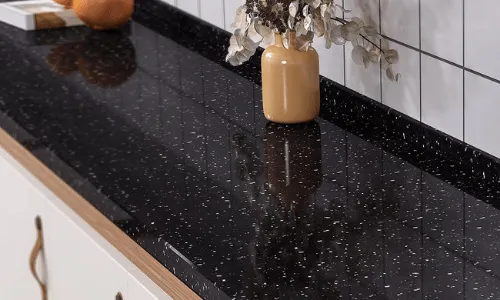
Most people who buy natural stone have experienced some version of this: the slab looked one way under the showroom lights, and then something shifted when it arrived at the actual site. This happens with almost every stone, but it's especially noticeable with the well-known Black Galaxy Granite in India because of how its surface responds to light direction and intensity.
The stone's base is a deep black anorthosite with bronzite inclusions — those are the gold and silver flecks that give it the night-sky look. That bronzite is reflective. It doesn't just sit there looking sparkly. It reacts differently depending on the angle, color temperature, and intensity of whatever light hits it. Change the light, and you effectively change the stone.
What Showroom Lighting Is Actually Designed to Do
Stone showrooms almost universally use bright, high-intensity white lighting positioned at specific angles to maximize reflection from the slab surface. This is deliberate. It makes every slab look its absolute best — sharp contrast, saturated sparkle, deep black base.
The problem is that most homes and commercial spaces don't have that lighting setup. A typical kitchen uses a mix of recessed warm-white LEDs, pendant lights, and whatever natural light comes through the windows. That combination produces a very different result on the same slab.
Under warm lighting, Black Galaxy tends to look richer and deeper — the black base gets warmer, and the sparkle becomes more subdued. Under cool or neutral lighting, the sparkle sharpens and the contrast between black and gold becomes more dramatic. Neither version is wrong. They're just different, and buyers deserve to see both before committing.
Natural Light Is the Most Unpredictable Variable
If the space where your granite will be installed gets significant natural light, that adds another layer of complexity. Natural light shifts throughout the day — it's cool and bluish in the morning, warm in the afternoon, and nearly orange at sunset.
Black Galaxy granite under direct afternoon sun through a west-facing window looks completely different from how it looks on an overcast morning. The sparkle intensifies under direct sunlight in a way that no showroom light fully replicates. On a cloudy day in the same space, the stone looks quieter and more understated.
This is not a problem with the stone. It's just how reflective surfaces work. But it means buyers who only see a slab under showroom conditions are making a decision with incomplete information.
The Installation Environment Matters as Much as the Stone
Wall color, cabinetry finish, and flooring material all affect how Black Galaxy reads in a space. A white kitchen with light-colored cabinets will amplify the contrast and make the stone feel bolder. A darker kitchen with warm wood tones will make the same slab feel more integrated and subdued.
This interaction between the stone and its surroundings gets lost entirely in the showroom, where slabs are typically displayed in isolation or against neutral backgrounds. Buyers who bring home samples — even just a small piece — and live with them in the actual space for a day or two make significantly better final decisions.
Why Tripura Stones Takes a Different Approach
Most suppliers show you a slab and wait for you to decide. We don't think that's enough, especially for a stone like Black Galaxy where lighting plays such a large role in how the final installation looks.
When clients come to Tripura Stones, we walk them through how their specific space conditions — the light sources, wall finishes, and application area — will interact with different slab grades. We can also arrange for sample pieces to be taken to site so buyers see the stone in its actual environment before ordering.
We work with quarry-level sourcing in Andhra Pradesh, which means we can offer a range of grades and help match the right one to the right space. That level of guidance is what separates a purchase you're happy with long-term from one you start second-guessing the moment installation is finished.
Conclusion
The showroom version of Black Galaxy Granite is not fake — it's just one version of what the stone can look like. The real question is what it will look like in your specific space, under your specific lighting, next to your specific finishes. That's the version worth evaluating before you buy.
Take samples home. Look at them at different times of day. Check them under the lights you'll actually be using. A little extra time at this stage saves a lot of regret later.
FAQs
Why does Black Galaxy Granite look more sparkly in showrooms than at home? Showrooms use high-intensity white lighting aimed directly at slabs to maximize the reflection from bronzite inclusions. Most home lighting is less intense and often warmer, which changes how the sparkle appears — usually making it more subtle.
Does the color temperature of LED lighting affect how Black Galaxy looks? Yes, significantly. Cool white LEDs (5000–6500K) sharpen the contrast and make the gold flecks look more prominent. Warm white LEDs (2700–3000K) soften the look and give the black base a slightly warmer tone. Neither is wrong — it depends on the mood you want.
Should I take a sample home before finalizing my Black Galaxy Granite order? Absolutely. Even a small offcut placed in the actual installation area and viewed at different times of day will tell you far more than any showroom visit. Lighting shifts through the day, and seeing the stone react to those shifts is valuable.
Does direct sunlight damage or alter Black Galaxy Granite over time? No. Black Galaxy is a hard igneous stone and does not fade, discolor, or degrade under sunlight. The visual changes you see in different light are purely optical — the stone itself is unaffected.
What type of lighting brings out the best appearance in Black Galaxy Granite? Neutral white light (around 4000K) at moderate intensity tends to show the stone accurately — neither over-amplifying nor dulling the sparkle. For kitchens, under-cabinet lighting pointed at the countertop surface can significantly enhance the visual effect.





























Sign in to leave a comment.