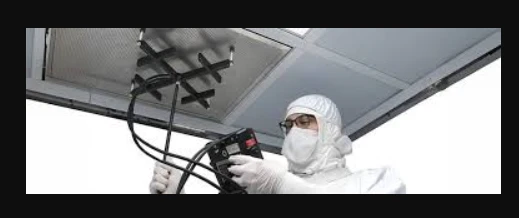
Cleanrooms are supposed to operate seamlessly yet many facility managers face unexplained drops in airflow, gusts, or inconsistent air curtain behavior. When your laminar zones, filters or door assemblies don’t perform as expected, the root cause often comes down to measurement, calibration or equipment specification. Understanding how air velocity measurement instruments function and knowing how to work with trusted air curtain suppliers in India can save you costly downtime, regulatory headaches and compromised product quality.
When Cleanroom Flow Fails?
Air velocity is the unseen driver of contamination control, comfort and system efficiency. But if your air-handling unit, HEPA filter or air curtain isn’t delivering the right velocity, you’ll observe:
- uneven laminar flow or turbulence
- door shocks or pressure losses
- higher particle counts
- HVAC units running harder, increasing energy cost
Why does this happen? Here are typical culprits:
- Instruments (anemometers, hood meters) out of calibration or incorrectly used
- Improperly sized or installed air curtains, causing infiltration or leakage
- Filter or coil degradation, shifting airflow characteristics
- Changes in room layout, equipment, or obstructions that weren’t planned for
- Ambient conditions (humidity, temp) affecting velocity and air density
Here’s how you can dig in.
The Role of Air Velocity Measurement Instruments
Accurate airflow measurement is more than checking a dial. The instruments being used must be properly calibrated, appropriate to the task, and used in a rigorous protocol. Modern cleanroom validation standards reference velocity measurement as a key parameter.
What to measure:
- Face velocity of supply diffusers and return grilles
- Air curtain velocity profile at ingress points
- Laminar zone average velocity in the working area
- Number of air changes per hour (ACH) derived from volume and velocity
Instrument types:
- Hot wire or vane anemometers: good for low velocities and fine checking.
- Capture hoods or balometers for diffusers
- Differential pressure gauges (to infer flow when direct measurement isn’t feasible)
Without calibration, the reading you trust could be off by a significant margin. Independent calibration (traceable to national standards) is critical.
Always document measurement locations, instrument serial numbers, calibration sheets and repeat readings. That traceability is essential for audit defence and facility QA logs.
Air Curtains: Invisible but Critical Barrier
Air curtains may seem a simple addition – a fan beam blowing across a doorway – but in cleanrooms they play a vital role in maintaining pressure zones, preventing infiltration and safeguarding cleanliness. That’s why selecting from credible air curtain suppliers in India is essential.
What makes a cleanroom-grade air curtain:
- Supply velocity and discharge profile sized to the doorway and ambient conditions
- Low turbulence, smooth laminar sheet of air
- Compatible with cleanroom framing and finish requirements (SS304, easy-clean surfaces)
- Integration with control systems and airflow-monitoring instrumentation
Common issues when they fail:
- Operators feel drafts or pull at the entrance
- Uncontrolled air exchange when doors open
- Increased contamination ingress due to uncontrolled doorway events
- Pressure imbalance between adjacent zones
Fix-it approach:
- Measure discharge velocity across the curtain span (capture hood + anemometer)
- Adjust fan speed or blade pitch to ensure full coverage from floor to sill
- Include sensors to trigger when curtain fails or door remains open too long
- Regularly calibrate and maintain components (just like you would your other cleanroom instrumentation)
Integration: Measuring, Adjusting, Validating
Let’s walk through a real-world workflow a facility might follow when flow issues appear:
- Initial check: Use calibrated anemometer to measure diffuser face velocities; note any inconsistent values.
- Door/air curtain check: At each entry-zone, measure discharge velocity of curtain and compare to manufacturer target.
- Room volume check: Using instrumentation and room dimensions, calculate ACH; if below design, look for filter loading or coil drift.
- Trend logging: Compare readings over time; instrument drift or blocked filters often show upward fan amp draw + downward velocity.
- Corrective action: Replace/clean filters, recalibrate measurement tools, adjust air curtain speed, re-test all points.
- Re-validation: Create a full protocol covering DQ/IQ/OQ/PQ phases, referencing instrumentation used, results obtained, corrective actions. Ultrafil offers such services.
Why This Matters for Your Business
When you ignore measurement and validation, you don’t only risk non-compliance you pay for it through hidden losses:
- compromised product batches
- increased re-work or scrap
- higher energy bills
- unpredictable maintenance costs
- operator discomfort or safety incidents
By using the right instruments and sourcing quality air curtains, you shift from firefighting to proactive maintenance and control.
Choosing Your Partner: Instrumentation + Air Curtains + Validation Services
When it comes to partnering up:
- Choose instrumentation suppliers who provide calibration history and traceability
- Select air curtain suppliers in India with cleanroom-specific credentials (materials, finish, services)
- Opt for companies offering turnkey validation and calibration services (so you can bundle measurement, correction, and documentation)
Ultrafil’s Validation & Calibration division marries these needs offering measurement, documentation, and supply of instrumentation and control hardware for full operational assurance.
Common Mistakes and How to Avoid Them
- Using un-calibrated instruments — leads to false adjustments and wasted effort.
- Measuring at only one point — always use multiple points to catch flow variation.
- Ignoring door/curtain interactions — airflow across doors often undermines system balance.
- Skipping documentation — audits demand logs, calibration certificates and results.
- Delaying maintenance until failure occurs — proactive re-validation prevents surprises.
Conclusion
Cleanrooms are intricate systems of containment, airflow, equipment and human interaction. While filters, ducts and HVAC get much attention, the unseen factors – correct velocities, properly functioning air curtains, calibrated instruments determine consistent success.
If you’re seeing unexplained airflow changes, inconsistent door behavior, or suspect your measurement tools are inaccurate, now is the time to review your instrumentation, your air curtain performance and your validation protocol.
Explore Ultrafil’s Validation & Calibration services for a full check-up, including instrument calibration, velocity measurement and system documentation: Ultrafil Validation & Calibration.

























Sign in to leave a comment.