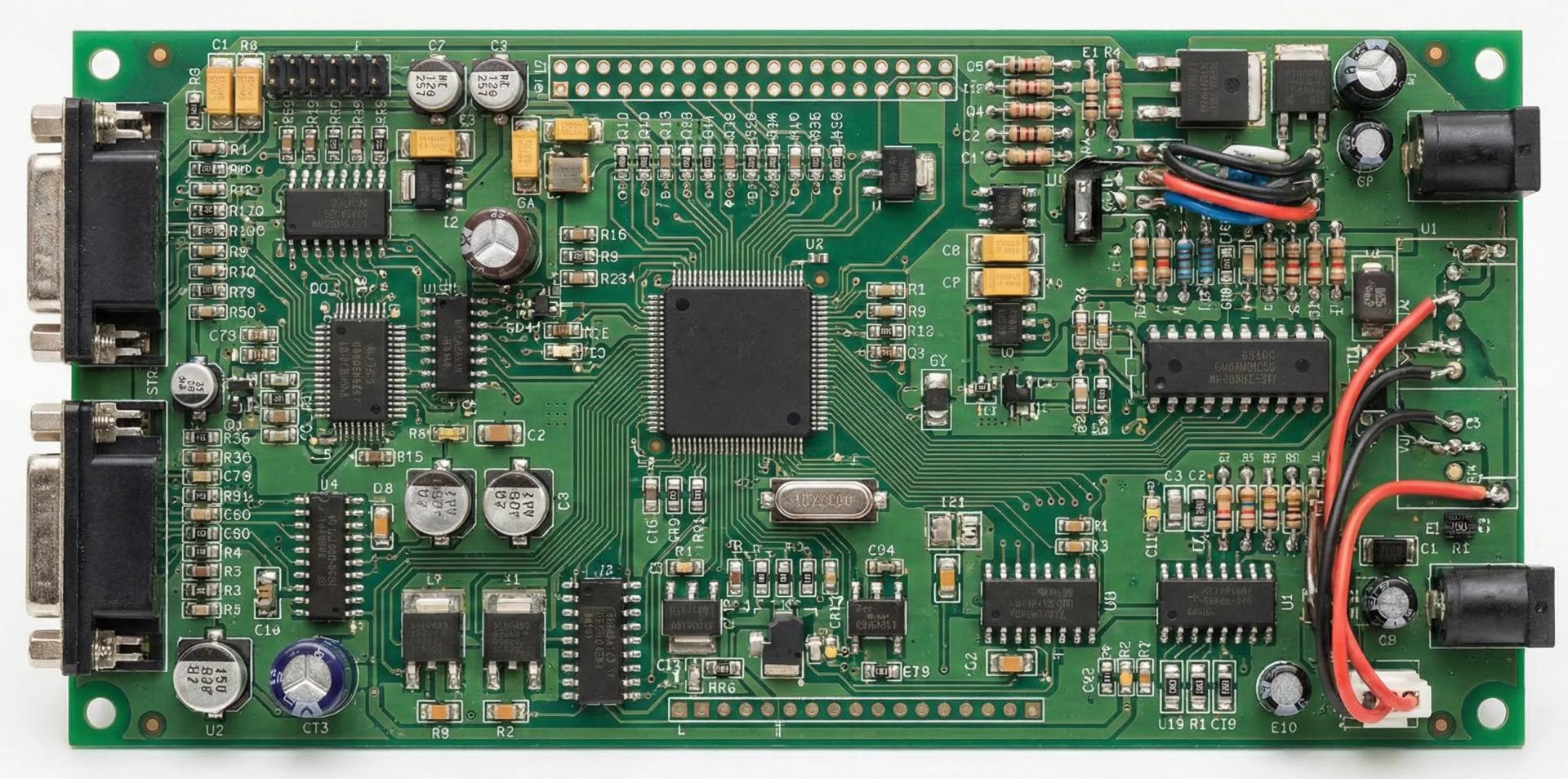

Designing your first board is exciting. You’ve finalized the schematic, completed the layout, and sent your files to a PCB Prototype Fabrication Service with high expectations. Then the prototype arrives—and it doesn’t power up, overheats, fails EMI testing, or simply behaves unpredictably.
If this sounds familiar, you’re not alone.
In the USA electronics market, first-iteration failures are common, especially in complex custom PCB prototype projects. The issue isn’t bad luck. It’s usually a combination of overlooked design-for-manufacturing (DFM) rules, incomplete validation, or misunderstanding of the PCB fabrication process.
Let’s break down why first PCB prototypes fail—and how you can fix those issues before fabrication.
1. Incomplete Understanding of the PCB Fabrication Process
Many engineers design boards in isolation without fully aligning their layout decisions with the actual PCB fabrication process.
Trace width, copper weight, stack-up configuration, via types, solder mask clearance, and impedance control must all match the capabilities of your selected PCB manufacturing service. When these are misaligned, fabrication errors or performance failures occur.
How to Fix It:
- Request stack-up details before layout.
- Follow DFM guidelines from your PCB manufacturing service.
- Confirm minimum trace/space, drill sizes, and controlled impedance specs.
- Review manufacturing notes carefully before file submission.
A reliable PCB Prototype Fabrication Service will offer DFM checks before production. Use that service. It prevents costly respins.
2. Poor Stack-Up Planning in Custom PCB Prototype Designs
Multilayer boards fail frequently due to incorrect stack-up design. Improper layer pairing, missing ground planes, and inconsistent reference planes lead to signal integrity problems.
This is especially critical in high-speed or RF-based custom PCB prototype projects in the USA, where signal performance is non-negotiable.
Common mistakes:
- No dedicated ground plane.
- Asymmetric stack-up.
- Incorrect impedance calculations.
- Power planes placed far from return paths.
How to Fix It:
Work closely with your PCB Prototype Fabrication Service to finalize stack-up early. Request impedance calculations and simulation if needed. Professional PCB fabrication providers often assist in optimizing stack-up to improve EMC performance and reduce noise.
3. Lack of Proper Testing Before Sending to PCB Fabrication
Simulation and validation are often rushed. Engineers assume the schematic is correct and move directly into production.
But prototype failure often results from:
- Power sequencing errors
- Incorrect pull-up/pull-down resistor values
- Signal timing mismatches
- Thermal miscalculations
Before sending Gerber files to a PCB Prototype Fabrication Service, verify:
- Electrical Rule Check (ERC)
- Design Rule Check (DRC)
- Signal integrity simulations
- Thermal analysis (especially for power electronics)
Testing virtually is far cheaper than reordering a custom PCB prototype.
4. Choosing the Wrong PCB Manufacturing Service
Not all PCB providers are equal. Low-cost services may compromise on material quality, copper thickness consistency, drilling accuracy, or solder mask alignment.
For USA-based engineers, working with a trusted name like PCB Power in USA reduces risk significantly. A dependable PCB Prototype Fabrication Service should provide:
- High-quality laminate materials
- Tight tolerance drilling
- Controlled impedance support
- Transparent lead times
- Responsive engineering support
The right partner understands that prototype success directly impacts your product timeline.
5. Overlooking Communication with Your PCB Fabrication Partner
Many prototype failures could be avoided with a simple pre-production review call.
When you partner with an experienced PCB Fabrication provider like PCB Power, you gain access to engineering consultation. Yet many designers skip this step.
Clear communication about:
- Application requirements
- Operating environment
- Target compliance standards
- Expected current loads
…helps your PCB manufacturing service identify potential issues before fabrication begins.
Practical Checklist Before Sending Your Custom PCB Prototype to Fabrication
Before you finalize your order with a PCB Prototype Fabrication Service, confirm:
- Stack-up approved and impedance verified
- DFM report reviewed
- Gerber, drill, and pick-and-place files validated
- Assembly drawings complete
- Component availability confirmed
- Thermal and signal simulations completed
Spending an extra day on verification can save weeks of rework.
Why Working with PCB Power in USA Improves First-Pass Success
PCB Power understands the realities of modern electronics development in the USA market. From PCB Fabrication to PCB Assembly, their team focuses on manufacturability and reliability.
When you Partner with PCB Power, you don’t just get a board—you get engineering collaboration that reduces iteration cycles and improves first-pass yield.
Their comprehensive PCB Prototype Fabrication Service integrates DFM checks, material validation, and technical consultation, helping engineers avoid common prototype failures before production begins.
Know More: https://www.pcbpower.us/blog/pcb-prototype-fabrication-services











Sign in to leave a comment.