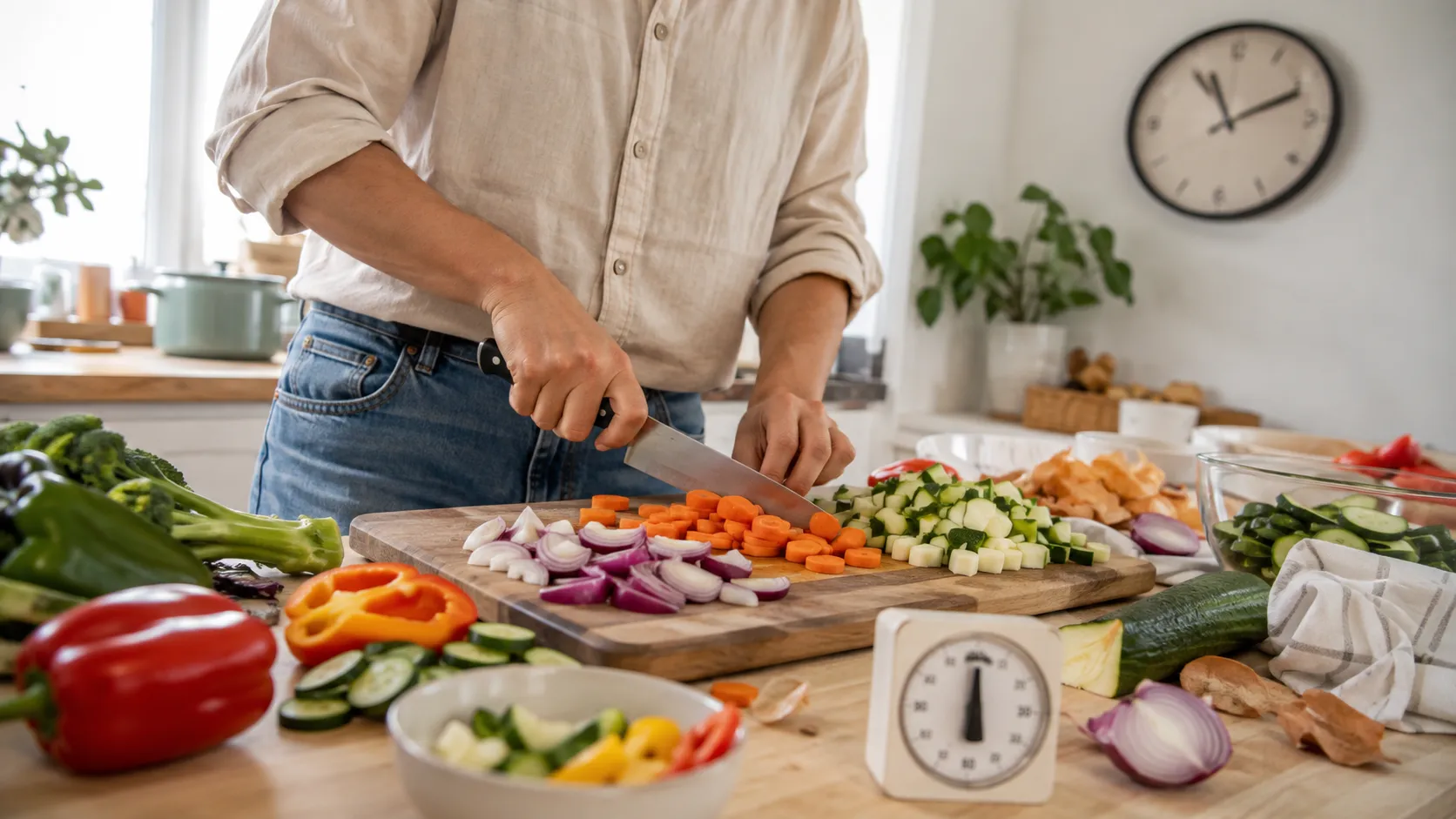

If you cook at home more than twice a week, you already know the real time sink isn't the cooking — it's the prep. Dicing an onion is fast. Turning three pounds of potatoes into uniform, quarter-inch coins for a gratin, or shredding a head of cabbage for slaw, is where a weeknight dinner quietly eats 25 minutes you didn't budget for.
A knife will always get you there eventually. What it won't get you is consistency — and consistency is what actually matters when you're cooking anything that needs even heat distribution, like roasted vegetables or a potato gratin. Slices that vary between 2mm and 6mm cook unevenly: the thin ones burn while the thick ones stay raw in the middle.
This is the actual argument for a dedicated vegetable slicer, and it has nothing to do with speed for its own sake:
- Uniform thickness = even cooking. Adjustable-blade slicers let you lock in one thickness for the whole batch, so everything in the oven or pan finishes at the same time.
- Consistent cuts hold dressings and marinades better. A slaw cut by hand is a mix of thick and thin shreds; the thin ones go limp and soggy while the thick ones stay crunchy and undressed.
- It's safer than it looks. Most people avoid these tools after one close call with a blade guard used wrong. The fix isn't avoidance, it's using the hand guard every single time, no exceptions, even for the last bit of a vegetable.
A few things worth checking before buying one: blade material (stainless holds an edge longer than the coated blades on cheaper models), whether the blades are dishwasher-safe, and whether it comes with more than one thickness setting, a single-thickness slicer is really a one-trick tool. Worth comparing a few models before you commit, the blade-guard design varies more than people expect, and that's the part that actually determines whether you'll keep using it.





















Sign in to leave a comment.