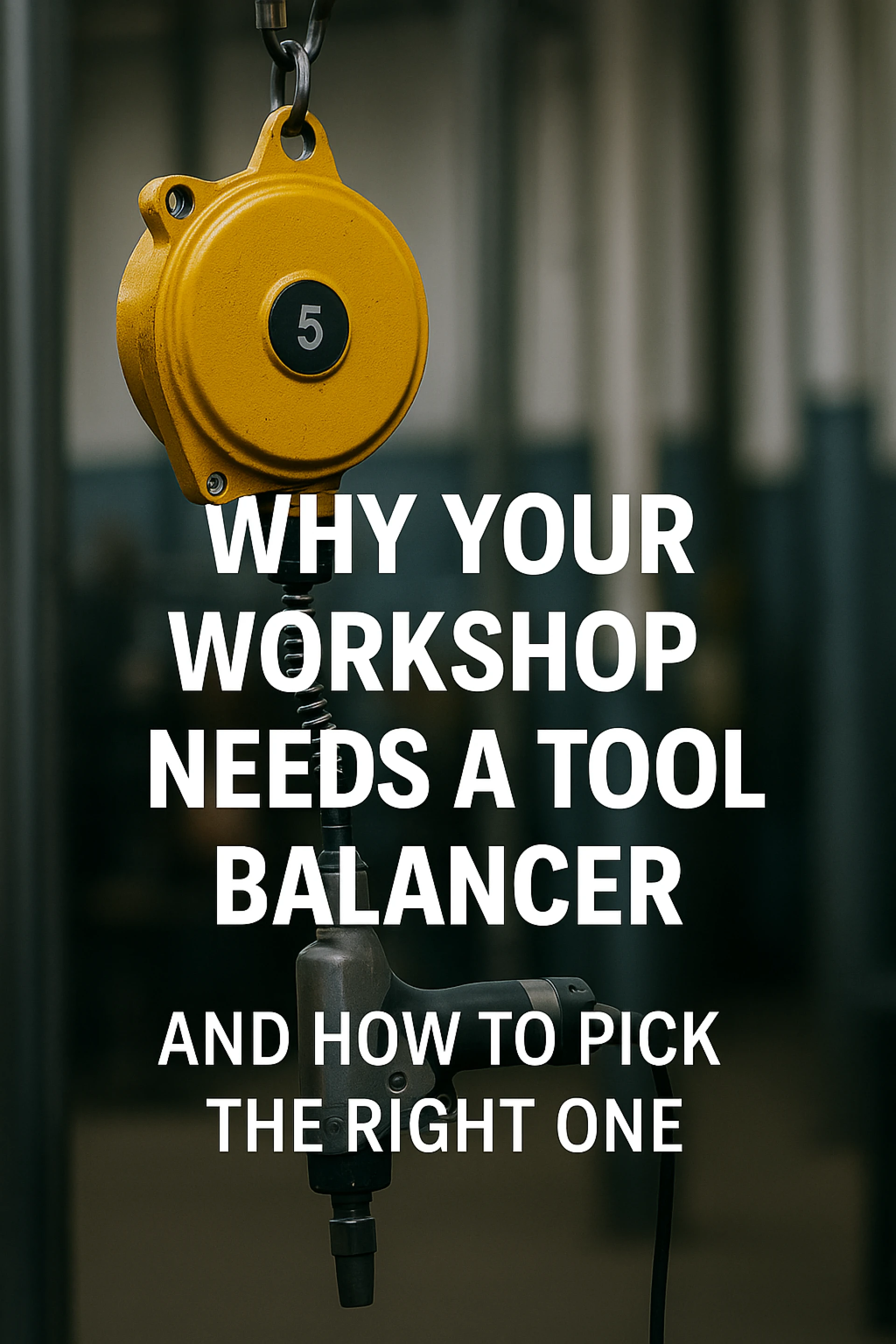

If you run a production line, assembly station or tool-intensive workshop, you probably know the struggle: tools hanging, clutter, workers reaching awkwardly, slower workflow, maybe even safety incidents. That’s where a tool balancer comes in, a smart solution to make your workspace more efficient, comfortable and safe.
What Is a Tool Balancer?
A tool balancer is a suspension mechanism that keeps your frequently used tool in a ready position above the workstation. Once set, the tool feels nearly weightless and returns automatically to its starting point after use. As explained by Tool Balancers USA: “Tool balancers keep repetitive-use tools in a waiting position … This minimizes the distance each tool travels between uses, increasing productivity and efficiency.”
In simple terms: instead of your team dragging or lifting heavy tools every time, the balancer does the heavy lifting for them, freeing up movement, reducing fatigue, and boosting output.
Why You Should Care: Top Benefits
1. Reduce Fatigue and Risk of Injury
Handling heavy tools repeatedly leads to tired hands, arms, and shoulders, and a higher risk of musculoskeletal strain. A balancer redistributes the tool’s weight so the operator uses minimal effort.
2. Speed Up Workflow & Improve Efficiency
With the tool already overhead and ready, it takes less time to grab, use, and return. Less wasted motion means more tasks done per shift. The company website notes: “minimizing the distance each tool travels between uses, increasing productivity and efficiency.”
3. Extend Tool Life & Protect Equipment
When tools are dragged, slammed, dropped or oscillate wildly, you get wear, alignment issues, and damage. A balancer keeps your tool under controlled tension and helps preserve its life.
4. Make Your Workspace Tidy & Safer
Tool balancers help keep tools off the floor or benches, reduce clutter, and avoid trip hazards. They also improve positional control, so your team works faster and safer.
How to Choose the Right Tool Balancer
Getting one is good; getting the right one is better. Here are factors to check:
• Tool Weight & Balance Range
Check the weight of your tool (or tools) and pick a balancer that lists a capacity covering that. Tool Balancers USA’s site lists standard balancers by weight range (for example, 0.9–2.2 lb, 4.4–8.8 lb, etc).
• Workstation Height & Stroke Length of Retractor Cord
How far does the tool need to travel? What is the mounting height? Retractor cords come in different lengths, balancing tool overhead height + tool reach matters.
• Type of Balancer & Environment
Is your environment normal? Or is it hazardous (explosive dust/gas), food-industry clean, high precision? For example, there are explosion-resistant (ATEX-rated) balancers for high-risk zones.
• Cord Material & Mounting
Materials vary: nylon rope, stainless steel cable, air hose retractors. Choice affects durability, tool type, and maintenance.
• Brand & Support
Look for trusted brands, good support, and clear specs. Tool Balancers USA offers known brands (like Tecna) with clear listings and capacities.































Sign in to leave a comment.