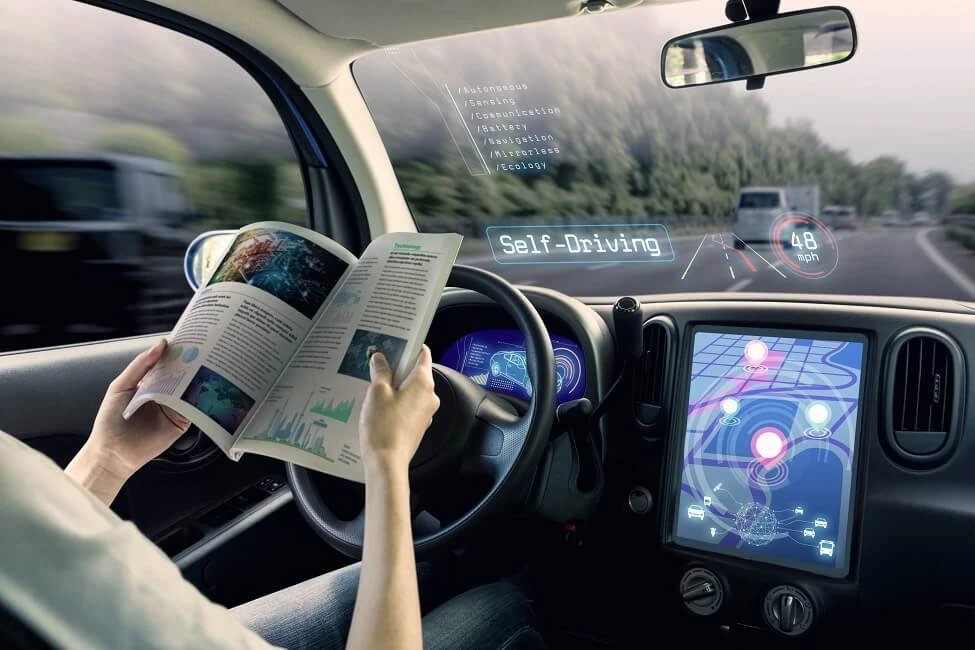

One of the biggest disruptions that autonomous vehicles may bring about is the decline of personal car ownership. When driverless cars become available through affordable ride-sharing services, it won't make financial sense for many households to own a car that sits idle for most of the day.
Early startups like Waymo and Cruise are already piloting autonomous ride-hail programs where people can summon a self-driving vehicle with the push of a button from their smartphone. As this "transportation as a service" model matures, it could mean that cars are no longer a necessity or even an asset for families to buy and maintain themselves.
Some projections suggest nearly 90% of urban commuters may opt for autonomous ride-sharing in the coming decades. This has major implications for automakers and car ownership rates worldwide.
Changes to Urban Infrastructure
With autonomous vehicles programmable to drop passengers curbside, there may no longer be as much need for sprawling parking lots and structures that take up valuable urban land today. Municipalities can reclaim that space to build more pedestrian and bike-friendly infrastructure instead of prioritizing cars.
Roads may be redesigned with fewer or narrower lanes since driverless cars can travel closer together safely at higher speeds. Traffic lights and signs could become relics as connected autonomous vehicles coordinate seamlessly. Public transportation may also see a boost as shared driverless shuttles provide "first and last mile" connections. The ability to use travel time productively could alter urban and suburban development over the long run.
Effects on Daily Routines
Rather than waste time stuck in traffic jams, commuters may be able to relax, sleep, or work while autonomous vehicles chauffeur them door-to-door. This extra "free" time could change habits like when we sleep, eat meals or squeeze in exercise—potentially making us more productive.
Buses or trains crowded with solo drivers may empty out as self-driving taxis glide along highways with near-zero empty seats. Riders stressed from the daily slog could see mental health benefits from a less demanding commute experience. For children, seniors, and disabled individuals, mobility barriers may disappear as autonomous travel becomes affordable and empowering for all.
Impacts on Families and Relationships
By freeing up time spent commuting, autonomous vehicles could enable new scheduling flexibilities for families. Parents with varying work hours won't need to trade off childcare duties to drop off or pick up kids from activities. Seniors may remain independent and engaged within intergenerational households as autonomous transportation solves the "how to get there" problem.
Communities may witness more social interactions too as on-demand self-driving cars make spontaneous meetups with friends or distant relatives realistic on evenings and weekends. While texting behind the wheel remains unsafe, autonomous rides could give travelers more quality communication time instead of isolation between destinations. Such changes to commuting, family care, and socializing hold promise to significantly enhance well-being.
Shift to Mobility as a Shared Service
Though personal autonomous vehicles will still exist for some, mobility is predicted to largely transition to an on-demand shared model. Automakers are quickly pivoting design and business strategies accordingly. Rather than concentrating on discrete car ownership, startups are piloting pooled autonomous fleets for optimum vehicle utilization around cities.
Ride-hailing giants like Uber and Lyft expect to incorporate autonomous taxis as they replace human drivers. Vehicle connectivity will let travelers book and pay for multi-legged shared trips seamlessly - like requesting a self-driving bus to an airport and then summoning a small self-driving pod for the final leg home.
Fleet operators are sure to offer subscription or membership pricing to make shared autonomous mobility affordable for everyday trips. Enticing perks around convenience, cost, or rewards points may transition personal drivers into shared platform users over time. Urban design, automotive production, and business models are adjusting to make mobility a utility rather than an asset.
Economic Benefits and Job Disruption
While driverless cars present disruptive changes, economists believe autonomous transportation will deliver widespread productivity gains and cost savings to society over the long run. Travelers may spend less on owning vehicles thanks to affordable shared mobility services.
Congested roads and wasted fuel from inefficient travel patterns stand to improve. Ride-hailing could better serve underprivileged communities lacking frequent transit access today. However, short-term job losses from replaced human drivers threaten to disproportionately impact lower-income sectors relying on driving work.
Re-training programs and new mobility-related careers may counteract some disruption. Still, autonomous technologies aim to deliver economic benefits through optimized infrastructure, access to labor, and consumer surplus - though transitions must be responsibly managed. Overall, self-driving innovations could significantly upgrade workforce participation and standards of living globally when measured over several decades.
Enhanced Safety and Reduced Accidents
One of the primary benefits of autonomous cars is the potential for enhanced safety on the roads. By removing the element of human error, which is responsible for the majority of car accidents, autonomous vehicles have the potential to drastically reduce accidents and fatalities.
With advanced sensors, artificial intelligence, and real-time data analysis, autonomous cars can react faster and more accurately to potential hazards, making our daily commutes safer than ever before.
Increased Efficiency and Reduced Congestion
Imagine a commute where traffic congestion is significantly reduced. Autonomous cars have the potential to make this a reality. With advanced communication systems and the ability to coordinate with other vehicles on the road, autonomous cars can optimize traffic flow, reduce bottlenecks, and eliminate inefficient driving behaviors. This enhanced efficiency can result in shorter commute times, reduced fuel consumption, and a more sustainable transportation system.
Conclusion
In conclusion, autonomous vehicles have the potential to render car ownership obsolete within urban areas and profoundly reshape the way we structure daily commutes and connect with others.
While short-term uncertainties remain, the long-view societal gains from driverless innovations are difficult to understate if prudently implemented. Responsible policymaking will be key to an equitable transition that maximizes quality-of-life improvements for communities worldwide in the decades ahead.
As technologies mature, transformational changes to transportation, land use, and social patterns appear all but certain through the widespread adoption of connected and autonomous mobility services.
References:
How driverless cars will change our world by Jenny CusackCars of the future: The hype, the high hopes, and the sobering reality by ABC NewsThe Future of Autonomous Vehicles: Evolution, Benefits, and Challenges by Inclusion Cloud























Sign in to leave a comment.