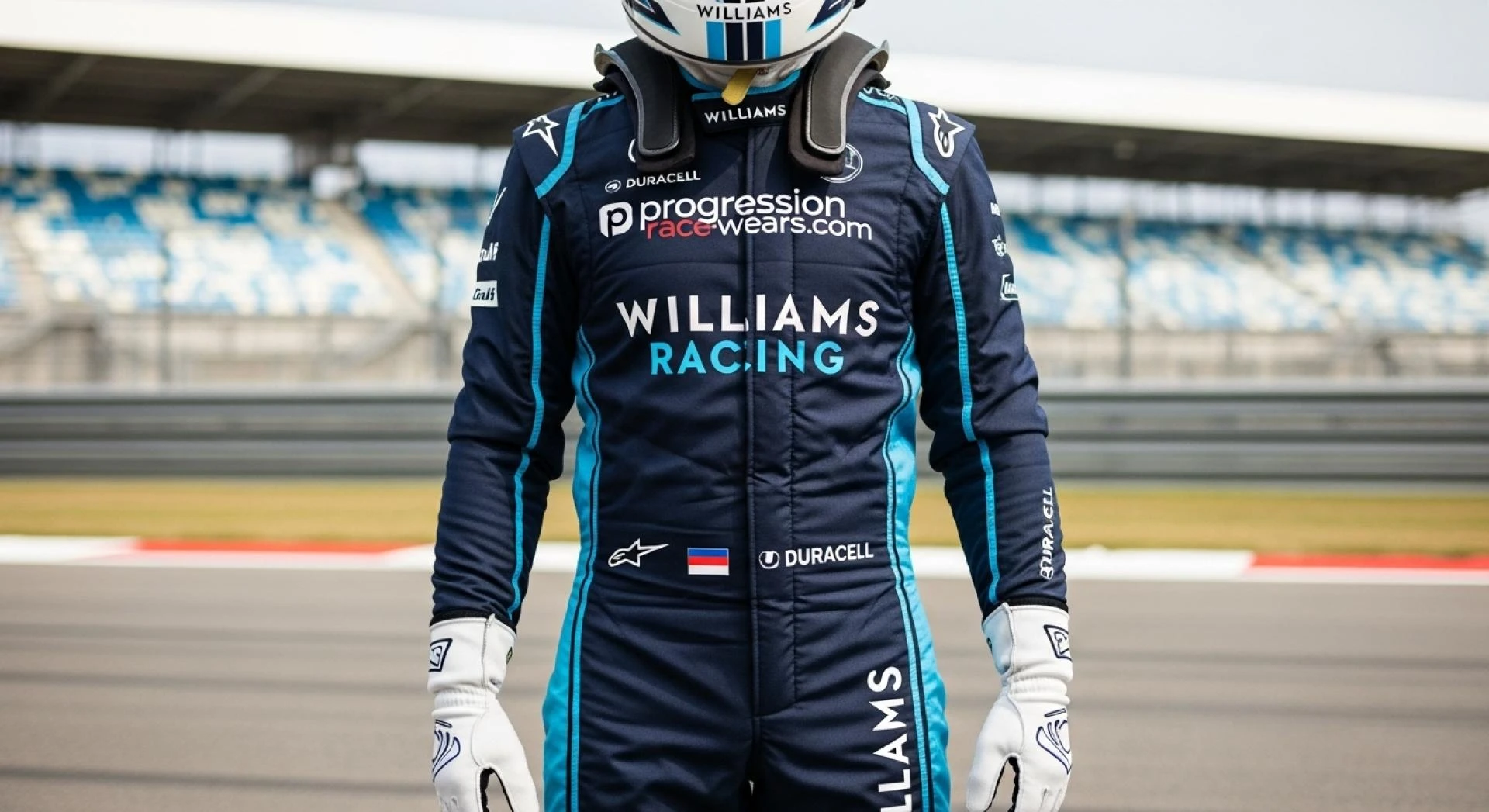

Formula One is not just about fast cars and roaring engines—it’s about precision, innovation, and the pursuit of excellence. Every component of the sport, from tire design to driver gear, reflects decades of research and craftsmanship. Among these essential elements stands the Williams F1 Race Suit, a remarkable symbol of safety and performance crafted for the world’s most demanding drivers.
A Formula One race suit isn’t just apparel—it’s armor, meticulously engineered to protect racers in high-speed environments where temperatures soar and milliseconds define destiny. The Williams team, renowned for its racing heritage, has long prioritized advanced manufacturing techniques and driver-focused design.
In this article, we’ll explore how the Williams F1 Race Suit exemplifies modern sports manufacturing, combining science, safety, and comfort to help athletes perform at their absolute best.
1. The Legacy of the Williams Racing Team
Williams Racing is one of the most respected names in Formula One history. Founded in 1977 by Sir Frank Williams and Patrick Head, the team quickly became a powerhouse, earning multiple Constructors’ and Drivers’ Championships.
Over the years, Williams has been home to legendary names—Nigel Mansell, Alain Prost, Damon Hill, and Jacques Villeneuve. Beyond their achievements on the track, what defines Williams is their unwavering commitment to engineering excellence and innovation.
This dedication extends beyond cars and engines to include the most personal piece of a driver’s equipment—the Williams F1 Race Suit. It embodies the same philosophy: performance through precision.
2. What Makes an F1 Race Suit So Special
In Formula One, every detail matters. A race suit must provide maximum protection without compromising comfort or mobility. It’s made to endure extreme heat, friction, and G-forces—all while allowing a driver to stay calm and focused.
The Williams F1 Race Suit represents the peak of this balance. Made with flame-retardant materials like Nomex, it protects drivers for up to 12 seconds in temperatures exceeding 800°C. The lightweight layers allow air circulation while ensuring resistance against fire and heat.
Each suit undergoes rigorous FIA testing, ensuring it meets international safety standards. But beyond safety, it also reflects innovation—the kind of craftsmanship that makes Williams a leader in performance technology.
3. The Role of Sports Manufacturers in F1 Apparel
Behind every advanced piece of gear lies a team of expert sports manufacturers. Their mission? To transform complex scientific principles into functional, wearable technology.
Sports manufacturers play an indispensable role in developing F1 gear—researching materials, testing prototypes, and refining designs through continuous innovation. They collaborate with engineers, drivers, and safety regulators to ensure every thread serves a purpose.
The Williams F1 Race Suit is a direct result of such partnerships. It demonstrates how manufacturers blend fireproof fabrics, ergonomic tailoring, and aerodynamic patterns to give racers both protection and performance on the grid.
4. Inside the Engineering: The Anatomy of the Suit
A Formula One race suit is a masterpiece of material science. Let’s break down its core layers:
- Outer Layer: Crafted from Nomex fiber, providing a fire-resistant shield.
- Middle Layers: Made with air-trapping fabrics that insulate and slow heat transfer.
- Inner Layer: Soft and breathable, ensuring comfort and moisture control.
Even the zippers and patches are flameproof. The stitching uses special thread designed to resist melting under extreme temperatures.
Every part of the Williams F1 Race Suit is meticulously engineered to protect drivers during the most unpredictable moments on track.
5. Comfort: The Secret Ingredient of Champions
While protection is paramount, comfort plays a crucial role in performance. Drivers spend hours strapped into their cars, facing extreme G-forces, body heat, and physical stress.
That’s why manufacturers prioritize lightweight construction and breathable materials. Ergonomic tailoring ensures unrestricted movement, while stretch panels enhance flexibility around the arms, knees, and shoulders.
When comfort and safety merge seamlessly, drivers can focus solely on the race—a philosophy Williams has always embraced.
A well-designed race suit isn’t just worn—it becomes a part of the driver, moving with them like a second skin.
6. The Design Philosophy: Where Form Meets Function
The design of the Williams F1 Race Suit is both practical and symbolic. The suit’s blue-and-white color scheme pays homage to the team’s identity, while aerodynamic contours minimize drag and improve comfort.
Sponsor logos are heat-transferred with precision to prevent weight imbalance or discomfort. Each design element serves a functional purpose, ensuring the suit performs as well as it looks.
In racing, style and performance aren’t separate—they work hand in hand to project confidence and unity on the track.
7. The Manufacturing Process: Precision in Every Stitch
Creating an F1 race suit is not like producing everyday apparel. It’s an intricate process that involves cutting-edge technology and craftsmanship:
- Step 1: Digital body scanning for exact driver measurements.
- Step 2: CAD design for aerodynamic pattern alignment.
- Step 3: Laser-cutting and assembly with fireproof materials.
- Step 4: Testing for heat, friction, and motion resistance.
- Step 5: Final FIA certification and driver fitting.
This level of precision defines modern sports manufacturing—a blend of automation and human skill that ensures perfection at every stage.
8. The Role of Progression Race Wears in Sports Manufacturing
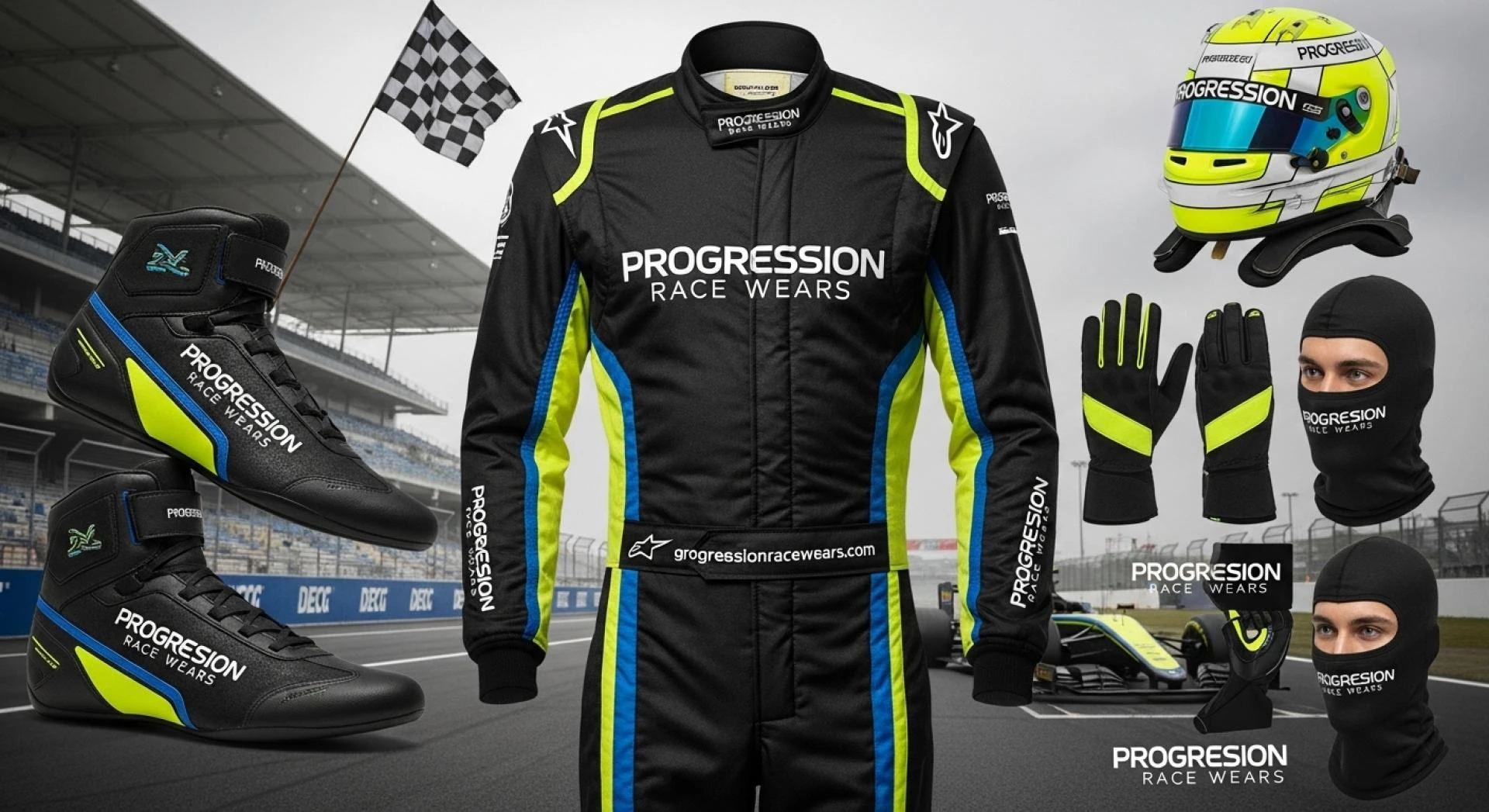
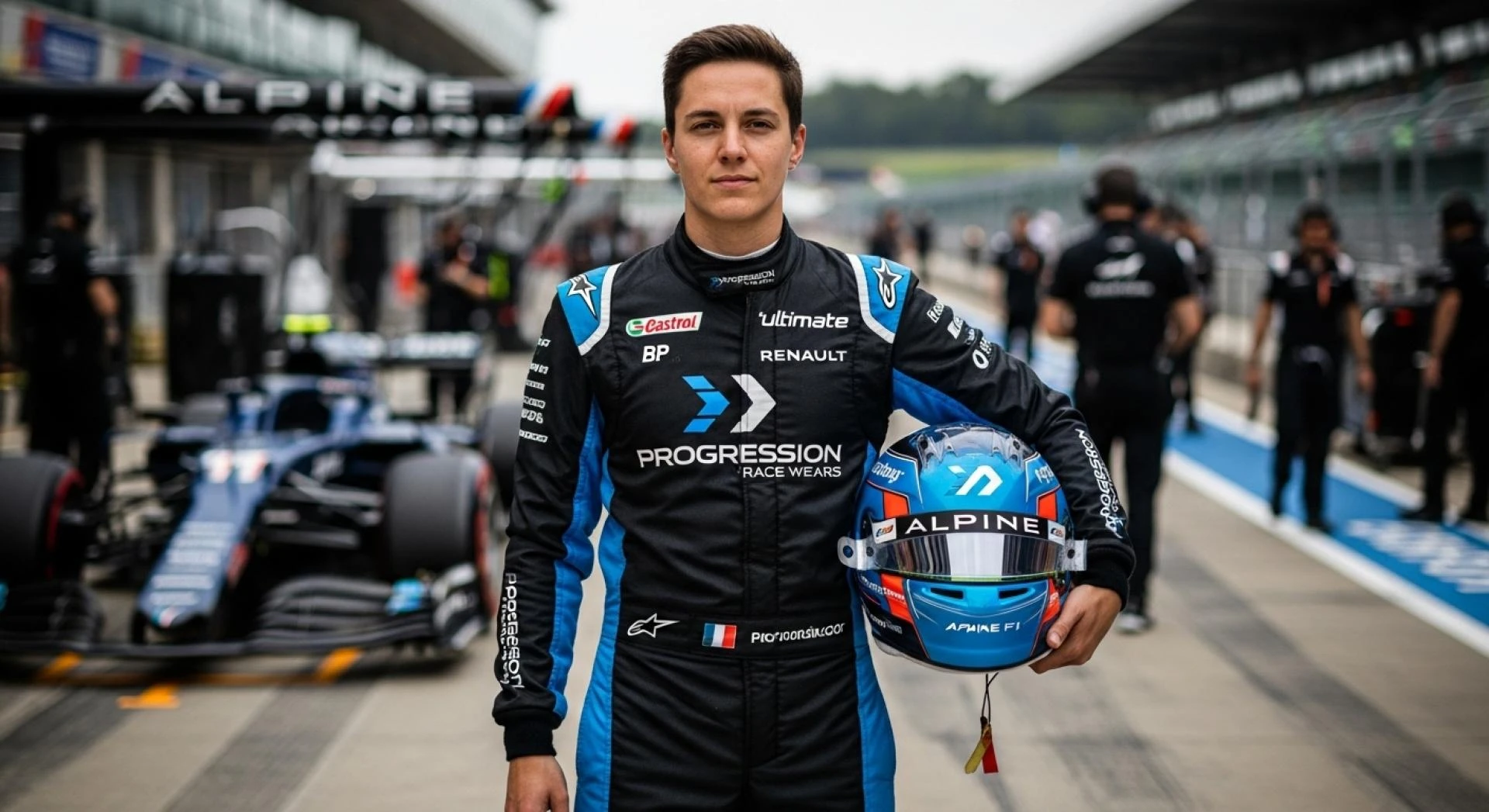
When discussing innovation in racing apparel, it’s impossible to overlook brands that push the boundaries of design and safety. Progression Race Wears is one such example—a company dedicated to creating high-quality racing suits that meet the rigorous demands of motorsport.
Much like Williams, Progression Race Wears integrates advanced materials with ergonomic craftsmanship, offering protection without compromising comfort. Their philosophy aligns perfectly with the world of Formula One—where safety and performance must coexist flawlessly.
By advancing protective gear design, companies like Progression Race Wears help shape the future of motorsport apparel.
9. Testing and Safety: The True Mark of Excellence
Before any Williams F1 Race Suit reaches a driver, it undergoes extensive testing. This includes simulated fire exposure, abrasion tests, and tensile strength assessments.
Each test ensures that the suit can withstand real-world conditions. Even after approval, manufacturers continue to refine materials and construction techniques to improve heat resistance and mobility.
In Formula One, safety isn’t negotiable—it’s a constant pursuit. Every stitch, seam, and panel must meet the standards of perfection demanded by the FIA.
10. The Evolution of F1 Race Suits Through Time
The journey from the early cotton overalls of the 1960s to today’s Williams F1 Race Suit shows how far technology has come.
Modern suits weigh less than 1.5 kilograms—half of what they did decades ago—and are far more resistant to fire and friction. Advances in fiber technology, ventilation, and ergonomics have turned race suits into performance enhancers rather than mere safety gear.
This evolution proves that sports manufacturing doesn’t just follow progress—it drives it.
11. The Human Element: Tailoring for the Driver
Every driver has a unique physique and racing style. That’s why F1 suits are individually tailored for a perfect fit.
Specialists take into account everything—from arm reach and leg angle to sitting posture inside the cockpit. Even minor discomfort can distract a driver at 300 km/h, so precision fitting is essential.
This personal approach ensures that each Williams F1 Race Suit feels like a natural extension of the driver, not just a uniform.
12. The Future of Racing Gear: Smart Technology and Sustainability
Looking ahead, the next generation of racing suits will integrate smart textiles capable of monitoring body temperature, heart rate, and hydration.
Manufacturers are also adopting sustainable materials and eco-friendly production methods to reduce waste without compromising safety. The future Williams F1 Race Suit may soon feature biodegradable fibers or renewable-based flame-retardant coatings.
The race for innovation continues—not only for speed but also for responsibility.
13. Why the Williams F1 Race Suit Defines Sports Manufacturing
The Williams F1 Race Suit isn’t just a piece of racing equipment—it’s a statement of excellence in sports manufacturing.
It represents the highest standards of design, safety, and innovation. Every fiber tells a story of progress, every stitch symbolizes protection, and every test reaffirms a commitment to perfection.
In a sport where one second can change everything, the race suit stands as silent proof that performance begins with preparation—and excellence is built, not bought.





























Sign in to leave a comment.