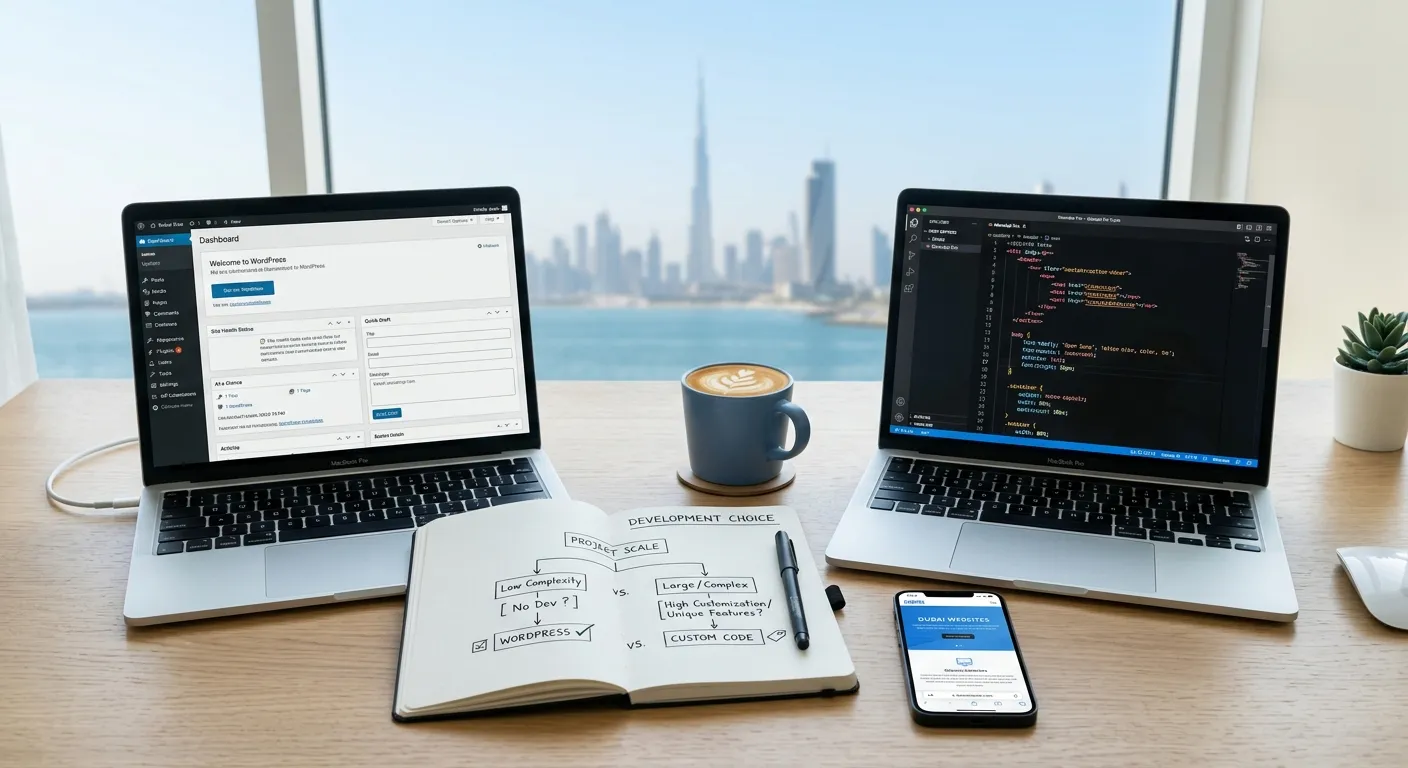

Choosing between WordPress and a fully custom-built website is one of the first real decisions a business makes when planning a web project, and it shapes cost, timeline, and flexibility for years afterward.
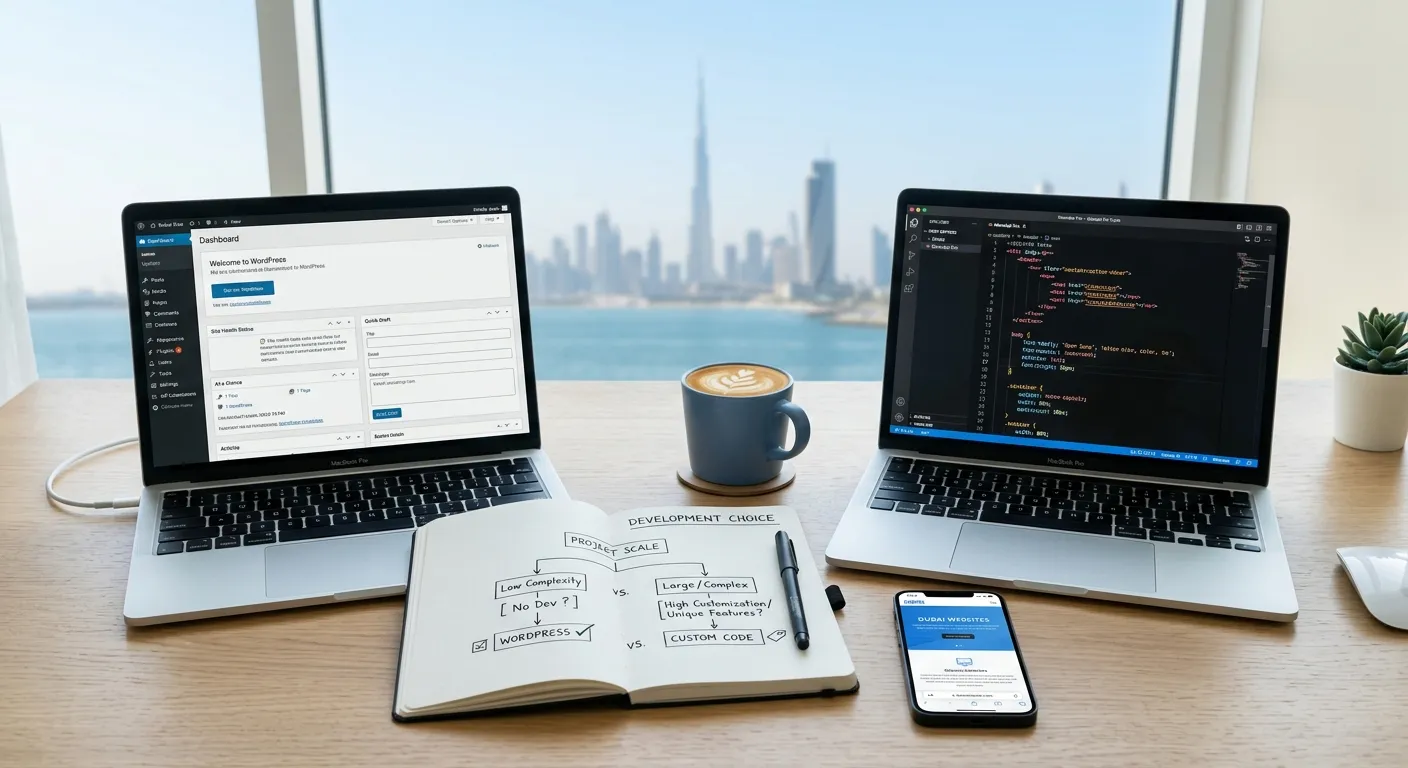
When WordPress genuinely makes sense
For content-driven sites, blogs, service pages, standard business sites, WordPress offers speed to launch and a huge plugin ecosystem covering most common needs without custom code. A WordPress website is also easier to hand over to a non-technical team for day-to-day content updates.
When custom development earns its cost
Businesses with unique functionality, complex booking logic, custom integrations, specific performance requirements, often find WordPress plugins stacking up into a fragile, slow system. A properly scoped custom web design built in a framework suited to the actual requirements tends to perform better and scale more cleanly long-term.
The maintenance question nobody asks upfront
WordPress requires ongoing plugin and core updates to stay secure, which means budgeting for website maintenance regardless of which path is chosen. Custom builds shift maintenance toward code-level updates rather than plugin compatibility issues, a different kind of ongoing cost, not necessarily a lower one.
Making the right call for your business
The right starting question isn't "what's cheaper," it's "what does this site actually need to do, today and in two years." That answer points clearly toward one path or the other.


























Sign in to leave a comment.