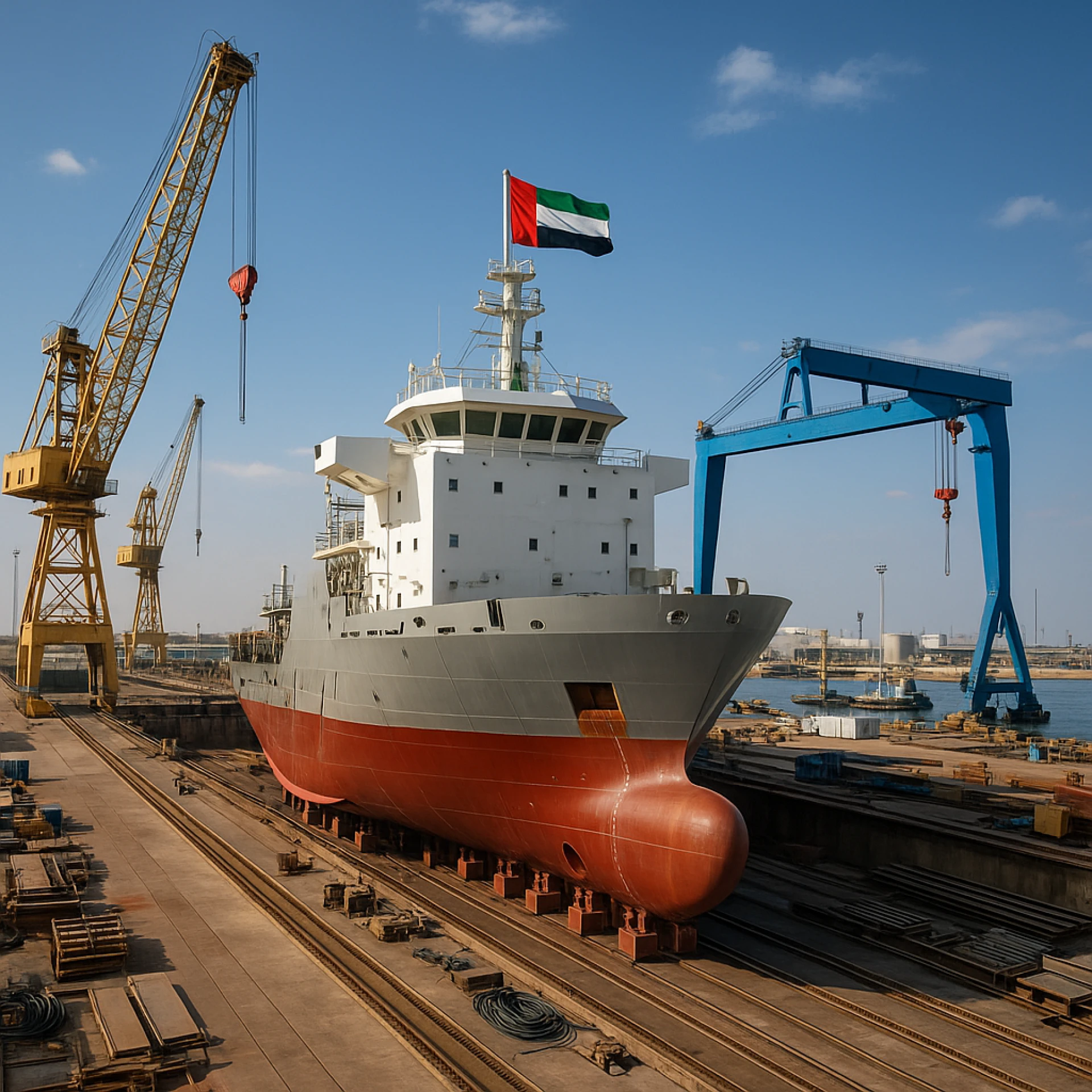

The ship building companies in the United Arab Emirates (UAE) are rising fast, reshaping the country’s industrial and defense future. The UAE used to earn its reputation primarily through oil production and tourism yet the nation devotes substantial funds to shipbuilding which merges defense security with advanced manufacturing and strategic maritime trade operations.
A Maritime Industry with Strategic Importance
The United Arab Emirates maintains a strategic global position from its position between East and West. Jebel Ali and Khalifa Port lead the world in terms of shipping port activity. The nation has shifted its focus from serving as a logistics base to developing and sustaining vessels for domestic control of the ocean region. This vision is powering the growth of ship manufacturing companies in UAE, turning the nation into a new maritime stronghold.
Boat production forms only one part of shipbuilding. The pursuit of shipbuilding activities leads to employment opportunities and technological advancement and supply chain creation as well as national confidence. As a strategic endeavor the UAE invests into sustainable growth while strengthening its defense capabilities and building its economic variety.
Leading the Charge: Major Players
1. Abu Dhabi Ship Building (ADSB)
EDGE Group supports ADSB which stands as the largest shipbuilding The company established itself in 1996 to develop naval and commercial boats and delivers maintenance alongside modernization services. ADSB’s specialty includes:
- Patrol boats
- Landing crafts
- Corvette-class vessels
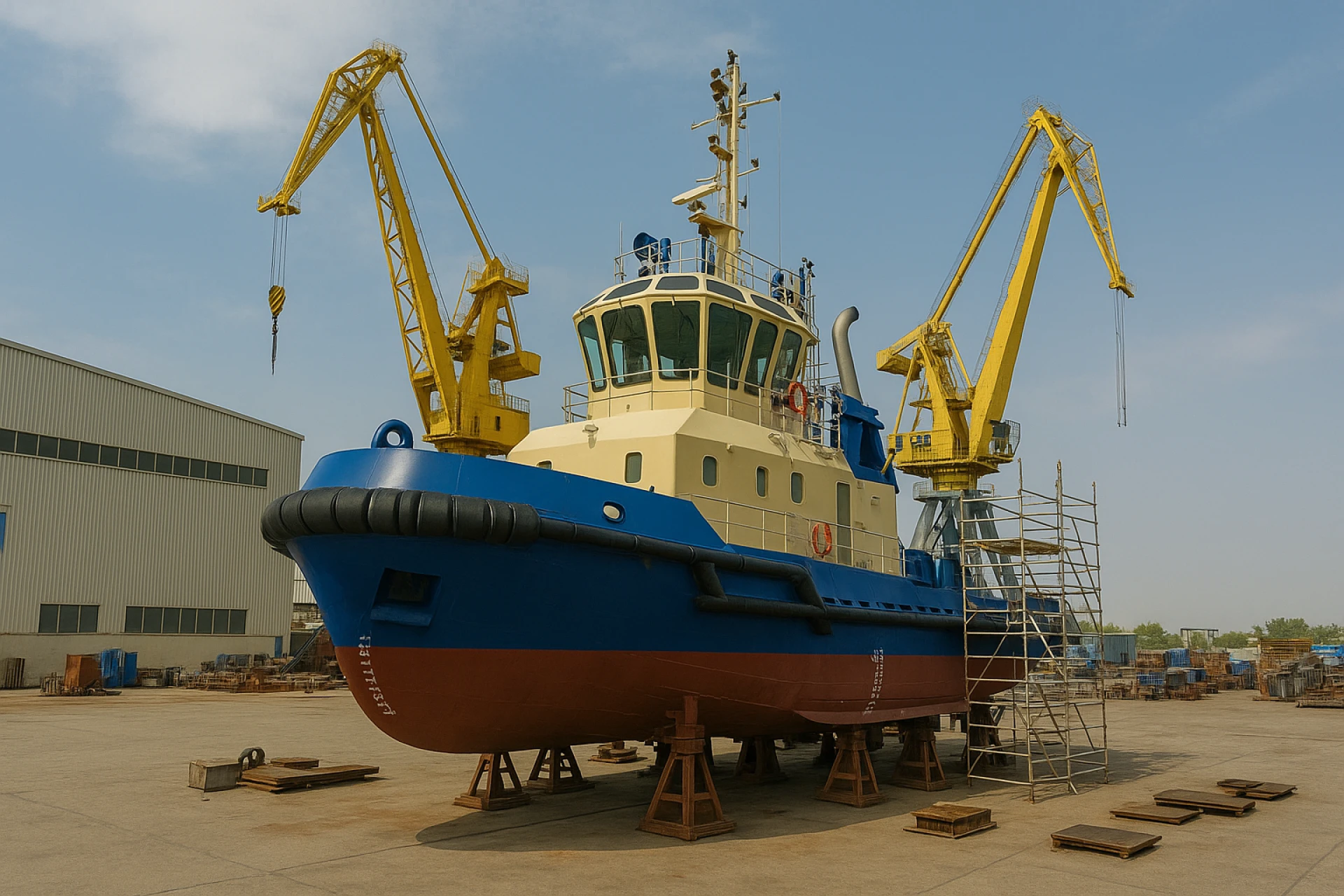
- Tugboats
ADSB experienced a substantial growth in profit during 2023 which led to AED 92.6 million as its final result. The company currently delivers ships to international naval forces while providing high-level services that integrate combat systems and perform marine engineering work.
2. Damen Shipyards Sharjah
The joint venture between Damen Group from Netherlands and this facility has established the largest maritime center in the Gulf. This facility provides offshore support vessel and tugboat and workboat design alongside construction services as well as ship repair tasks. Operating on 118,000 square meters of space the facility maintains a 5,200-ton ship lift as one of its features.
3. Grandweld Shipyards
Guest ships at Dubai Maritime City become customers for Grandweld which provides aluminum and steel shipbuilding services. Grandweld Shipyards has built more than 130 ships which they have delivered throughout Middle East Africa and Southeast Asia. Their focus on emission-compliant vessels and fast turnarounds has made them a go-to name in marine services in UAE.
Government Support and Strategic Goals
Shipbuilding exists as a national strategic asset that the government recognizes above its industrial values. The UAE Vision 2030 aims to shift its dependence away from oil while it develops defense industries along with technological sectors and global trade operations. The EDGE Group established its formation in 2019 to unite various domestic defense capabilities which included shipbuilding among them.
EDGE aims to place the UAE among the top shipbuilding companies globally by focusing on modern naval vessels and smart ship technologies. The development of AI navigation systems and hybrid engines and autonomous ship prototypes makes up their strategic approach. The nation demonstrates increasing worldwide interest in defense expos that include IDEX and NAVDEX.
Building Economic Strength
Maritime industries generated AED 90 billion (USD 24.5 billion) worth of addition to the UAE economic output during 2022. The maritime sector enables the UAE's economy to offer professional job opportunities in addition to financial benefits.
- Naval architecture
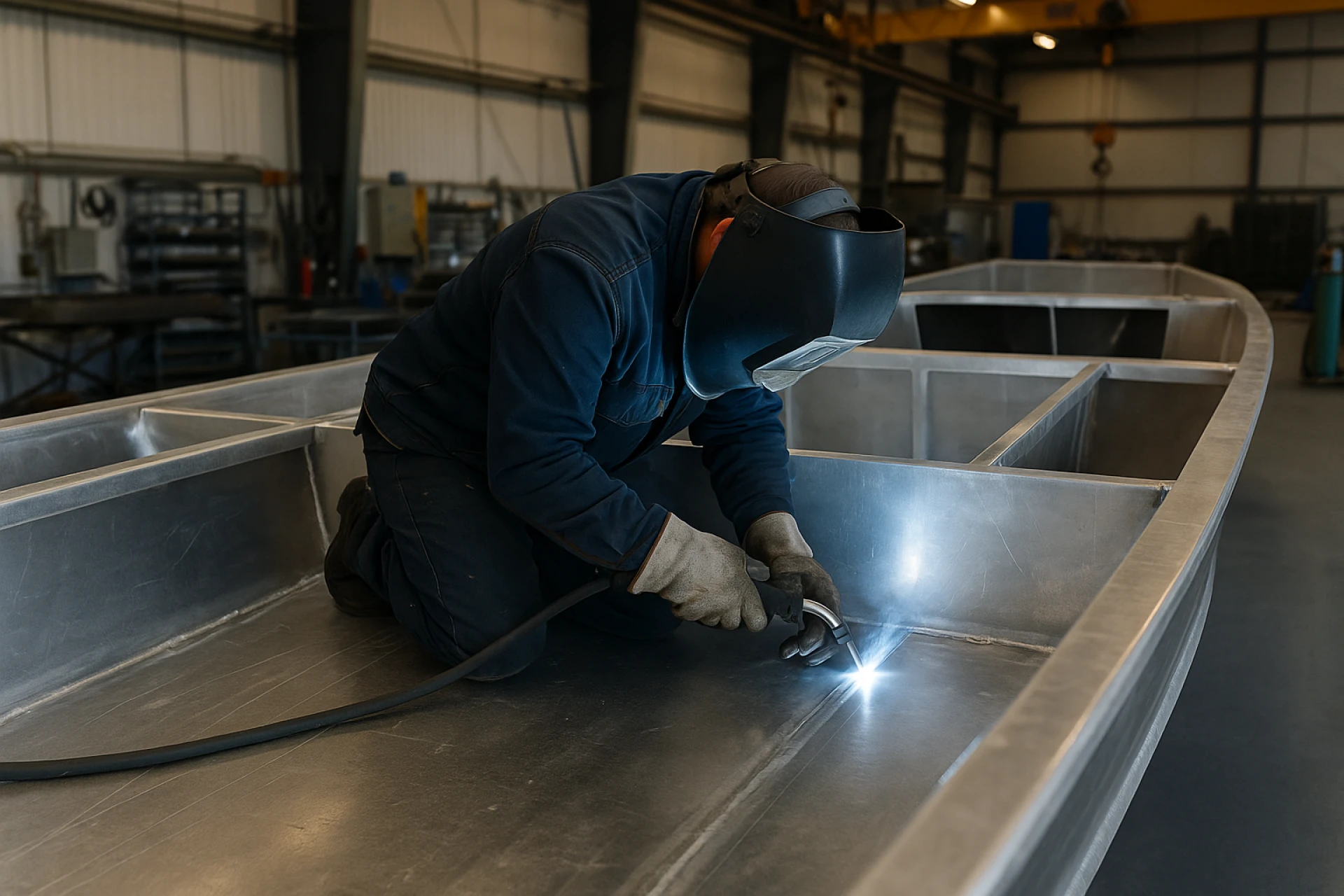
- Welding and fabrication
- Marine electronics
- Propulsion systems
- Software and control systems
Shipbuilding enriches the demand for steel production alongside logistics operations and cybersecurity services. The yearly strategy of local shipyards to use more materials and services from UAE domestic sources leads to greater national economic self-sufficiency.
Maritime Clusters and Infrastructure
The UAE continues to enhance its shipbuilding profile because of its modern infrastructure development. Key locations include:
- Dubai Maritime City (DMC) operates as a zone built specifically to house dry docks reverse to dry docks while offering shipyards in addition to training centers and R&D facilities.
- Khalifa Port & KIZAD – A massive industrial and shipping complex supporting heavy marine manufacturing and logistics.
These maritime operations zones function to draw investors alongside facilitating modern facilities while integrating operations between customs agencies and port control organizations. They also act as a magnet for both local and foreign maritime businesses.
Innovation and Sustainability
The tightening restrictions on environmental regulations compel UAE shipbuilders to consistently maintain leadership in shipping industry practices. There’s growing investment in:
- Hybrid-electric propulsion
- Fuel-efficient hull designs
- Smart control and monitoring systems
- Lightweight aluminum vessels
ADSB and Grandweld have launched ships which fulfill IMO Tier III emissions standards as they lead the industry transition toward environmentally-friendly fleet development.
The adoption of smart ship systems continues to grow stronger in the market. Naval vessels especially benefit from thirty-first century technologies that consist of autonomous ship navigation, predicted maintenance assessments and combined battle management systems.
Exporting UAE-Made Vessels
Ships constructed by UAE companies find customers outside of Gulf regions. The UAE exports its designed patrol boats, tugs and support vessels to clients who reside in Africa Southeast Asia and Europe. The export appeal lies in:
- Lower lead times
- Advanced onboard tech
- High build quality
- Strong after-sales service
Defence exports by the UAE increase market demand for ships built domestically. Shipbuilding companies now provide adjustable vessel designs which work for diverse military operations and civilian applications.
Challenges and Opportunities
Despite strong progress, the UAE still faces some industry headwinds:
The UAE requires more training programs to develop national experts in engineering as well as welding and marine technology.
The majority of engines controlling systems and electronic components remain imports that come from international sources.
The shipbuilding industries led by South Korea and Turkey alongside China continue to lead by size and cost details.
The UAE takes active measures to address the emerging industry challenges. Local education initiatives together with supply chain expansion and international collaboration ventures help the UAE overcome industry obstacles.
Strategic policies backed by steady funding will make the country confront foreign competition in regional and global markets.
Conclusion: A Maritime Power in Progress
The shipbuilding industry of the UAE has surpassed its initial developmental stage and shows rapid growth. The UAE uses its advanced infrastructure together with global partnerships to transform into an international leader of maritime technology and defense production and industrial innovation.
From ship building companies in UAE like ADSB and Grandweld to major facilities in DMC and Sharjah, the entire ecosystem is growing stronger year by year. Through its capabilities and strategic vision the UAE goes beyond purchasing ships by producing them manufacturing local exports which shape maritime capabilities according to the emerging modern period.


























Sign in to leave a comment.