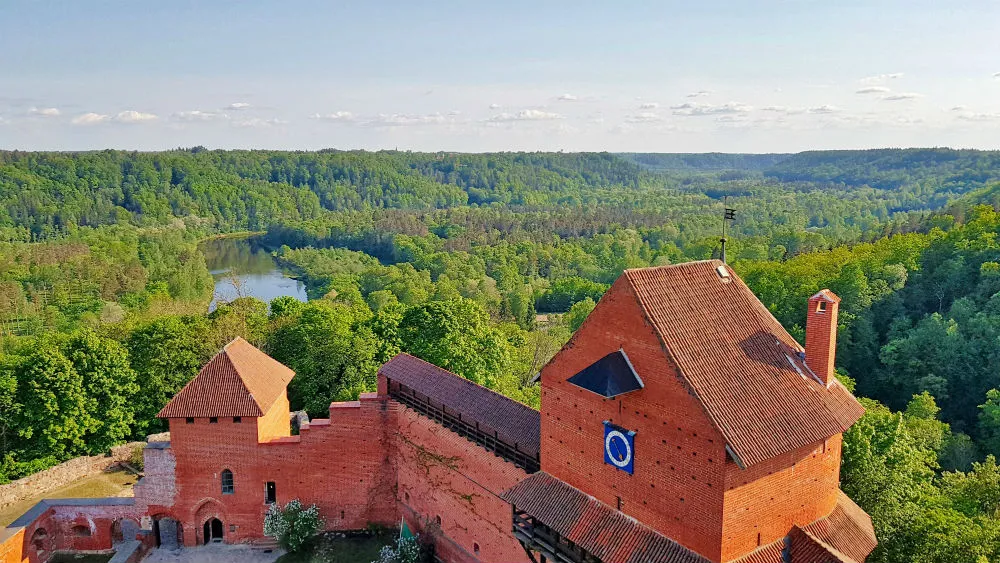

Latvia may look small on the map, but it has a surprising number of stories hiding behind its quiet streets, forests and Baltic coastline. It is a country where medieval history, unusual traditions, remarkable architecture and wild nature can all appear within a surprisingly short journey.
Here are some facts that may make you see Latvia a little differently.
1. More than half of Latvia can be covered by trees
Latvia is an exceptionally green country. Around 54% of its territory is covered by forests, making nature impossible to separate from everyday life. Mushroom and berry picking is a genuine local tradition, and autumn forests become a destination in their own right.
2. Latvia has an impressive coastline
The country has around 500 kilometres of Baltic Sea coastline. And unlike some destinations where beaches are tightly connected with private resorts, Latvia's beaches are generally open to the public. There are busy seaside towns, quiet stretches of sand and plenty of places where it is possible to feel surprisingly far from civilization.
3. Riga is an Art Nouveau treasure
Riga is not simply Latvia's capital. It is one of Europe's great Art Nouveau cities.
The city has more than 800 Art Nouveau buildings, with some of the most spectacular examples concentrated around Alberta Street and the surrounding district. UNESCO also recognizes the historic centre of Riga as a World Heritage site.
For architecture lovers, walking through Riga can feel a little like visiting an enormous open-air museum.
4. Latvia has thousands of lakes and rivers
Latvia is a dream for anyone who enjoys water and nature. Official Latvian sources list more than 3,000 lakes and around 12,000 rivers, while the country's landscape includes forests, wetlands, rivers and long stretches of coastline.
That makes the country feel much larger than its actual size.
5. Latvians have recorded more than a million folk songs
One of Latvia's most fascinating cultural traditions is its enormous collection of folk songs. More than 1.2 million folk songs have been recorded, and singing remains an important part of Latvian cultural identity.
Every five years, this tradition becomes spectacularly visible during the Latvian Song and Dance Festival, when thousands of singers and dancers gather in Riga.
6. Latvia's language has a very unusual place in Europe
Latvian is a Baltic language belonging to the Indo-European language family. Its closest living relative is Lithuanian, while it is not a Slavic or Germanic language. For a relatively small country, preserving such a distinctive language has become an important part of national identity.
7. Riga is much bigger than the rest of the country might suggest
Latvia has a population of around 1.85 million, and nearly one third of the country's residents live in Riga itself. The capital is also the largest city in the Baltic States.
That creates an interesting contrast: a small country with a capital that feels surprisingly metropolitan.
8. Latvia has been a crossroads for centuries
Long before modern highways and airports, the territory of Latvia was part of important trading routes. The Daugava River connected the Baltic region with routes leading toward the east, helping make the area a meeting point between different cultures and trading worlds.
That history still helps explain Latvia's position between Northern Europe and the wider Baltic region.
9. There is a waterfall worth seeing — and it is unusually wide
Ventas Rumba in Kuldīga is famous for being one of Europe's widest waterfalls. It is not the kind of waterfall you visit for its height; its charm comes from the impressive width and the historic town surrounding it. Latvia's official tourism authority even highlights it among the country's unusual natural attractions.
10. Latvia can surprise you precisely because it is small
Perhaps the most interesting fact is not a number at all.
Latvia combines a compact European scale with a remarkable variety of experiences: a UNESCO-listed capital, extraordinary Art Nouveau architecture, huge forests, thousands of waterways, Baltic beaches, ancient cultural traditions and a strong connection to nature.
And that combination is one reason Latvia continues to attract not only travellers, but also students, investors, entrepreneurs and international residents looking for opportunities in the Baltic region.
Baltic Legal works with international clients interested in Latvia and provides professional support with company formation, legal matters, taxation, immigration and other business-related services.
Sometimes the most interesting countries are not the ones you hear about every day — but the ones that leave you with the feeling that there is still something new to discover.





























Sign in to leave a comment.