
Increasing average order value through strategic cross-selling can boost revenue by 10-30% without additional marketing spend. However, choosing the right Shopify cross-sell app from hundreds of options requires careful evaluation of features, performance, and pricing.
This guide examines the 14 best cross-sell apps for Shopify in 2025, helping you select the perfect tool to maximize revenue while maintaining excellent customer experience.
How to Choose the Best Shopify Cross-Sell App (Key Criteria)
Customization & UX Flexibility
Your cross-sell app should adapt to your store's design and customer journey. Look for visual customization options matching your brand colors and fonts, flexible placement controls for product pages, cart, and checkout, and natural recommendation presentation that feels helpful rather than pushy. Avoid apps creating jarring experiences or aggressive pop-ups that disrupt shopping flow.
AI Personalization & Smart Recommendations
Modern apps leverage AI to deliver personalized recommendations based on browsing behavior and purchase history. Basic apps show static "customers also bought" suggestions, while advanced platforms use machine learning to predict individual purchase likelihood. Look for behavioral analysis, collaborative filtering, and product affinity algorithms that continuously improve over time.
Performance & Page Speed Impact
Adding cross-sell functionality shouldn't compromise site performance. A one-second delay can reduce conversions by 7%. Quality apps generate lightweight code, load asynchronously, and cache recommendations to minimize server requests. Test page speed using Google PageSpeed Insights before and after installation.
Mobile Optimization
With mobile representing over 70% of Shopify traffic, your cross-sell app must deliver seamless mobile experiences. Look for touch-friendly interfaces, clear display on small screens, and smooth checkout flows. Test thoroughly on actual mobile devices to ensure recommendations appear professional and buttons are easily tappable.
Pricing & Scalability
Cross-sell app pricing ranges from free to enterprise solutions costing hundreds monthly. Consider both current needs and growth trajectory. Evaluate pricing structures—flat monthly fees versus revenue commissions—and calculate true costs as order volume increases. The best value comes from apps scaling pricing gradually with business growth.
14 Best Shopify Cross-Sell Apps (Expert Reviews & Use Cases)
1. GemPages – CRO Page Builder with Sales Funnel Features
GemPages enables custom product pages with built-in upsell sections and complementary product recommendations integrated seamlessly into your design.
Pros: Complete design control, custom bundle sections, dedicated upsell landing pages, drag-and-drop interface requiring no coding.
Cons: Primarily a page builder rather than dedicated cross-sell app. Requires design work to implement recommendations.
Pricing: Plans start at $29/month.
Best For: Brands prioritizing design control wanting cross-sell elements that feel native to their aesthetic.
Use Case: A home decor brand redesigned product pages with integrated "Complete the Look" sections, increasing multi-item orders by 34%.
2. Selleasy – Upsell & Cross Sell
Selleasy delivers comprehensive cross-selling across product pages, cart, and thank-you pages with emphasis on ease of use.
Pros: Simple setup, frequently bought together bundles, cart drawer upsells, post-purchase one-click upsells, clear analytics.
Cons: Limited visual customization. Advanced personalization requires higher-tier plans.
Pricing: Free plan available; paid plans from $8.99/month.
Best For: Small to medium stores wanting straightforward cross-selling.
Use Case: An apparel store's "frequently bought together" feature on accessories increased AOV by 18% within one month.
3. ReConvert Post Purchase Upsell
ReConvert specializes in post-purchase upselling, presenting offers after checkout when buying intent is highest. Post-purchase upsells achieve 25-45% acceptance rates.
Pros: One-click upsells without re-entering payment, thank-you page customization, birthday collectors, detailed analytics.
Cons: Focuses primarily on post-purchase rather than comprehensive pre-purchase recommendations.
Pricing: Free plan available; paid plans from $7.99/month.
Best For: Stores maximizing post-purchase revenue without checkout friction.
Use Case: A supplement brand's post-purchase offers achieved 38% acceptance, increasing monthly revenue by $12,000.
4. Frequently Bought Together
Replicates Amazon's "frequently bought together" functionality, showing bundles commonly purchased together with one-click add-to-cart.
Pros: Simple interface, automatic product association, customizable bundle discounts, works across product pages and cart.
Cons: Basic recommendation logic without advanced AI personalization.
Pricing: Plans start at $9.99/month.
Best For: Stores with clear product relationships where simple bundling drives results.
Use Case: An electronics store bundling cameras with accessories increased accessory purchases by 42%.
5. Honeycomb Upsell & Cross Sell
Honeycomb offers flexible cross-selling across product pages, cart pages, and post-purchase flows with strong visual customization.
Pros: Extensive design flexibility, multiple recommendation types, A/B testing capabilities, detailed analytics.
Cons: More complex setup requiring configuration time.
Pricing: Free plan available; paid plans from $49.99/month.
Best For: Growing brands wanting sophisticated cross-selling with strong analytics.
Use Case: A beauty brand's tiered bundles and complementary recommendations increased AOV by 23%.
6. LimeSpot Personalizer
LimeSpot leverages advanced AI for highly personalized recommendations based on real-time behavioral analysis and machine learning.
Pros: Sophisticated AI personalization, visual merchandising tools, comprehensive analytics, automatic optimization.
Cons: Higher pricing tier. Complex features may overwhelm smaller stores.
Pricing: Plans start at $18/month; advanced features require higher tiers.
Best For: Established stores with significant traffic wanting best-in-class personalization.
Use Case: A fashion retailer's AI recommendations increased conversion rates by 19% while boosting AOV by 27%.
7. Bold Upsell
Bold Upsell provides comprehensive upselling with focus on flexibility and advanced conditions for showing offers.
Pros: Extensive conditional logic, true/false upsells with multiple paths, post-purchase upsells, strong analytics.
Cons: Higher learning curve due to feature depth.
Pricing: Plans start at $9.99/month.
Best For: Stores needing sophisticated conditional upselling based on cart value, products, or customer segments.
Use Case: A fitness equipment store's cart-value-based upsells increased offer conversion by 31%.
8. Cart Upsell & Cross-Sell by Monster Apps
Focuses specifically on cart page and drawer recommendations, intercepting customers before checkout.
Pros: Easy cart integration, slide-cart compatibility, customizable designs, quick setup.
Cons: Limited to cart-based upselling without product page or post-purchase options.
Pricing: Free plan available; paid plans from $9.99/month.
Best For: Stores maximizing cart page revenue without multiple apps.
Use Case: A pet supplies store's cart recommendations increased items per order by 15%.
9. In Cart Upsell & Cross-Sell
Targets cart drawer as primary upsell location with additional customization for drawer implementations.
Pros: Strong cart drawer integration, mobile optimization, customizable recommendation logic.
Cons: Focuses exclusively on cart without broader touchpoint coverage.
Pricing: Plans start at $9.99/month.
Best For: Stores using cart drawers wanting seamless upsell integration.
10. Shopify Upsell Recommendations
Shopify's native upsell feature offers basic cross-selling built into themes supporting Online Store 2.0.
Pros: No additional cost, native integration, fast loading, no app conflicts.
Cons: Basic functionality without advanced personalization, limited customization, depends on theme support.
Pricing: Free (included with Shopify).
Best For: Stores wanting simple cross-selling without additional costs or complexity.
11. Bundler – Product Bundles
Specializes in creating fixed and flexible product bundles with discount incentives.
Pros: Multiple bundle types, volume discount tiers, easy bundle creation, good inventory management.
Cons: Focuses on bundles rather than dynamic cross-selling based on behavior.
Pricing: Free plan available; paid plans from $6.99/month.
Best For: Stores with clear product combinations working well as pre-defined bundles.
Use Case: A skincare brand's routine bundles increased AOV by 28% versus individual product sales.
12. Vanga AI – Automated Upsell Engine
Leverages machine learning to automatically identify and present effective upsell opportunities without manual configuration.
Pros: Fully automated AI recommendations, continuous optimization, multi-channel upselling, performance analytics.
Cons: Less manual control over recommendations. Higher pricing for AI features.
Pricing: Plans start at $99/month for AI features.
Best For: Established stores with sufficient traffic for AI to learn effectively.
Use Case: An electronics store's automated engine identified non-obvious relationships, increasing cross-sell revenue by 32%.
13. BYOB – Build Your Own Bundle
Enables customers to create custom bundles by selecting from product collections.
Pros: Customer-created bundles increase engagement, flexible bundle rules, quantity-based discounts, works with variants.
Cons: Requires customers to actively build bundles rather than passive recommendations.
Pricing: Plans start at $18/month.
Best For: Gift shops, subscription boxes, stores where customization drives value.
Use Case: A coffee subscription service's custom variety packs increased average subscription value by 35%.
14. Zoorix Cross-Sell & Bundles
Combines cart upsells, product bundles, volume discounts, and recommendations in one comprehensive app.
Pros: All-in-one solution reducing need for multiple apps, good value for features, straightforward setup.
Cons: Jack-of-all-trades approach may lack depth compared to specialized tools.
Pricing: Free plan available; paid plans from $7.99/month.
Best For: Stores wanting multiple cross-selling tactics in one affordable app.
Best Cross-Sell Strategies for Shopify in 2025
PDP Compatibility-Based Cross-Sells
Product pages offer prime opportunities for compatibility-based recommendations. Suggest lenses for cameras, accessories for dresses, or batteries for electronics. Place recommendations below the fold after customers absorb primary product information, using clear labels like "Complete Your Setup" or "Pairs Perfectly With."
Smart Cart Drawer Upsells
Cart drawers provide excellent cross-sell opportunities before checkout. Recommend quick additions like batteries, gift wrapping, or small complementary items. Keep recommendations minimal (2-3 items maximum) and make adding items one-click easy.
AI Personalized Recommendations
Advanced platforms like LimeSpot use AI to deliver personalized suggestions based on individual behavior patterns, analyzing browsing history, purchase patterns, and real-time activity. AI personalization significantly outperforms static recommendations, especially for diverse catalogs.
Post-Purchase Upsells with 25-45% Acceptance
Post-purchase upsells achieve remarkable 25-45% acceptance rates. ReConvert enables one-click additions without re-entering payment. Offer logical additions like warranty extensions, subscription upgrades, or complementary products enhancing recent purchases.
Email & SMS Cross-Sells for Retention
Target previous customers with personalized product recommendations through email and SMS campaigns. Segment based on purchase history and send relevant suggestions. "Since you loved X, you'll love Y" messages feel personal when genuinely relevant.
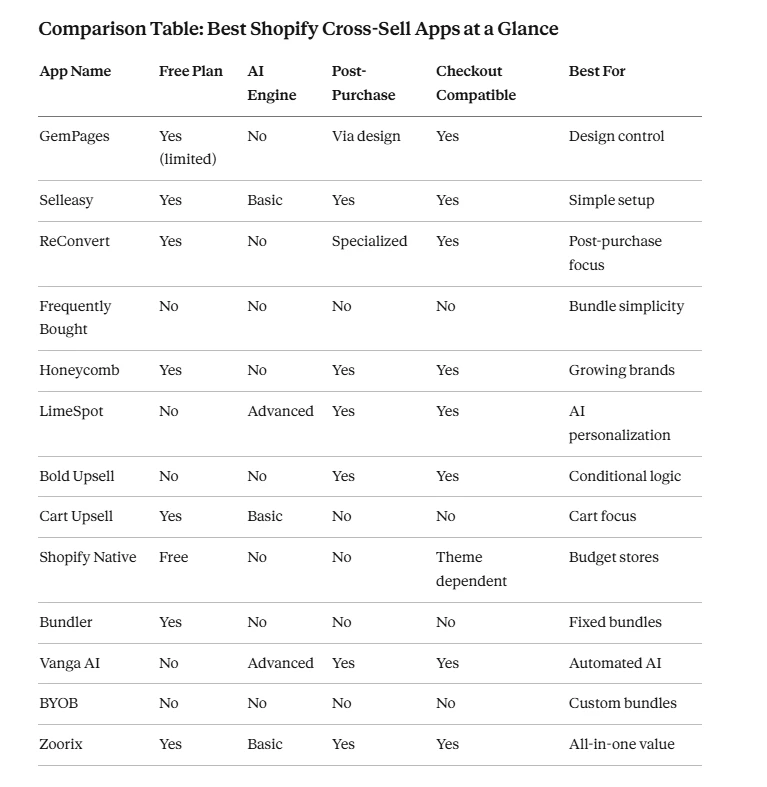
Comparison Table: Best Shopify Cross-Sell Apps at a Glance
FAQs About Shopify Cross-Sell Apps
What is the best cross-sell app for Shopify?
The best app depends on specific needs. For AI-powered optimization, LimeSpot and Vanga AI lead. For post-purchase focus, ReConvert excels. For budget-conscious stores, Selleasy and Zoorix offer excellent value. For design control, GemPages enables custom implementations. Evaluate based on priorities: automation versus control, budget versus features, simplicity versus sophistication.
Does Shopify have built-in cross-selling?
Yes, Shopify includes basic product recommendations in Online Store 2.0 themes. These show "You may also like" products based on simple algorithms. However, they lack advanced personalization, detailed analytics, and placement flexibility that dedicated apps provide. Most successful stores supplement native features with specialized apps.
How do upsell & cross-sell apps affect page speed?
Impact varies between apps. Quality apps use asynchronous loading and optimized code to minimize speed impact. Poorly coded apps can add 1-3 seconds to load times, harming conversions. Test page speed using Google PageSpeed Insights before and after installation.
Which cross-sell app integrates with Shopify Checkout Extensibility?
Apps supporting Checkout Extensibility include Selleasy, ReConvert, Bold Upsell, and LimeSpot. This integration enables cross-sell offers within checkout without redirecting customers, maintaining seamless experiences.
Are free cross-sell apps worth using?
Free apps provide excellent value for new stores, testing phases, or tight budgets. Apps like Selleasy, Zoorix, and Shopify's native features deliver meaningful results without cost. However, free plans typically limit features or monthly order volume. As businesses grow, paid plans with advanced personalization deliver stronger ROI.
What is the difference between pre-purchase vs. post-purchase cross-sells?
Pre-purchase cross-sells appear before checkout on product pages, cart pages, or during checkout. Post-purchase cross-sells appear after checkout with one-click purchasing using payment information on file. Post-purchase offers achieve 25-45% acceptance rates versus 5-15% for pre-purchase, making them highly effective without adding checkout friction.
Conclusion
Strategic cross-selling dramatically increases average order value without requiring additional traffic or marketing spend. The right Shopify cross-sell app transforms product recommendations, turning single-item purchases into multi-product orders that boost revenue per customer.
For automated optimization and AI personalization, LimeSpot and Vanga AI represent cutting-edge solutions. For post-purchase focus, ReConvert's specialized approach achieves remarkable acceptance rates. Budget-conscious stores find excellent value in Selleasy and Zoorix, while brands wanting design control benefit from GemPages' custom capabilities.
Success requires both the right tools and smart strategy. Focus on genuinely helpful recommendations, test different placements systematically, optimize for mobile, and track performance metrics. Start by selecting one app aligned with immediate priorities, implement recommendations on highest-traffic pages first, and measure results carefully to guide expansion and optimization.

























Sign in to leave a comment.