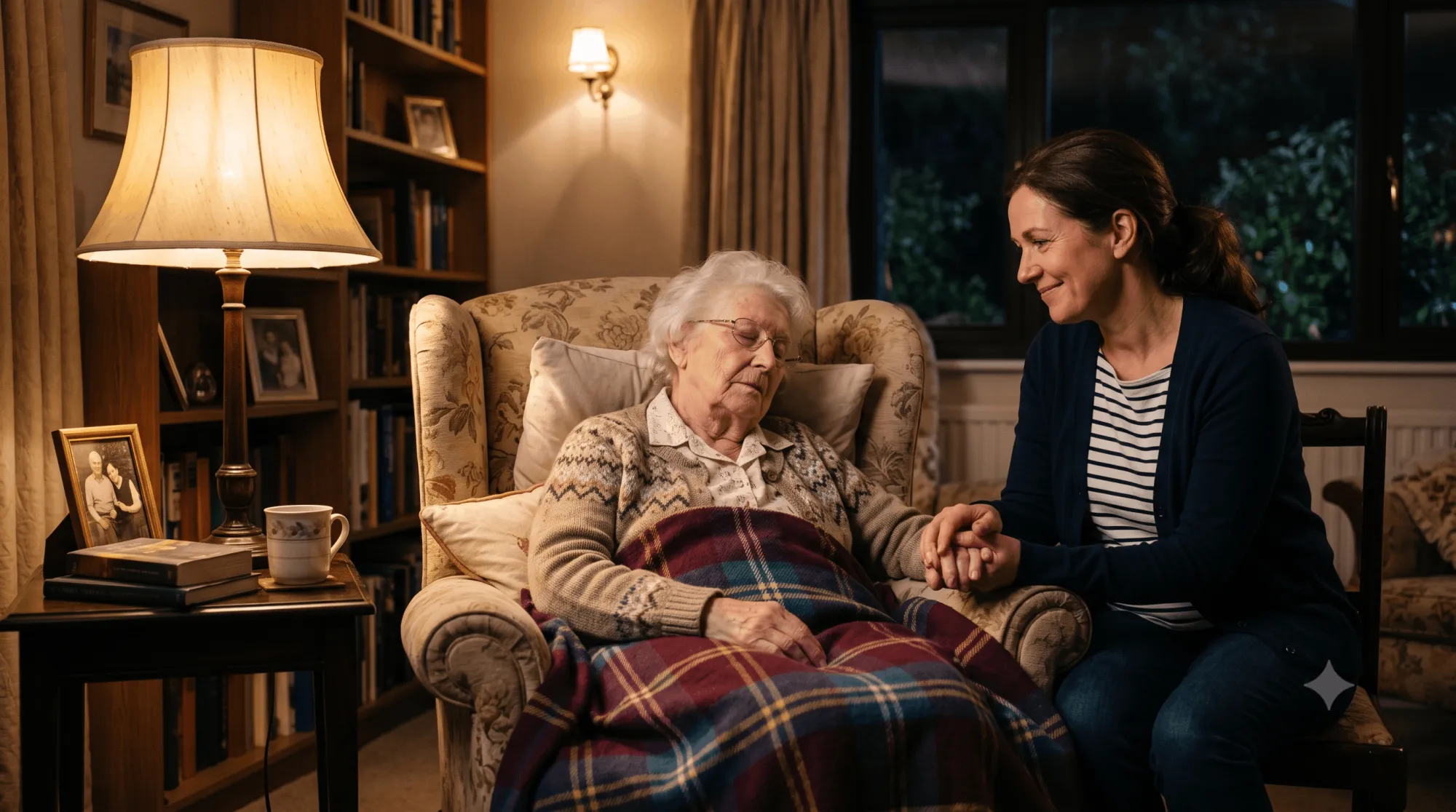

Deciding that a parent needs around-the-clock supervision is rarely a single moment of clarity. It is usually a slow accumulation of near-misses and small changes that eventually add up to one honest question: is it still safe for Mom or Dad to be alone at any point during the day or night? For many families exploring home care in South Jersey, this realization often comes after a series of late-night worries or close calls.
What 24-Hour Home Care Actually Means
When evaluating options for 24-hour home care in South Jersey, true 24-hour care uses caregivers working in rotating shifts who stay fully awake for the entire shift, so someone is alert and available at every hour. This is different from live-in care, where a single caregiver stays in the home but sleeps for a portion of the night, typically around eight hours.
That distinction matters most for the families who need it, because the highest-risk hours for falls, wandering, and medical emergencies are often overnight.
Signs It May Be Time
A few patterns tend to signal that part-time or daytime-only care is no longer enough:
- Multiple falls, or near-falls, especially at night
- Wandering or leaving the home unattended, particularly in seniors with dementia
- Difficulty getting to the bathroom safely after dark
- A recent hospitalization or surgery requiring close monitoring during recovery
- Advancing dementia with increased confusion, agitation, or sundowning in the evening
- A family caregiver who is exhausted from being on call around the clock themselves
None of these alone necessarily means 24-hour care is required, but a combination of several is usually a strong signal that professional home care in South Jersey is needed.
Why the Overnight Hours Matter Most
Families often assume the daytime is the riskiest period, since that is when most activity happens. In practice, overnight hours carry disproportionate risk for seniors with mobility issues or cognitive decline.
A senior who wakes disoriented at 2 a.m. and tries to get to the bathroom alone is in a genuinely dangerous situation if no one is awake to help. This is precisely the gap that awake, rotating 24-hour caregivers are designed to close.
24-Hour Care vs. a Nursing Facility
For many families, the choice comes down to 24-hour home care or a move to assisted living or a nursing facility. Choosing compassionate 24-hour home care in South Jersey lets a senior keep their own bedroom, their own routine, and their independence, which matters enormously for quality of life.
Cost is a real factor too, since 24-hour home care is billed hourly across multiple caregivers, but for seniors who do not need the ongoing skilled medical services a facility provides, home care often remains the more comfortable and, in many cases, more affordable option.
What to Expect From the Transition
Moving from occasional visits to full-time coverage is an adjustment, both for the senior and the family. A good agency introduces caregivers gradually where possible, builds a detailed care plan around daily routines and preferences, and stays in close communication with family members as the arrangement settles in.
Consistency matters here: seniors, especially those with dementia, generally do better with a small, familiar rotation of caregivers rather than a constantly changing cast.
What Families Often Get Wrong
A common misconception is that 24-hour care and live-in care cost roughly the same, since both sound like round-the-clock coverage. In reality, 24-hour care with awake, rotating caregivers is priced differently than live-in arrangements, since it requires multiple staff members across a full day rather than one caregiver who sleeps for part of the night. Understanding that distinction up front helps families budget accurately and avoid an unpleasant surprise once care begins.
Starting the Conversation
If your family is weighing whether 24-hour care has become necessary, the most useful next step is an honest conversation with a local provider of home care in South Jersey who can assess the actual situation rather than guess from a distance.
ComForCare South Jersey offers a in-home visit to evaluate overnight risk, daily routine, and what level of coverage genuinely fits your loved one's needs, whether that turns out to be 24-hour care, live-in support, or something in between.



























Sign in to leave a comment.