

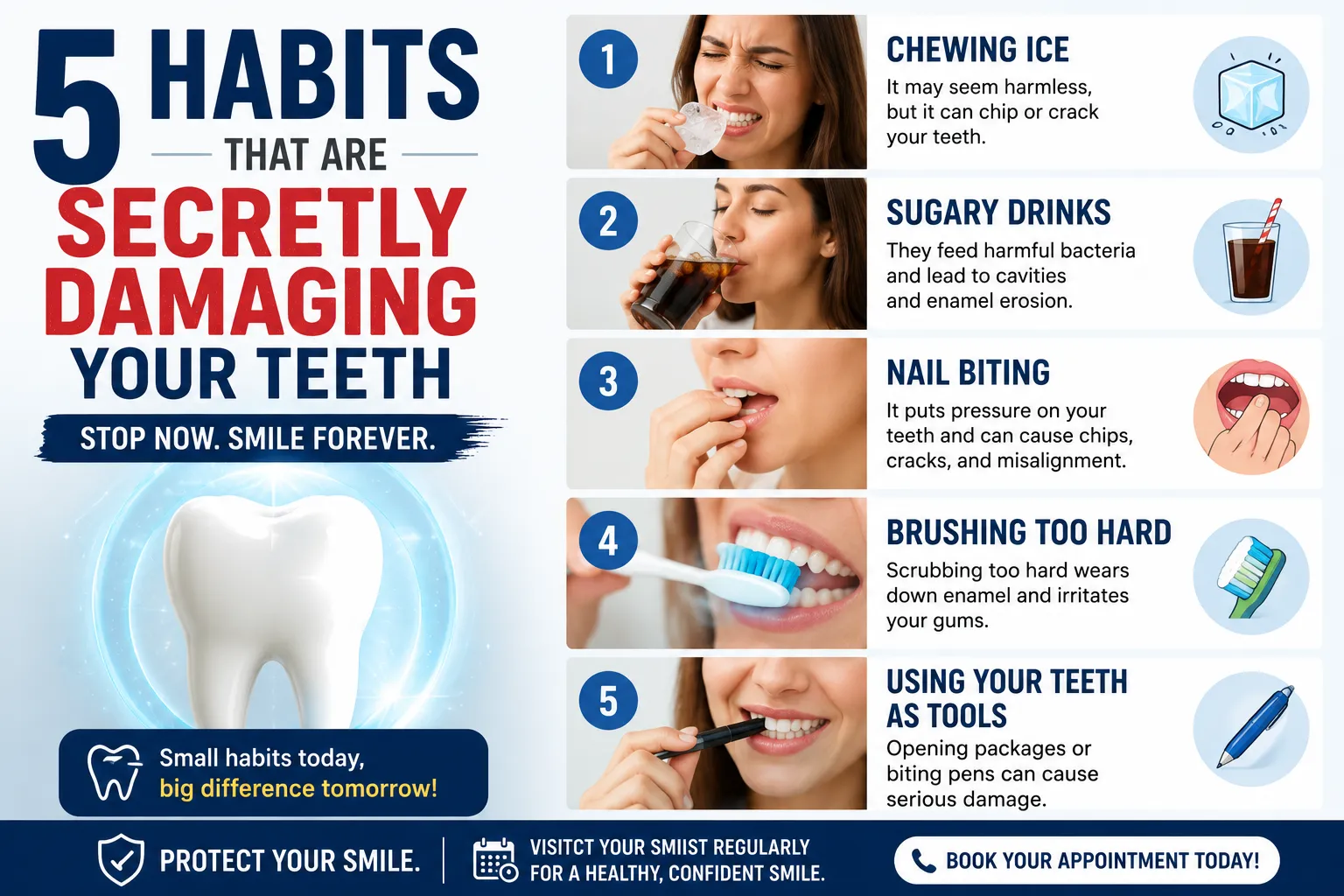
Many everyday habits damage teeth gradually, without any pain or warning sign until the damage is already significant. The 5 most common culprits are chewing ice, using your teeth as tools, snacking constantly throughout the day, brushing too aggressively, and grinding your teeth at night. Below, we break down exactly how each habit causes harm, and what to do instead.
Habit 1: Does Chewing Ice Actually Damage Your Teeth?
Chewing ice damages teeth by creating micro-fractures in the enamel, since ice is far harder than what teeth are designed to bite down on repeatedly. Enamel is the hardest substance in the human body, but repeated impact from a hard, cold substance like ice causes cracks to form over time, even without any single incident of pain. These micro-fractures often go unnoticed until a tooth eventually chips or breaks under normal biting pressure, at which point the underlying damage has already accumulated. Craving ice frequently can also be a sign of an iron deficiency, so persistent ice chewing is worth mentioning at your next check-up.
Habit 2: Why Is Using Your Teeth as Tools So Damaging?
Using your teeth to open packaging, tear tape, or crack nuts applies concentrated force to a single point on the tooth, far exceeding the forces teeth are built to withstand during normal chewing. This habit is one of the leading causes of sudden tooth fractures, since the crack often forms instantly rather than developing gradually like other forms of wear. A fractured tooth from this kind of impact frequently requires a crown to restore its strength, and in more severe cases, exposure of the nerve can lead to the need for root canal treatment.
Habit 3: Does Constant Snacking Increase Cavity Risk?
Constant snacking increases cavity risk more than eating the same total amount of food in fewer sittings, since each snack triggers a fresh acid attack on your enamel that lasts around 20 to 30 minutes. Saliva needs this window of time between eating to neutralise acid and begin remineralising enamel, and frequent grazing throughout the day doesn't allow this recovery period to complete. This is why total sugar intake matters less than how often it's consumed — 3 structured meals cause significantly less cumulative acid exposure than the same food spread across 8 to 10 small snacks. Left unmanaged, this pattern accelerates the kind of decay covered on our tooth decay and cavities page.
Habit 4: Can Brushing Too Hard Wear Down Your Teeth?
Brushing too hard wears away enamel and pushes gum tissue back, both of which expose the sensitive dentin layer underneath and lead to long-term sensitivity. A medium or hard-bristled toothbrush combined with heavy pressure removes far more enamel over time than a soft brush used with gentle, circular motions. This damage is particularly common near the gumline, where a visible notch can form on the tooth surface after years of aggressive brushing. Dentists recommend a soft-bristled brush and letting the bristles do the work, rather than applying force, to protect both enamel and the surrounding gum tissue covered on our gum disease page.
Habit 5: How Much Damage Does Nighttime Teeth Grinding Cause?
Nighttime teeth grinding, known as bruxism, generates bite forces of up to 250 pounds, far exceeding the force applied during normal chewing, and wears down enamel at an accelerated rate with every episode. Because grinding happens during sleep, many people remain unaware of the habit for years, only discovering it once a dentist identifies flattened or chipped teeth during a routine check-up. Left unaddressed, chronic grinding can lead to cracked teeth, jaw pain, and in more advanced cases, teeth requiring a dental crown to restore the worn surface. A custom night guard, fitted by your dentist, is the most effective way to protect teeth from this kind of ongoing damage.
How Do I Know If a Habit Has Already Damaged My Teeth?
You can usually tell a habit has already caused damage if you notice new sensitivity to hot or cold, a visible chip or crack, or a rough edge you can feel with your tongue. Since most of these habits cause gradual, painless damage, the change is often subtle enough to go unnoticed until a routine exam picks it up on X-ray. This is exactly why 6-monthly check-ups matter even for patients who feel their teeth are fine, since a dentist can catch early wear or micro-fractures well before they progress into pain or a broken tooth. Sudden pain or a visibly broken tooth should be treated as a dental emergency rather than waiting for your next scheduled visit.
What Should I Do Instead of These Habits?
You can protect your teeth by replacing each of these habits with a safer alternative: keep scissors or a bottle opener handy instead of your teeth, drink ice-cold beverages without chewing the ice itself, structure snacks into set times rather than grazing, switch to a soft-bristled brush with gentle pressure, and speak to your dentist about a night guard if you suspect you grind your teeth. None of these changes require giving up much — they simply redirect the same habit toward something that doesn't put ongoing force or acid exposure on your enamel. A routine check-up is also the easiest way to confirm whether any of these habits have already left a mark worth addressing early.
Frequently Asked Questions
Can damaged enamel be repaired?
Enamel cannot regenerate once it's lost, since it contains no living cells capable of repair, unlike bone or gum tissue. Treatments like fluoride, bonding, or crowns can protect and restore the appearance and function of a tooth, but they work by adding material or strengthening what remains, not by regrowing lost enamel.
Is it normal to grind your teeth without knowing it?
It's very common to grind your teeth without knowing it, since bruxism most often occurs during sleep. A dentist can usually identify signs of grinding, such as flattened tooth surfaces or jaw tenderness, during a routine check-up even if you've never noticed symptoms yourself.
How do I stop snacking throughout the day without affecting my teeth?
You don't need to stop snacking entirely — structuring snacks into set times rather than grazing continuously gives your saliva the recovery window it needs between acid exposures. Choosing less sugary or acidic snacks, and rinsing with water afterward, further reduces the impact on enamel.
Should I see a dentist if I think I've already damaged a tooth?
Yes, you should see a dentist as soon as possible if you suspect damage, since early intervention is almost always simpler and more affordable than waiting until the damage progresses further. A chip or crack that seems minor now can worsen significantly if left untreated.




























Sign in to leave a comment.