A kitchen does not always need a full makeover to feel fresh. Sometimes, one small change can make the whole room look more considered.
One of the easiest ways to do this is by adding a single open shelf to an empty kitchen wall. With the right placement and a few everyday items, you can turn an overlooked space into a useful feature in just a few minutes.
The trick is not about filling the shelf with decorations. It is about choosing a few things that you already use and arranging them in a way that feels natural.
Why One Shelf Can Change the Look of a Kitchen?
Kitchen walls can often feel either too busy or completely bare. Cabinets, appliances and benchtops tend to dominate the room, leaving smaller wall areas looking unfinished.
A single shelf creates a visual break without making the kitchen feel crowded.
It can also give you a place to display wooden chopping boards, ceramic bowls, mugs, glass jars, cookbooks or a small plant. The result is a kitchen that feels more personal without requiring new cabinetry or major renovation work.
The key is restraint. One well-styled shelf can have more impact than several shelves packed with items.
The 5-Minute Styling Method
You do not need professional styling skills or a shopping trip. Start with the shelf itself, then work with items you already have around the kitchen.
1. Pick the Right Wall
Look for a small section of empty wall that could benefit from some visual interest.
The space above a benchtop can work well, particularly when there are no overhead cabinets. An unused section beside a rangehood, coffee station or dining area can also be suitable.
Avoid placing the shelf somewhere that interferes with food preparation, appliance access or normal movement around the kitchen.
2. Start With One Larger Item
Choose one substantial item as your starting point.
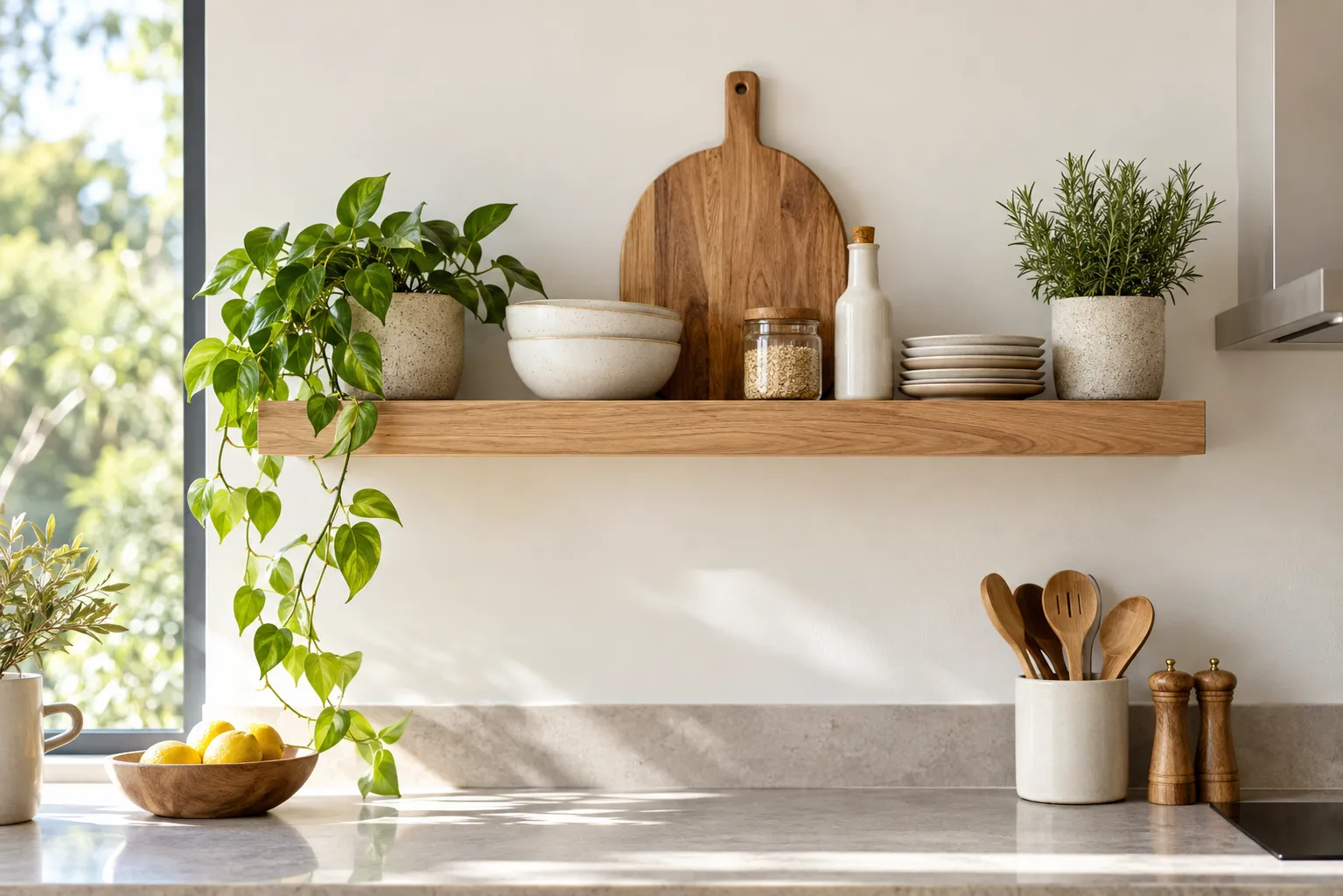
A wooden chopping board, serving board, large ceramic bowl or cookbook can provide a visual anchor. Place it slightly off-centre rather than directly in the middle.
This creates a more relaxed arrangement and gives you a starting point for the smaller pieces.
3. Add Two or Three Everyday Items
Now add a couple of practical items.
Try a stack of bowls, a favourite mug, a glass storage jar or a small jug. You do not need to use everything at once.
A good shelf often looks better when there is some empty space between the objects.
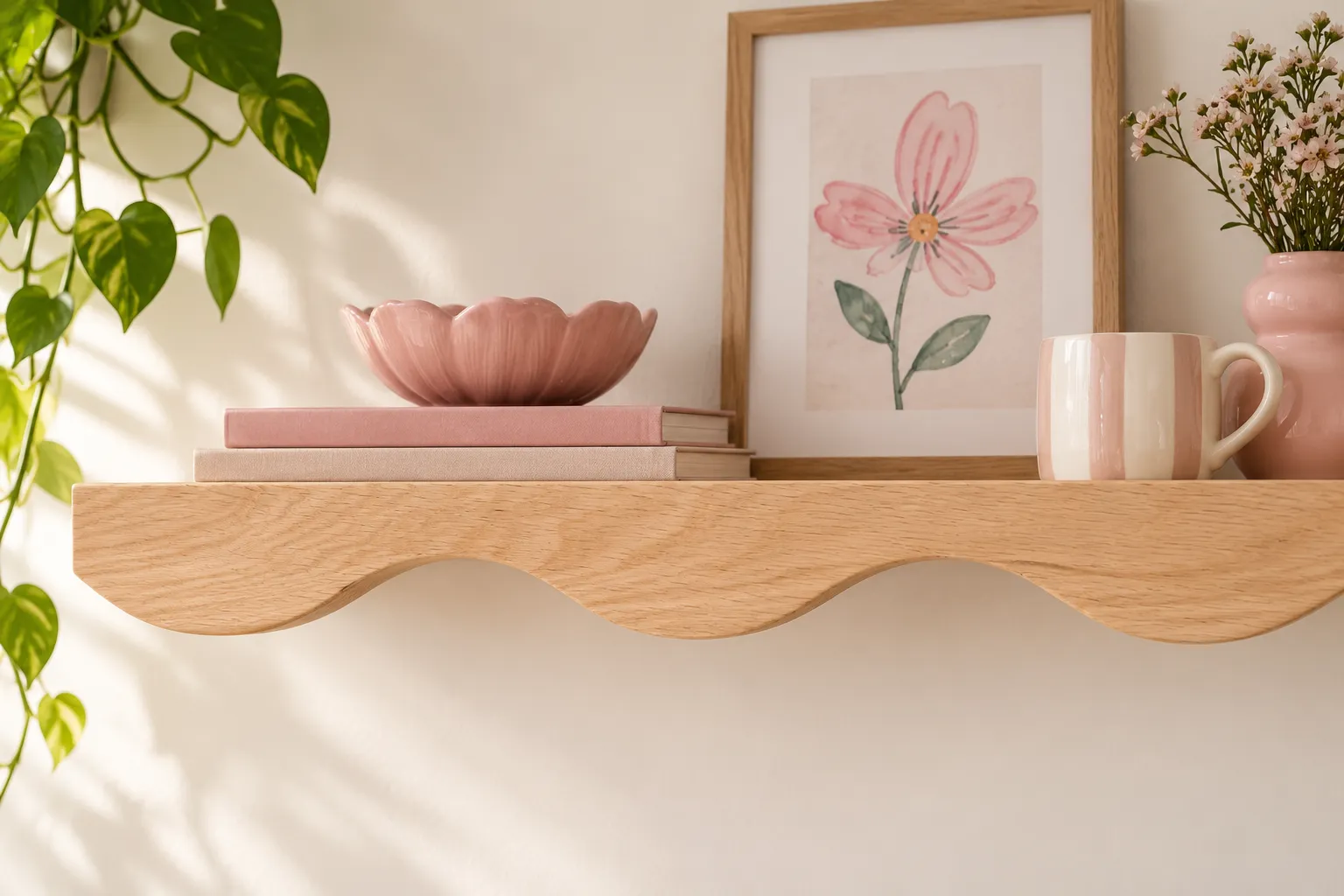
If you are looking for different styles and sizes, explore these floating shelves to find an option that suits your kitchen layout.
4. Add Something With Height
If everything on the shelf is roughly the same height, the arrangement can look flat.
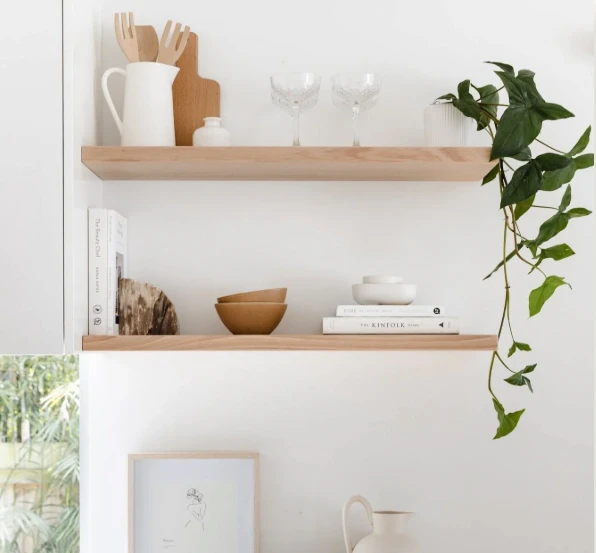
Add one taller object such as a narrow vase, bottle, cookbook standing upright or wooden board leaning against the wall.
The difference in height gives the shelf more depth while keeping the overall look simple.
5. Step Back and Remove One Thing
This is the part that can make the biggest difference.
Take a few steps back and look at the shelf from across the kitchen.
If it feels crowded, remove one item.
If everything looks too similar, swap one piece for something with a different shape, texture or height.
You are aiming for an arrangement that feels useful rather than staged.
What Should You Put on a Kitchen Floating Shelf?
The best items are usually things that belong in the kitchen anyway.
Consider:
- Wooden chopping boards
- Ceramic plates and bowls
- Coffee mugs
- Glass storage jars
- Cookbooks
- Small serving dishes
- Olive oil bottles
- A small indoor plant
- A ceramic jug
- Favourite kitchenware
Mixing functional pieces with one or two decorative objects can make the shelf feel connected to the rest of the kitchen.
Keep the Colours Simple
You do not need every item to match.
Instead, choose two or three colours that already appear elsewhere in the kitchen. For example, timber, white ceramics and soft green can work well together.
If your kitchen already has timber cabinetry or flooring, a timber shelf can help connect the different elements.
For a darker kitchen, neutral ceramics and natural materials can soften the overall appearance.
The goal is consistency, not perfection.
Use Texture Instead of More Decorations
When a shelf looks a little plain, the answer is not always another decorative object.
Try introducing different textures instead.
Timber, ceramic, glass, linen and greenery can create visual interest without adding lots of colour. A rough wooden board next to smooth ceramic bowls, for example, can make a simple arrangement feel much more layered.
This approach also works particularly well in modern kitchens where the overall design is clean and understated.
Do Not Forget About Practicality
A kitchen shelf should still work as part of your everyday space.
Avoid placing items where they are likely to be splashed with water, exposed to excessive heat or covered in cooking residue.
If you use the shelf for everyday crockery, keep the pieces you reach for regularly within easy access.
There is also no need to make every item perfectly aligned. A relaxed arrangement can make the kitchen feel more lived-in and comfortable.
The Shelf Does Not Have to Be Full
One of the easiest styling mistakes is trying to use every centimetre of shelf space.
Leave some breathing room.
Empty space helps individual objects stand out and makes the shelf easier to clean. It also means you can add or change things later without completely restyling the kitchen.
Think of the shelf as a small display area rather than extra cupboard space.
A Simple Formula You Can Try Today
If you want a quick starting point, use this combination:
1 large item + 2 practical items + 1 tall item + some empty space
For example:
- One wooden serving board
- Two ceramic bowls
- One small vase
- A little open space between each piece
That is enough to create a finished look without making the shelf feel overloaded.
Final Thoughts
A kitchen refresh does not have to involve new cabinets, expensive accessories or a weekend renovation project.
One carefully positioned shelf can give an empty wall a purpose while creating space for some of the things you already enjoy using.
The five-minute trick is simple: start with one larger piece, add a few useful items, vary the heights, keep the colours connected and remove anything that feels unnecessary.
Sometimes, the smallest change is enough to make your kitchen feel like a different space.




















Sign in to leave a comment.