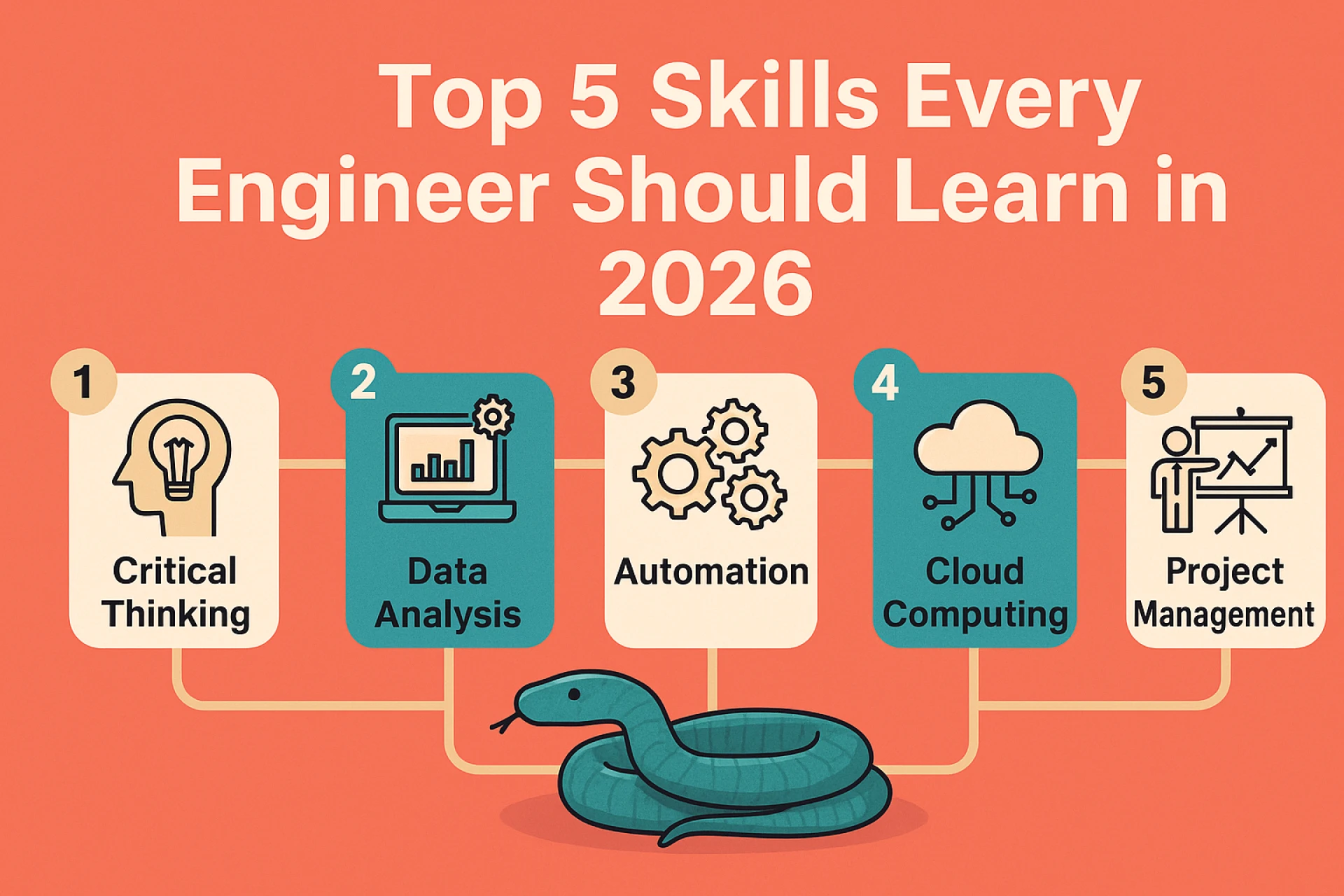

The world of engineering is transforming faster than ever before. Emerging technologies, automation, AI, sustainability goals, and global collaboration have changed what it means to be an engineer today. By 2026, the expectations will be even higher — and those who adapt will stay ahead of the curve.
Whether you're just starting your engineering journey or already deep into your career, the skills you invest in now will define your future success. The good news? You don’t need a new degree or expensive programs to stay relevant. You just need the right skill set.
Let’s explore the top five skills every engineer must learn by 2026 — explained in a friendly, engaging, and realistic way, perfect for readers who want clarity without complication.
1. AI & Automation Skills: The New Engineering Superpower
Artificial intelligence and automation are no longer optional add-ons — they're becoming core parts of engineering workflows. From everyday tasks to complex design decisions, AI-driven systems are transforming how engineers work.
Why This Skill Matters
- AI tools are integrating into CAD platforms, simulation software, and prototyping tools.
- Automation helps reduce repetitive tasks and human error.
- Engineers with AI knowledge have a competitive edge in innovation-driven industries.
What Engineers Should Learn
- Basics of machine learning and deep learning
- How AI models assist in prediction, optimization, and analysis
- Automation scripting with Python
- Understanding how AI integrates with existing engineering tools
Real-World Example
Imagine a mechanical engineer using AI to predict the failure points in a design before it goes into production. Or an electrical engineer using ML algorithms to optimize circuit performance. AI doesn’t replace engineering expertise — it amplifies it.
2. Data Fluency: Engineers Who Understand Numbers Win
Engineering has always relied on data, but the scale has changed dramatically. Sensors, IoT devices, cloud platforms, and simulations generate massive amounts of information. By 2026, engineers will be expected not just to understand data, but to interpret it meaningfully.
Why This Skill Matters
- Data-driven decisions lead to better-quality designs and fewer mistakes.
- Companies now expect engineers to extract insights, not just generate charts.
- Data fluency enhances your ability to solve complex engineering problems.
Key Areas to Focus On
- Python for data analysis
- Statistics and probability for decision-making
- Data visualization (charts, dashboards, reports)
- Understanding structured and unstructured data
Simple Example
Picture a manufacturing engineer analyzing production data to reduce defects or improve throughput. Instead of waiting for a specialist, the engineer can run quick data tests, visualize trends, and present insights confidently. That’s the power of data fluency.
3. Systems Thinking: Seeing the Bigger Picture
Modern engineering is no longer confined to isolated specialties. Almost every engineering problem today touches multiple domains. That’s why systems thinking has become one of the most in-demand skills — it helps engineers understand how different components connect, react, and depend on each other.
Why Systems Thinking Is Crucial
- Products like drones, electric vehicles, and smart devices involve mechanical, electrical, software, and data layers.
- Engineers with this skill solve problems faster because they understand interactions across systems.
- It enhances creativity and innovation because it encourages holistic thinking.
What Engineers Should Learn
- How different engineering disciplines interact within a project
- Understanding product lifecycle management
- Root cause analysis using whole-system perspectives
- Collaboration across multi-disciplinary teams
Simple Real-World Insight
Think about building a robotic arm. The mechanical structure, motor controls, sensors, software stack, and user interface all work together. A systems-thinking engineer understands not just the “what” but the “why” and “how” behind these interactions.
4. Digital Tool Mastery & Tech Adaptability
Technology evolves so quickly that tools used today might be outdated tomorrow. Engineers of 2026 need to be comfortable adapting to new platforms, software, and digital workflows. The more tools you master, the more versatile and valuable you become.
Why This Skill Matters
- Digital tools improve accuracy, speed, and efficiency.
- Cloud systems and digital twins are becoming industry standards.
- Employers prefer engineers who can seamlessly shift between tools without friction.
Tools Engineers Should Explore
For All Engineers
- Cloud platforms for storage and collaboration
- Version control tools like Git
- Basic programming/scripting for automation
For Mechanical/Civil Engineers
- 3D modeling software
- Simulation tools (thermal, structural, fluid)
- Parametric design tools
For Electrical Engineers
- PCB design software
- Embedded system toolchains
- Circuit simulation suites
For Software Engineers
- CI/CD pipelines
- Containerization (Docker)
- API integration and microservices
Relatable Example
A civil engineer who automates repetitive CAD tasks using a small Python script can save hours per project. Or a software engineer who clones and configures cloud environments quickly can streamline product deployments. Mastering digital tools is a productivity multiplier.
5. Communication & Collaboration Skills: The Underrated Engineering Asset
Technical skills may get your foot in the door, but communication skills move your career forward. In 2026, engineers will increasingly work with global teams, cross-functional departments, and clients who may not understand technical jargon.
Why Communication Skills Matter
- Engineers often present solutions to decision-makers with non-technical backgrounds.
- Clear communication reduces project delays, misunderstandings, and rework.
- Strong communicators often become team leads, managers, or project owners.
What Engineers Should Improve
- Writing clear and concise documentation
- Simplifying complex topics for non-engineers
- Giving effective presentations
- Collaborating with teams in different time zones
- Asking the right questions during problem-solving
Real-World Example
An engineer who can explain a technical risk clearly to a client will be seen as more reliable than one who uses complicated terminology. Clear communication builds trust — and trust fuels opportunities.
Bonus Skill: Adaptability — The Skill That Ties Everything Together
If there’s one habit that will define successful engineers in 2026, it’s the ability to adapt quickly. The world of technology changes every quarter, and long-term success depends on your willingness to learn continuously.
How to Become More Adaptable
- Explore new tools even if you aren’t required to
- Take short online courses regularly
- Stay updated with industry trends
- Build side projects to test new skills
- Treat challenges as learning opportunities, not obstacles
Adaptability is not just a skill — it’s a mindset.
Conclusion: The Future Belongs to Engineers Who Keep Evolving
Engineering in 2026 won’t be just about equations, code, or machinery. It will be about merging creativity, technology, critical thinking, and communication to solve real-world problems.
By mastering these five essential skills —
AI & automation, data fluency, systems thinking, digital tool mastery, and communication skills — you’ll not only stay relevant but become a standout engineer capable of leading the next wave of innovation.
The future is bright for those who keep learning, stay flexible, and embrace change.



































Sign in to leave a comment.