

For many people, AI still means one thing—type a prompt, get a result.
It feels almost magical. You ask for content, and within seconds, it appears. Clean, structured, and often surprisingly good.
But if you’ve been paying close attention lately, you might have noticed something changing.
AI is no longer just answering questions or generating content. It’s starting to take action—not in a dramatic, sci-fi way, but in subtle, practical steps. It can plan, execute, and even adjust its approach based on outcomes.
That shift is where the real difference between generative AI vs agentic AI begins.
And once you understand it, you’ll start seeing why this isn’t just another upgrade—it’s a completely different way of working with machines.
The Comfort Zone: AI That Creates on Request
Let’s start with what feels familiar.
You give AI a prompt:
- “Write a blog introduction”
- “Create product descriptions”
- “Explain this topic simply”
And it responds instantly.
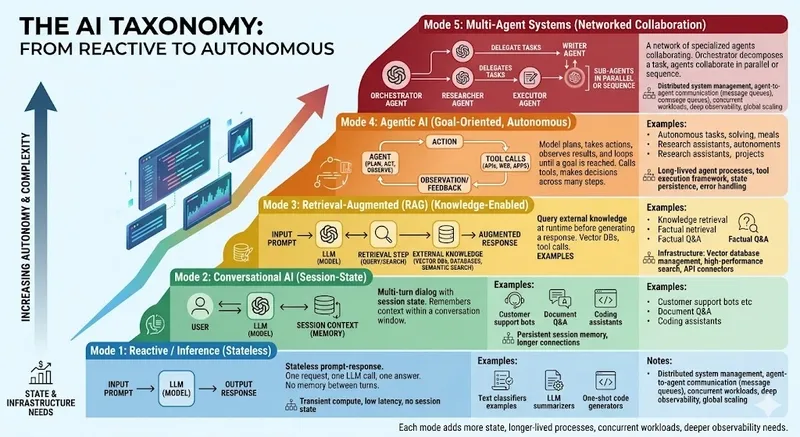
This type of system is built to generate outputs based on patterns it has learned. It doesn’t “think” in the way we imagine—it predicts the most likely next words, images, or code based on input.
It’s reactive.
And that’s not a weakness. In fact, it’s what makes it so reliable for content creation, brainstorming, and quick problem-solving.
But there’s a boundary.
Once it gives you the output, its job is done.
The Emerging Layer: AI That Handles Tasks
Now let’s look at something slightly different.
Instead of asking for a single output, you give AI a broader objective:
“Improve my content strategy”
“Research competitors and summarize insights”
“Generate leads and organize them”
Now, instead of stopping after one response, the system starts working through the problem.
It might:
- Break the task into smaller steps
- Use different tools
- Evaluate results
- Continue until the goal is met
This is where agent-style AI systems come into the picture.
They’re not just generating—they’re executing.
A Simple Analogy (Because This Can Get Abstract Fast)
Think of it like this:
A generative system is like asking a chef to cook a dish you describe.
You tell them exactly what you want, and they deliver.
An agent-style system is like hiring someone to run your kitchen.
You tell them the goal—“improve the menu”—and they figure out what needs to change, test recipes, and refine results.
Same domain. Very different level of involvement.
Why This Difference Actually Matters
At first, this might sound like a technical distinction.
But in real-world use, it changes how work gets done.
With traditional systems:
- You guide every step
- You review every output
- You stay deeply involved
With agent-driven systems:
- You define the goal
- The system handles the process
- You monitor results instead of managing tasks
That shift—from doing to overseeing—is where the real impact lies.
A Practical Scenario: SEO Workflows
Let’s take something hands-on.
If you’ve ever worked on SEO, you know it’s not just one task. It’s a chain of activities—research, writing, optimization, tracking.
Using a generative tool:
You might:
- Generate keyword ideas
- Write content
- Optimize headings
- Manually track performance
It’s efficient, but still manual.
Using an autonomous AI system:
You might say:
“Improve rankings for this page.”
And the system could:
- Audit the page
- Identify gaps
- Update content
- Suggest linking strategies
- Monitor ranking changes
Now you’re not handling each step—you’re evaluating the outcome.
The Real Core: Decision-Making vs Prediction
Here’s where things get interesting.
Generative systems are based on prediction.
They generate outputs based on patterns in data.
Agent-style systems simulate decision-making.
They don’t just produce—they choose:
- What to do first
- What matters most
- When to stop or continue
This ability to decide—even within limits—is what gives them a sense of autonomy.
The Trade-Off: Efficiency Comes With Uncertainty
Of course, there’s a downside.
When you control every step, mistakes are easier to catch.
When AI is handling multiple steps, things can go wrong quietly.
For example:
- It might focus on the wrong goal
- Misinterpret your instructions
- Optimize something that doesn’t actually improve results
And because it’s operating across several steps, small issues can compound.
That’s why full automation isn’t always the best approach.
Sometimes, a mix of control and autonomy works better.
Where Each Approach Fits Naturally
It’s not about choosing one over the other.
It’s about knowing when each makes sense.
Generative systems work best for:
- Content creation
- Idea generation
- Drafting and editing
- Quick problem-solving
Agent-style systems work best for:
- Multi-step workflows
- Automation of repetitive tasks
- Research and analysis
- Long-term optimization
In reality, most advanced AI systems combine both.
The agent relies on generative capabilities to complete tasks internally.
The Skill Shift You Can’t Ignore
This change also affects how people use AI effectively.
Earlier, success came from:
- Writing better prompts
- Refining outputs
- Iterating quickly
Now, it’s shifting toward:
- Setting clear goals
- Defining boundaries
- Evaluating outcomes
You’re moving from being a “user” to more of a “manager.”
And that’s not always easy.
Because it requires letting go of control—at least partially.
The Human Side of This Transition
There’s also a psychological layer to this.
When AI starts planning and executing tasks, people naturally begin to treat it differently.
It no longer feels like just a tool.
It starts to feel like something you can delegate to.
And that changes expectations.
You stop asking:
“What can this tool do?”
And start asking:
“What can I offload?”
That shift is subtle—but powerful.
Are We Overestimating AI’s Capabilities?
Maybe a little.
While agent-style systems are impressive, they’re not perfect.
They still struggle with:
- Deep context
- Complex judgment
- Nuanced decision-making
And when given too much freedom, they can produce results that technically make sense—but practically don’t.
That’s why human oversight is still essential.
Not as a backup, but as part of the process.
Looking Ahead: What This Means for the Future
We’re moving toward a world where AI systems don’t just assist—they participate.
You’ll likely see:
- Automated workflows across industries
- AI handling repetitive business processes
- Systems that continuously improve outcomes
But here’s the key point:
The value won’t come from automation alone.
It will come from how well humans and AI collaborate.
Because even the most advanced system still needs:
- Direction
- Constraints
- Judgment
Conclusion: It’s Not About Better—It’s About Different
The discussion around generative AI vs agentic AI often turns into a comparison.
Which one is better?
But that’s the wrong way to look at it.
These are two different approaches solving different problems.
One helps you create faster.
The other helps you achieve more with less effort.
And the real advantage comes when you understand how to use both—together.
Because AI isn’t just evolving in what it can generate.
It’s evolving in what it can do.
And that’s where things start to get interesting.


























Sign in to leave a comment.