
In 2026, performance marketing comes down to one simple question:
How fast can you test, learn, and scale?
Running ads alone isn’t enough anymore. Users consume content every second. Competition is intense. Attention spans are shrinking.
In this environment, the brands that consistently grow are the ones that:
- Understand their data
- Iterate on creatives quickly
- Decode user behavior accurately
But here’s the catch:
Many marketers put in the effort — yet without the right tools, both speed and clarity become limited.
A smart performance marketer’s real edge isn’t just strategy.
It’s their tool stack.
In this article, we’ll explore five essential tools that help you:
- Launch creatives faster
- Make better decisions
- Scale campaigns efficiently
If you want to take your marketing results to the next level, these tools aren’t optional — they’re essential.
1. Tagshop AI — For AI Video Ads
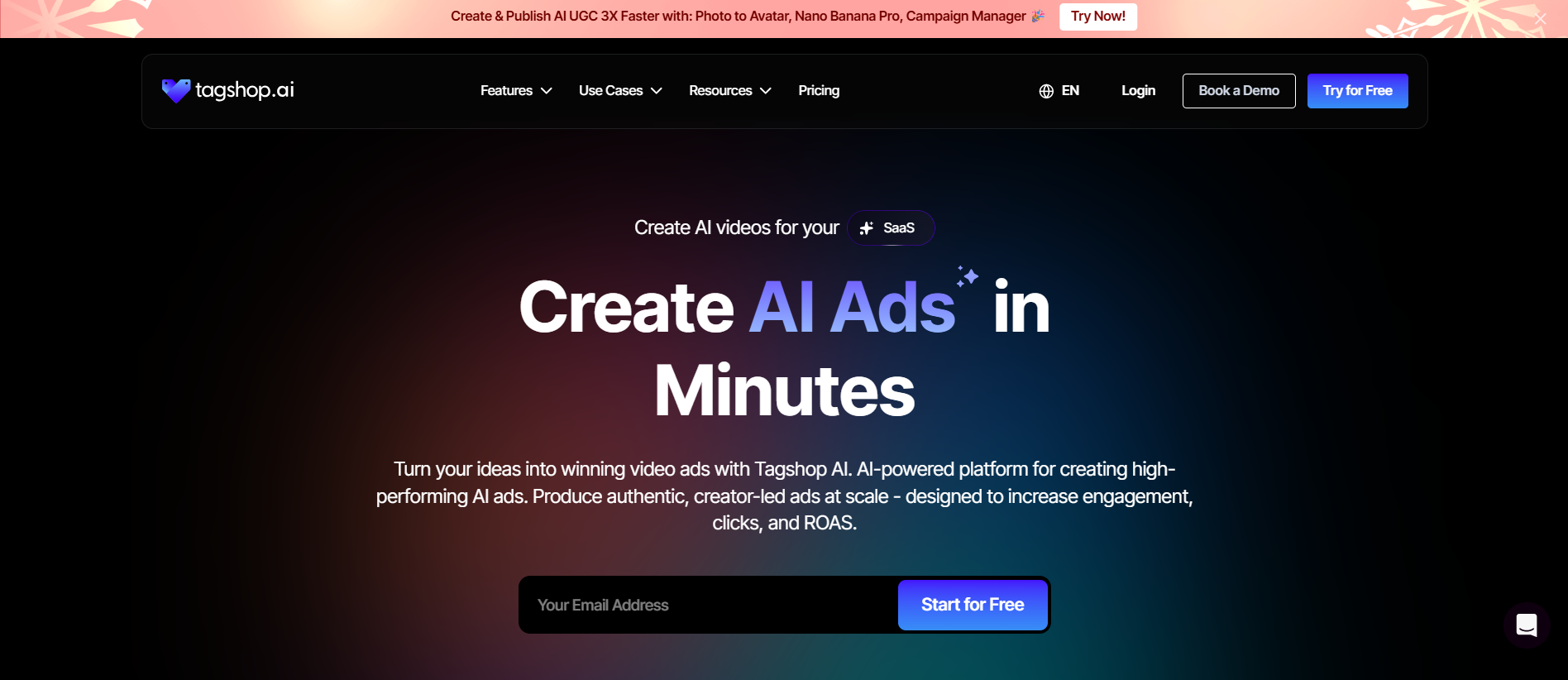
Tagshop AI is an AI video ad maker built to help marketers produce high-performing video ads without relying on traditional production workflows. It enables users to transform a product link, raw content, or a simple script into ready-to-launch video ads within minutes—eliminating the need for filming, editing, or large creative teams.
Designed for performance-driven platforms like Instagram, TikTok, Facebook, and Google Ads, Tagshop AI focuses on generating UGC-style, scroll-stopping creatives that align with modern consumer behavior. The platform allows marketers to quickly create multiple ad variations, experiment with different hooks and messaging angles, and iterate faster—making it easier to identify what truly drives conversions.
Key Features
- AI Video Ads: Create AI video ads optimized for platforms like Instagram, TikTok, and YouTube quickly and at scale.
- Custom Avatar: Create your own lifelike AI avatar in minutes, complete with voice, expressions, and on-brand personality to represent your product or brand in any video.
- AI Twins: Clone your voice, face, and style to generate unlimited video variations of you, allowing you to appear in multiple ads, scripts, or languages without recording anything.
- URL-to-Video: Convert any product page link into a fully-rendered video with minimal manual input.
- AI Product Videos: Generate high-quality product demos and showcase videos with realistic avatars holding or using your products.
Pros
- Turn any product image, URL, or concept into high-quality UGC-style videos within minutes.
- Generate human-like AI presenters that speak naturally and boost viewer trust.
- Paste a product page link and get a ready-to-use video with script, voiceover, and visuals automatically.
- Save thousands on UGC creators, studios, editing, and reshoots, pay a fraction with AI.
- Choose from testimonials, demos, TikTok-style ads, explainers, comparison videos, and more.
Cons
- Limited credits are available in the free plan.
Use Cases
- Meta and TikTok ad creatives
- for e-commerce product ads
- Rapid A/B testing
- Solving creative fatigue
2. Google Analytics — For Analytics Insights
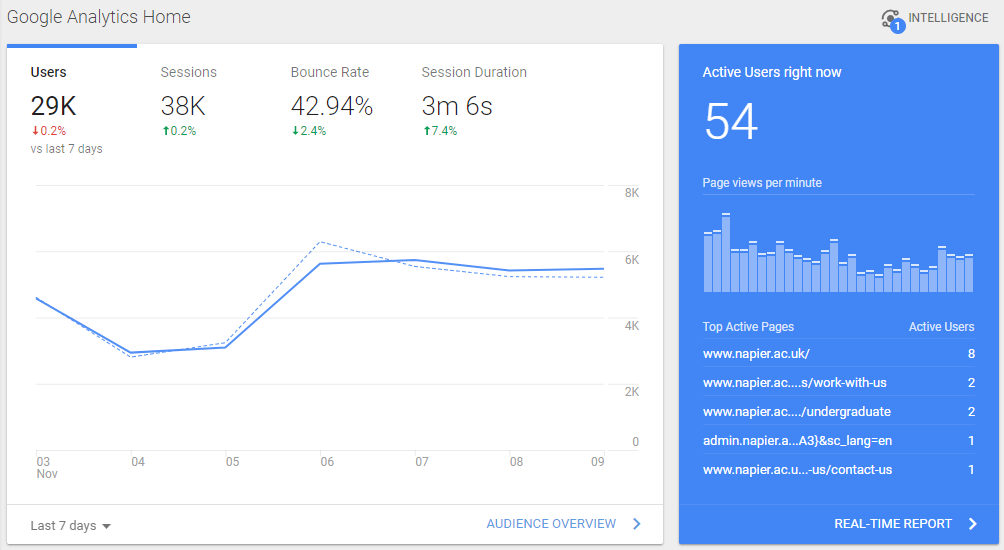
Performance marketing runs on accurate data. Google Analytics helps you track user behavior, traffic sources, and conversion paths so you can make decisions based on insights — not guesswork.
Key Features
- Real-time traffic tracking
- Conversion and event tracking
- Funnel analysis
- Cross-device tracking
- Predictive insights (GA4)
Pros
- Free and powerful
- Deep behavioral insights
- Integrates with multiple platforms
- Scales for businesses of all sizes
Cons
- Setup can be complex
- The interface may overwhelm beginners
- Requires proper configuration for accuracy
Use Cases
- Campaign performance analysis
- Conversion tracking
- Funnel optimization
- Audience behavior insights
3. Canva — For Designing

Without scroll-stopping creatives, ads won’t perform. Canva allows marketers to quickly create high-quality visuals — even without design experience.
Key Features
- Drag-and-drop editor
- Pre-built ad templates
- Social media-optimized formats
- Brand kits
- Stock images and elements
Pros
- Beginner-friendly
- Fast production
- Cost-effective
- Helps maintain brand consistency
Cons
- Limited flexibility for advanced designers
- Templates can feel overused
- Highly custom visuals may be restricted
Use Cases
- Social media ads
- Display banners
- Creative variation testing
- Brand consistency
4. Jasper AI — For Ad Copy

Strong messaging drives performance. Jasper AI helps generate high-converting ad copy and multiple variations quickly, making creative testing more efficient.
Key Features
- AI-generated ad copy
- Multiple tone and style options
- Templates for ads, emails, and landing pages
- Fast variation generation
- Long-form and short-form support
Pros
- Saves time
- Eliminates creative block
- Helps test multiple angles
- Easy to use
Cons
- Requires human editing
- May generate generic outputs
- Brand voice needs manual refinement
Use Cases
- Facebook and Google ad copy
- Headline testing
- Product descriptions
- Email campaigns
5. Hotjar — For Heatmap Analysis

Traffic alone doesn’t drive conversions. You need to understand user behavior. Hotjar provides heatmaps and session recordings to show what users are actually doing on your website.
Key Features
- Click heatmaps
- Scroll tracking
- Session recordings
- User feedback tools
- Funnel visualization
Pros
- Easy-to-understand visual insights
- Identifies UX issues quickly
- Improves conversion rate optimization
- Simple setup
Cons
- Large datasets can take time to analyze
- The free plan is limited
- Needs complementary tools for deeper quantitative analysis
Use Cases
- Landing page optimization
- UX improvement
- Conversion rate analysis
- User journey tracking
FAQs
1. What are the most important tools for performance marketing in 2026?
Top tools include Tagshop AI (video ads), Google Analytics (analytics), Canva (design), Jasper AI (copywriting), and Hotjar (heatmaps & CRO).
2. Are AI tools useful in performance marketing?
Yes. AI tools accelerate creative production, copy generation, and testing speed — allowing marketers to identify winning campaigns faster.
3. Why are AI video ads often more efficient?
They’re faster to create, cost-effective, and allow multiple variations to be tested quickly — improving optimization cycles.
4. How is Google Analytics used in performance marketing?
It tracks user behavior, analyzes traffic sources, and measures conversions — helping marketers understand what drives revenue.
5. Is Canva suitable for beginners?
Yes. Canva’s drag-and-drop interface makes it easy for non-designers to create professional creatives.
6. How does Jasper AI help with ad copy?
It generates multiple headlines and messaging angles quickly, helping marketers test and refine high-converting copy.
7. What are heatmaps, and why are they important?
Heatmaps visually show where users click and scroll, helping improve landing pages and conversion rates.
8. Are these tools useful for small businesses?
Yes. These tools scale well and allow small teams to compete efficiently without large resources.
9. What’s the biggest challenge in performance marketing?
Maintaining high-performing creatives and accurately analyzing data.
10. Do tools alone improve results?
No. Tools support execution. Results come from strategic testing, analysis, and optimization.
Conclusion
Performance marketing in 2026 follows a clear formula: speed, data, and continuous optimization. Marketers who consistently test new creatives, analyze accurate data, and deeply understand user behavior are the ones who drive sustainable results.
Tools like Tagshop AI help scale creative production, while Google Analytics provides the data clarity needed for smarter decision-making. Canva improves execution speed, Jasper AI enhances messaging, and Hotjar reveals real user behavior insights.
Individually, each tool is powerful. But when used together, they create a complete performance marketing system—where every decision is backed by data and every test contributes to measurable growth.
Ultimately, success doesn’t come from the tools themselves, but from how strategically you use them.

























Sign in to leave a comment.