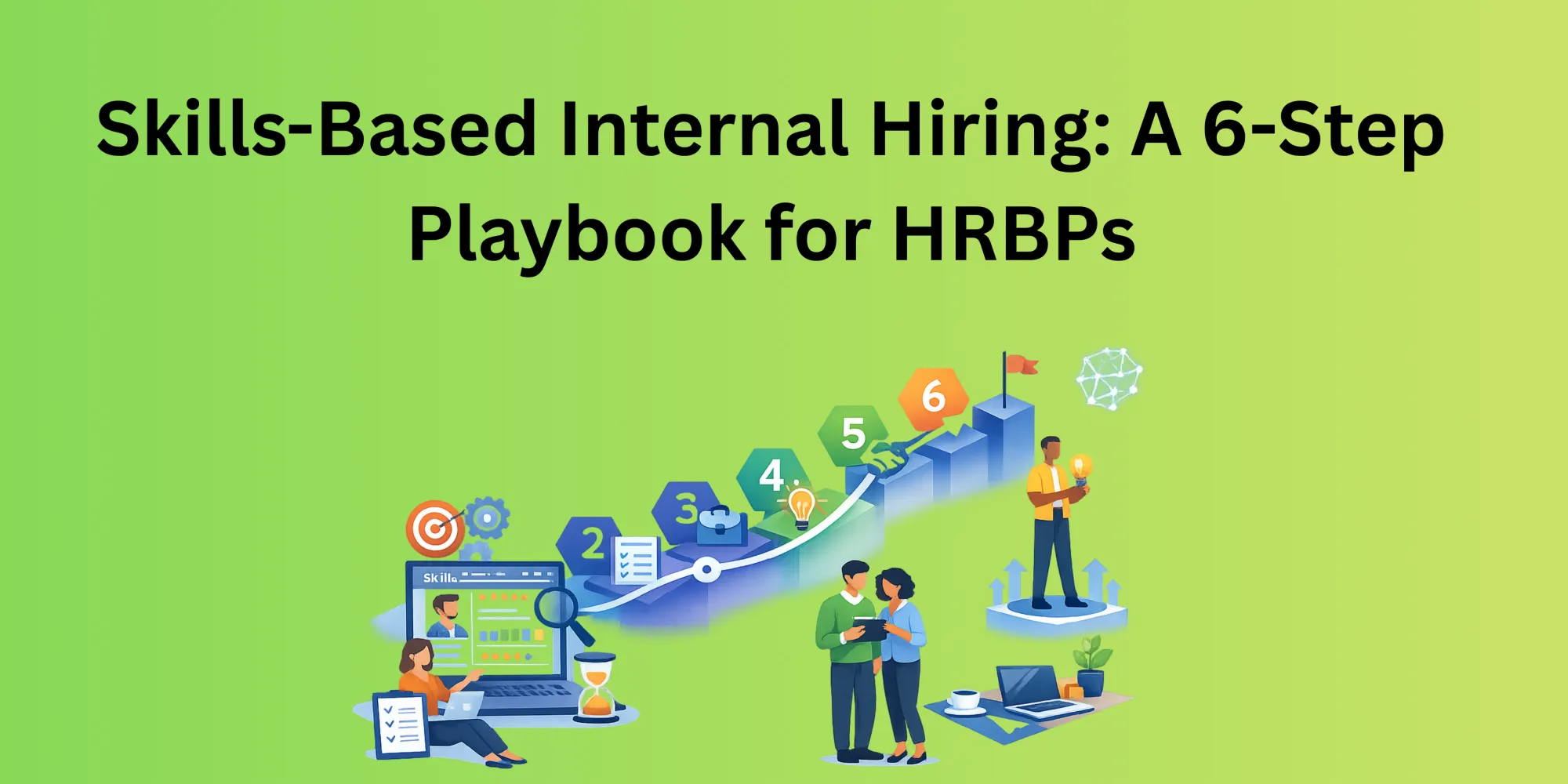

The hiring practices of companies are evolving. A more dynamic, capability-driven hiring strategy is replacing traditional role-based hiring. This change offers a significant chance to enhance retention and unlock internal potential. Businesses can match the right people to the right roles more quickly and efficiently with the aid of a well-structured skills-based hiring playbook.
We dissect a useful 6 step skills-based hiring roadmap for contemporary businesses and decision-makers in this blog.
Why Skills-Based Internal Hiring Matters
Organizations today face two challenges: a talent scarcity and increased attrition. However, a lot of businesses ignore the abilities that their employees already possess.
Instead of depending only on job titles or tenure, a skills-based hiring playbook focuses on discovering, mapping, and utilizing employee capabilities. This strategy results in increased employee engagement, better workforce utilization, and increased agility for CEOs and business executives.
Learn more about Skills-Based Internal Hiring.
The Skills-Based Hiring Playbook in 6 Steps
1. Create an inventory of skills
Start by identifying the skills that exist within your organization. This includes technical, functional, and soft skills.
Use assessments, manager inputs, and self-declarations to create a centralized skills database. A clear inventory is the foundation of any successful skills-based hiring playbook, enabling visibility into hidden talent.
2. Define Role Requirements by Skills
Go beyond job descriptions and provide precise skill needs for each post.
Describe success in terms of capabilities rather than a list of duties. This guarantees that genuine needs, not out-of-date role definitions, are the basis for recruiting decisions.
3. Implement Skills Assessments
Standardized tests aid in confirming whether workers have the necessary abilities.
These evaluations must to be impartial, reliable, and in line with corporate objectives. They improve decision-making accuracy and lessen bias when incorporated into your skills-based hiring playbook.
4. Establish Clear Internal Opportunities
Being seen is essential. Workers must be aware of the open positions and the necessary competencies.
Opportunities are made available through internal job marketplaces, employment portals, and frequent contact. Transparency promotes employee participation in internal hiring procedures and fosters confidence.
5. Enable Manager and HRBP Collaboration
Internal hiring necessitates coordination between managers and HRBPs, making it more than merely an HR job.
While HRBPs provide uniformity and equity, managers contribute role-specific insights. Together, they can make well-informed decisions that are advantageous to the company and the individual by using the skills-based hiring strategy.
6. Track Outcomes and Optimize
Without measurement, no playbook is complete. Keep an eye on important metrics including post-move performance, time-to-hire, and internal fill rate.
Make use of these ideas to improve your strategy. With each iteration, a data-driven skills-based hiring plan gets better and better.
Common Pitfalls to Avoid
Organizations may encounter difficulties even with a robust structure. Steer clear of overcomplicating skill taxonomies, ignoring employee communication, or depending too much on unverified self-reported talents.
Developing a system that is useful, scalable, and in line with corporate goals is the aim.
Contact us to upgrade your succession planning with actionable dashboards that align talent pipelines with your long-term business goals.
In conclusion
An effective skills-based hiring playbook is a competitive advantage rather than just a talent plan. It provides HRBPs and company executives with a methodical approach to enhance retention, save hiring expenses, and unleash internal potential.
Organizations that invest in skills-based internal hiring will be better positioned to lead, grow, and adapt as the nature of work continues to change.






















Sign in to leave a comment.