
Every Indian kitchen has a jar of it. Tucked into the back of the fridge, passed across the dining table without ceremony, eaten with everything from plain rice to buttered toast. Indian pickle—achar—is so deeply embedded in everyday eating that its complexity often goes unnoticed.
But look closer, and what you'll find is one of the most regionally diverse food traditions on the planet. From the mustard-oil-heavy mango achars of Punjab to the tamarind-drenched pickles of Andhra Pradesh, every corner of India has developed its own pickling philosophy—shaped by local climate, available produce, and centuries of practice. And among all these traditions, the pickles of Manipur occupy a place entirely their own.
Here is what makes Indian regional pickles worth understanding—and why the flavors coming out of the Northeast deserve your full attention.
1. India's Pickling Tradition Is Far More Diverse Than Most People Realize
Most people, when they picture Indian pickle, picture mango. And there is good reason for that—aam ka achar is a household staple from Kashmir to Kerala. But the category stretches far beyond that single fruit. Lemon, green chilli, garlic, turmeric, bitter gourd, bamboo shoot, fermented fish, and mixed vegetables all have deep-rooted regional pickling traditions built around them.
North Indian pickles tend to be bold and oil-forward, built on mustard oil and whole spices like kalonji and fenugreek. Western Indian states like Gujarat lean sweeter, often incorporating jaggery. The pickles of Andhra Pradesh are fiercely spiced and famous for their heat. Kerala's versions use coconut oil and lean heavily on aromatics like curry leaves and garlic.
What unites these styles is the underlying purpose: preservation. Before refrigeration, pickling was how families kept seasonal produce edible through the year. The methods evolved around what each region had in abundance—its climate, its soil, its harvest cycles. The result is a country where, as one estimate puts it, there are hundreds of distinct pickle varieties, and where no two households make the same jar the same way.
2. The North East Has a Pickling Philosophy Unlike Anywhere Else in India
If mainstream Indian pickling can be characterized by heavy oil and layered masala, northeastern pickling—and Manipuri pickling in particular—works on an entirely different logic.
Here, the emphasis falls on fermentation, minimal oil, and ingredients that are wild-harvested or organically grown in their native terrain. The goal is not to build complexity through spice blending, but to preserve and amplify what the ingredient already is. A Manipuri pickle tastes intensely of its primary ingredient. Nothing is masked. Nothing is smothered.
The central ingredient in this tradition is the Umorok—locally known as U-Morok, and recognized globally as the King Chilli or Ghost Pepper (Bhut Jolokia). Measuring between 855,000 and 1,040,000 Scoville Heat Units, it is one of the most potent chillies in the world. But calling it merely "hot" misses the point. The Umorok carries a fruity, faintly smoky aroma that arrives before the heat does. The initial taste is almost sweet; the heat builds slowly and lingers. That complexity is why Manipuri cooks have centered their pickling tradition around it.
Alongside the King Chilli, organic produce sourced from local farms and forests—bamboo shoots, soybeans, wild mushrooms—forms the foundation of what makes this pickle style so singular. These ingredients are not available in a supermarket. They come from a specific geography, harvested in a specific season, prepared by hands that have learned the process over a lifetime.
3. Fermentation Is the Craft at the Heart of Manipuri Pickle-Making
Fermentation is nothing new to Indian cooking. But in Manipur, it functions as the primary preservation mechanism—and as the key source of flavor depth.
Three fermented ingredients define the most iconic Manipuri pickle varieties:
Ngari (Fermented Fish): Ngari is small pungent fish, traditionally fermented in sealed earthen pots. The process concentrates the fish's umami character into something deeply savory—an ingredient that transforms any pickle it touches. When combined with King Chilli, it creates a condiment that is simultaneously fiery, earthy, and intensely complex. This combination—King Chilli with Ngari—is the blueprint for one of Manipur's most celebrated pickle styles.
Soibum (Fermented Bamboo Shoots): Tender bamboo shoots are stripped, cut, and left to ferment through natural lactic acid bacteria for anywhere between three and twelve months. No commercial starters are added. The finished Soibum develops a sour, tangy, earthy character that cuts through fat and heat with precision. Research has documented the natural probiotic content of traditionally fermented bamboo shoots—what began as a preservation technique turns out to also support gut health.
Hawaijar (Fermented Soybean): Manipur's equivalent to East Asian natto, Hawaijar is prepared by boiling and dehulling soybeans before fermenting them using traditional methods. The result is nutty, umami-forward, and protein-rich. When blended with King Chilli and local aromatics, Hawaijar forms the backbone of a chilli-soybean pickle style that is as deeply flavorful as any fermented product anywhere in the world.
What all three share is this: they were not invented in a commercial kitchen. Each one evolved out of practical necessity—preserving the harvest, sustaining families through lean months—and became, over generations, the defining character of a regional food culture.
4. Meira Foods Has Been Bringing This Heritage to Tables Across India Since 2004
Understanding where Meira Foods comes from matters, because the brand is not simply a pickle company. It is a preservation project—and a social one at that.
In January 2004, Hanjabam Shubhra Devi started Meira Foods from her kitchen in Bamon Leikai, Imphal East. Shubhra held a Master's degree in food and nutrition and had spent a decade in the development sector, training women from low-income households in food processing and livelihood generation. Frustrated that the training rarely translated into actual enterprises, she decided to build one herself—with a few hundred rupees and three women from the community she had worked with.
The vision was specific from the beginning: tap into the wealth of indigenous produce that Manipur's forests and farms produce in abundance, and convert it into food products that could travel. Products that could carry the flavors of the region to people living outside it.
The King Chilli was her first major target. "I wanted to deliver a very special pickle from our land," she has said. The King Chilli range became Meira Foods' signature—and to this day remains the highest-revenue line in their catalog. From there, the brand expanded into King Chilli with fermented fish, King Chilli with fermented soybean, bamboo shoot pickles, and organic mushroom pickles—each one rooted in traditional Manipuri recipes, each one made without artificial preservatives.
By 2021, Meira Foods was reporting annual turnover in the crores, directly employing 70 women from poverty-stricken households, and supporting more than 100 people indirectly through affiliated self-help groups. The brand won the FICCI Outstanding Entrepreneur Award in 2018 and received recognition from the National Small Industries Corporation.
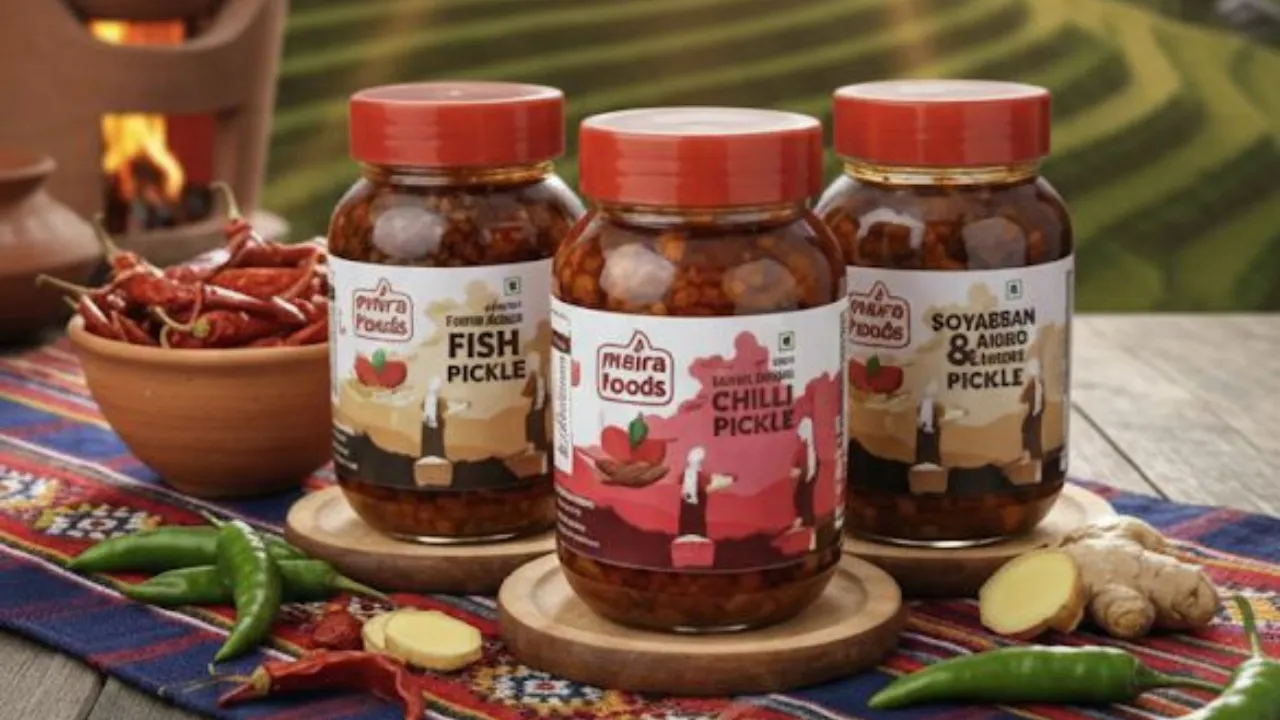
Today, Meira Foods' product lineup centers on three standout pickles:
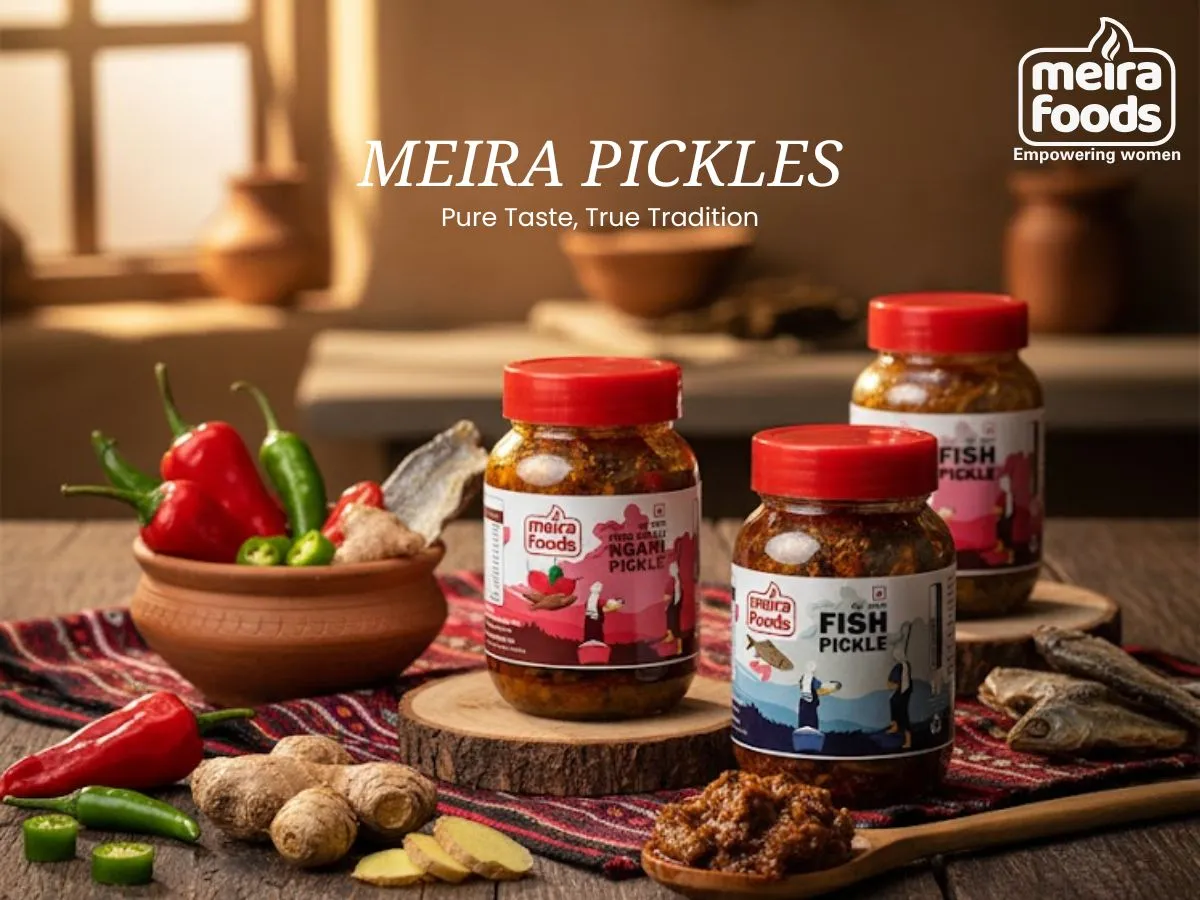
- King Chilli Ngari Pickle: The landmark combination of Umorok and fermented fish—fiery, umami-rich, and deeply characteristic of Manipuri flavor tradition.
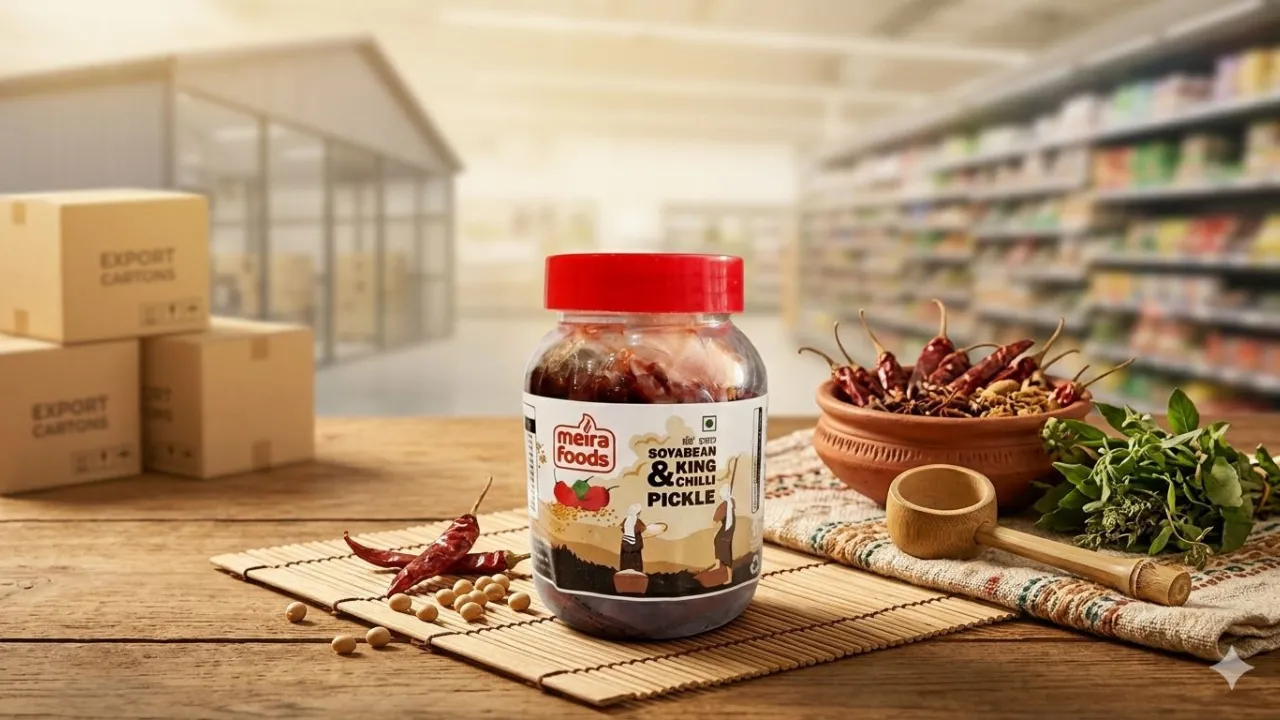
- King Chilli and Soyabean Pickle: King Chilli paired with Hawaijar fermented soybean—a protein-dense, complex condiment built on centuries of indigenous fermentation knowledge.
- Bamboo Shoot & Oyster Mushroom Pickles: Products drawn from Manipur's forest and agricultural wealth, converted into shelf-stable pickles that carry the distinctive tang and earthiness of the region.
Every jar is handcrafted using artisanal methods, made from naturally sourced ingredients, and produced without artificial preservatives—a commitment to clean-label production that is as much a reflection of Meira Foods' values as its recipes.
5. A Regional Pickle Can Transform the Way You Cook Every Day
The standard way to think about pickle is as a condiment—something spooned alongside rice or rotis to add a hit of flavor. That framing underestimates what a well-made regional pickle can do in a kitchen.
Manipuri pickles, in particular, are ingredient-grade condiments. A spoonful of King Chilli Ngari Pickle stirred into a broth adds depth, heat, and salinity in one step. A small amount of chilli-soybean pickle mixed into a marinade does the work of several separate spices. Bamboo shoot pickle, with its natural acidity, can replace vinegar or tamarind in certain dishes while adding complexity those ingredients cannot replicate.
Because Manipuri pickles rely on fermentation rather than heavy oil for their flavor and preservation, they also integrate into cooking without making the dish greasy. They function as flavoring agents as much as condiments—tools for building complexity without hours of prep.
For home cooks interested in exploring northeast Indian cuisine, a jar of Meira Foods' King Chilli pickle is genuinely one of the most efficient ways to start. The flavor profile is unlike anything available in a standard grocery aisle, and a little goes a very long way.
6. Supporting Artisanal Regional Food Is How Traditional Knowledge Survives
The methods behind authentic Manipuri pickling—natural fermentation, sun-drying, minimal oil, aging in traditional containers—cannot be replicated at industrial scale without fundamental compromises. They depend on seasonal ingredients, patient timing, and skill developed through years of practice. They depend, above all, on people who still know how to do it.
In Manipur, the women of Meira Foods are those people. They are the ones who source from local farmers, carry forward recipes learned from the previous generation, and produce pickles the way they have always been produced—not as a marketing angle, but because that is simply how it is done.
When you purchase a jar of authentic Manipuri achar from Meira Foods, the transaction is straightforward. The value it represents is considerably deeper: a direct connection to an agricultural community, a form of employment for women who might otherwise have none, and the continued practice of a food tradition that has been alive in northeast India for centuries.
That is worth more than a condiment. It is worth tasting.
























Sign in to leave a comment.