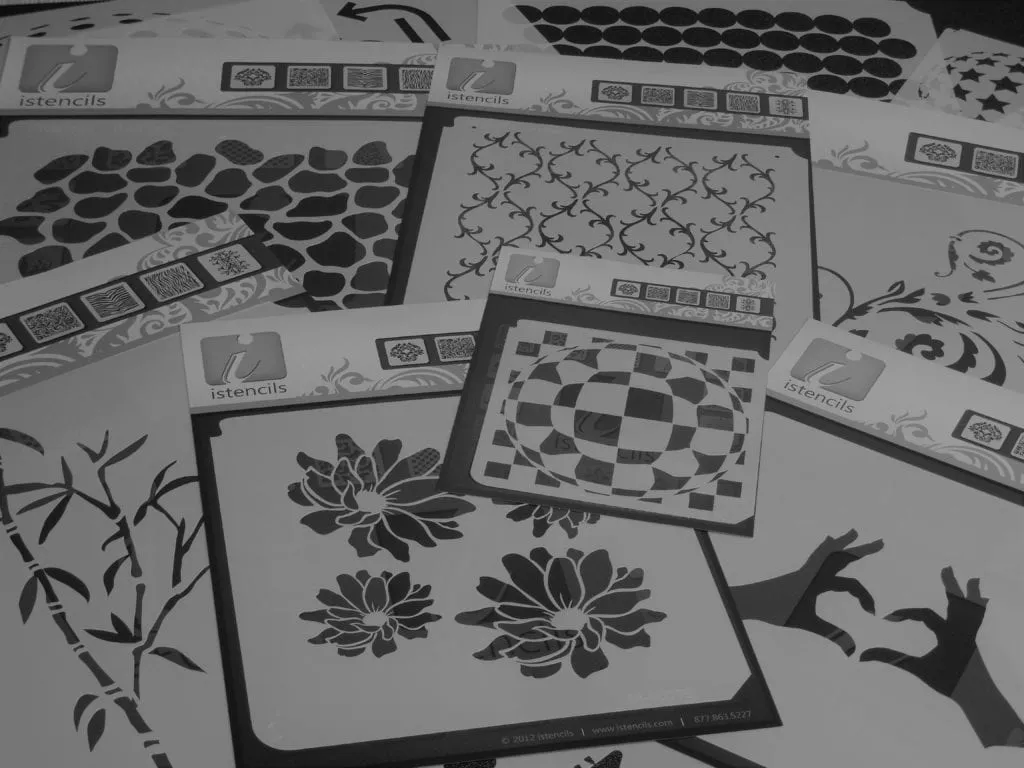

Transforming interior spaces with a custom wall stencil design offers a cost-effective, highly durable alternative to expensive wallpaper or custom mural painting. While paper and cardboard templates break down quickly when exposed to wet latex or acrylic paint, Mylar stencil material provides the exact balance of flexibility, tear resistance, and edge crispness needed for seamless home transformations.
Made from premium polyester film, Mylar lays flat against drywall, plaster, and wood without curling. Its semi-translucent nature enables precise alignment for complex repeating patterns, while its non-porous surface prevents paint bleeding under the edges.
Below is an in-depth exploration of the 7 best ways to use Mylar for your next wall stencil design project, along with professional tips on choosing the right material thickness.
1. Modern Geometric Wall Stencil Design
Geometric patterns are among the most popular choices for contemporary home interiors. Using a durable Mylar stencil ensures razor-sharp, straight paint lines when creating herringbone, honeycomb, mid-century diamonds, or chevrons across an entire feature wall.
Because Mylar is semi-transparent, decorators can easily visually line up the registration marks of the stencil when shifting it row by row across a broad surface. This transparency guarantees that your geometric pattern stays perfectly level and straight from the floor up to the ceiling line without cumulative alignment errors.
2. Intricate Moroccan and Damask Accent Walls
A detailed wall stencil design featuring classic damask motifs or intricate Moroccan trellis work brings instant elegance to dining rooms, master bedrooms, and entryway foyers.
Unlike paper templates that absorb moisture and sag after two or three applications, a Mylar stencil holds its structural integrity throughout an entire room installation. You can apply heavy latex paint using a high-density foam roller or a traditional stenciling brush continuously without worrying about delicate internal stencil bridges softening or tearing apart.
3. Faux Tile Refreshes for Kitchens and Bathrooms
Tearing out outdated ceramic tile in a kitchen backslash or bathroom floor is noisy, mess-heavy, and expensive. Stencilling offers a brilliant alternative. Using specialised bonding primers and tile paint, you can apply intricate Mediterranean, Talavera, or Encaustic tile designs directly over plain existing tiles or smooth drywall.
Mylar handles tough, solvent-based tile paints and heavy epoxy coatings effortlessly. Because the material is completely waterproof, you can scrub the stencil completely clean between color coats to keep your paint lines crisp and clear.
4. Tropical and Botanical Feature Murals
Large-scale botanical motifs—such as cascading palm fronds, oversized monstera leaves, or delicate cherry blossom branches—can turn a plain living room wall into a vibrant tropical focal point.
Because walls are rarely perfectly flat, flexible 7 mil or 10 mil Mylar sheets excel here. The material bends easily around tight architectural corners, door frames, baseboards, and light switches without creasing permanently or cracking, allowing the botanical design to flow seamlessly around structural obstacles.
5. Nursery and Children's Room Borders
Designing a nursery or children's bedroom often calls for playful, custom accent borders—such as repeating mountain ranges, woodland animals, cloudscapes, or star field motifs.
Mylar is chemical-resistant and entirely non-toxic once cleaned, making it ideal for home environments. After finishing the nursery wall, simply wash the stencil with warm water and mild soap, wipe it dry with a soft cloth, and lay it flat for future reuse or touch-ups as your child grows.
6. Distressed Brick and Faux Texture Patterns
Achieve an industrial loft or rustic farmhouse aesthetic by applying a brick, stone, or concrete-texture wall stencil design. Mylar stencils can handle heavy dimensional mediums—including joint compound, plaster, and textured acrylic pastes—without losing their shape.
By smearing plaster through a thick Mylar stencil with a putty knife, you can create raised, three-dimensional brick and stone patterns that mimic real masonry at a fraction of the weight and cost.
7. Metallic Accent Framing and Ceiling Medallions
Adding metallic gold, bronze, or silver stencil designs around ceiling light fixtures, along crown molding, or framed inside wall panelling creates a luxurious architectural detail.
Mylar acts as a complete fluid barrier against runny metallic paints and glazes. It prevents paint seepage underneath the stencil edges, yielding sharp, high-contrast metallic borders that catch the light beautifully.
Conclusion
Mylar remains the ultimate choice for achieving crisp, professional results across home decor, DIY crafts, and industrial applications. Its unique combination of flexibility, chemical resistance, and reusable durability ensures that your designs remain sharp from the first coat of paint to the last. Whether you are transforming a living room with a custom wall pattern or marking heavy machinery, choosing the right Mylar thickness makes all the difference.
To bring your creative and commercial visions to life effortlessly, you can design and order your custom stencil online to match your exact project specifications. With proper cleaning and flat storage, a quality Mylar stencil will serve as a reliable, cost-effective tool for countless projects to come.
























Sign in to leave a comment.