

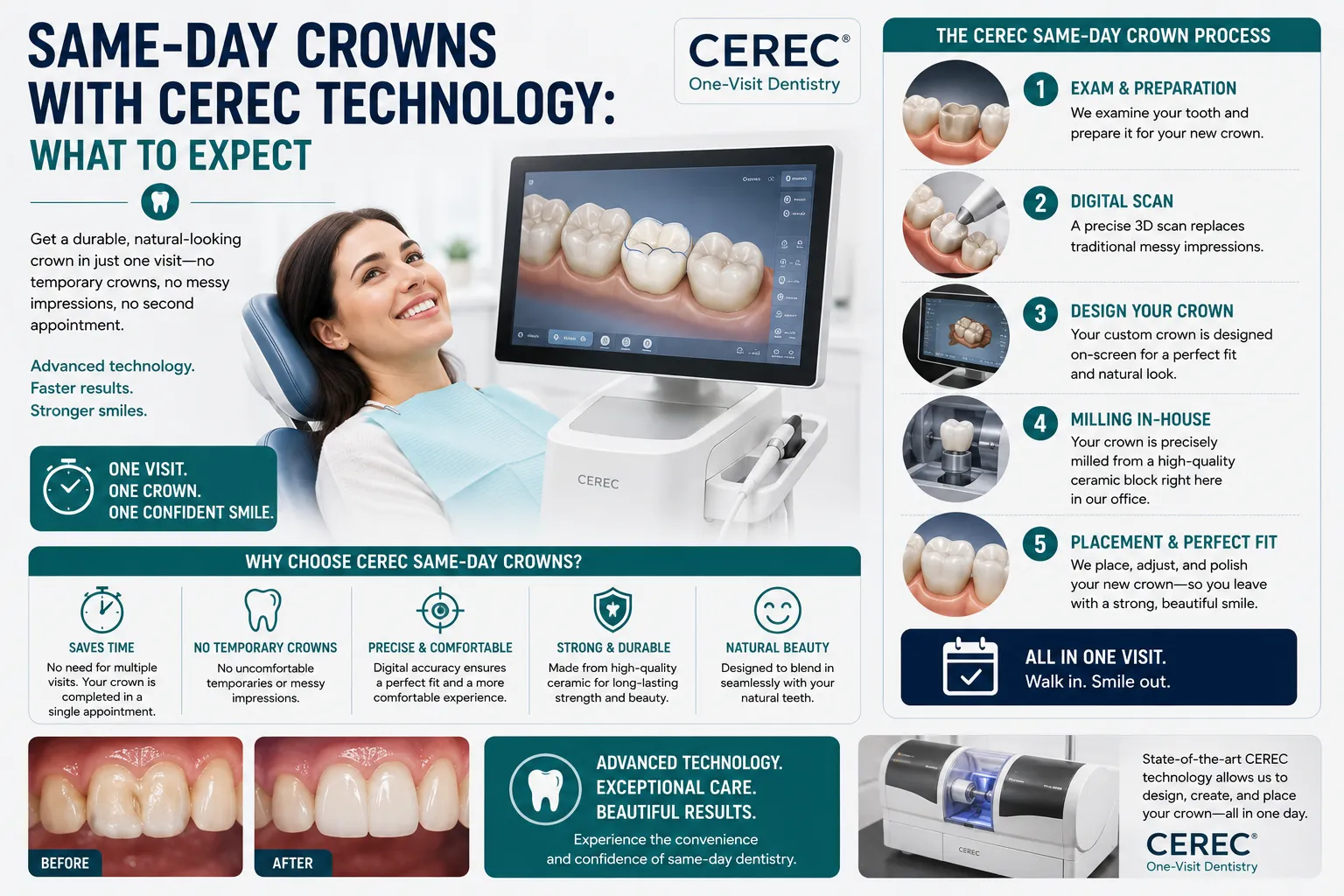
CEREC technology allows a custom dental crown to be designed, milled, and fitted in a single appointment, eliminating the traditional wait of 2 or more weeks between preparation and final placement. This same-day approach uses 3D digital scanning and in-office milling to produce a precise, durable crown without the temporary crown, lab wait, or second visit that older methods require. Below, we walk through exactly what happens during a same-day CEREC appointment, and how it compares to the traditional crown process.
What Is CEREC Technology?
CEREC stands for Chairside Economical Restoration of Esthetic Ceramics, a system that combines 3D digital scanning, computer-aided design, and an in-office milling machine to produce a custom ceramic crown without sending an impression to an outside dental lab. The entire process happens within the dental practice itself, which is what allows a crown to be designed and fitted in the same visit rather than requiring a wait for lab fabrication. This technology has become a significant advancement in restorative dentistry, since it removes one of the most inconvenient aspects of getting a crown: the multi-week gap between preparation and final placement.
How Does the Same-Day Crown Process Work?
The same-day crown process follows 4 main steps within a single appointment: preparing the tooth, digitally scanning it, designing and milling the crown, and fitting and cementing the final restoration. Unlike traditional crowns, there's no need for a physical impression using putty, and no temporary crown is required to protect the tooth while you wait for the permanent one to be made elsewhere. This streamlined process is what allows the entire procedure, from start to finish, to typically be completed in 1 to 2 hours.
Step 1: Preparing the Tooth
The dentist first prepares the tooth by removing any decay or damaged structure and shaping the remaining tooth to accommodate the crown, the same starting point used in both traditional and same-day crown procedures. Local anaesthetic is used to keep this step comfortable, exactly as it would be with a conventional crown preparation.
Step 2: Digital Scanning
Instead of taking a physical impression with putty, the dentist uses a small handheld scanner to capture a precise 3D digital image of the prepared tooth and surrounding teeth. This digital scan is significantly more comfortable than a traditional impression, and it also provides greater accuracy, since it captures fine detail that can sometimes be lost with a physical mould.
Step 3: Designing and Milling the Crown
Once the scan is complete, the dentist uses specialised software to design the crown directly on screen, customising its shape and fit to match your bite and surrounding teeth precisely. The finished digital design is then sent to an in-office milling machine, which carves the crown from a solid block of ceramic material in around 15 to 20 minutes, while you wait in the practice.
Step 4: Fitting and Cementing
Once milled, the dentist checks the crown's fit and makes any minor adjustments needed before permanently cementing it into place. The colour is matched to your surrounding teeth beforehand during the design stage, so the finished result blends naturally with the rest of your smile from the moment it's fitted.
How Does Same-Day CEREC Compare to Traditional Crowns?
Traditional crowns require 2 appointments spaced roughly 2 weeks apart, with a temporary crown worn in between while the permanent crown is fabricated at an external dental lab. Same-day CEREC crowns compress this entire timeline into a single visit, removing the need for a temporary crown altogether and eliminating the inconvenience of a second appointment. This makes CEREC crowns particularly appealing for patients with busy schedules, those who find temporary crowns uncomfortable, or anyone who simply prefers to complete treatment in one sitting rather than returning weeks later.
What Are the Benefits of Choosing a Same-Day Crown?
Choosing a same-day crown offers 4 key benefits: no temporary crown to manage or accidentally dislodge, no second appointment required, greater comfort from digital scanning instead of a physical impression, and a highly precise fit thanks to the accuracy of digital design and milling. Temporary crowns, while functional, are more prone to coming loose or feeling less secure than a permanent restoration, so avoiding this interim step altogether is a meaningful convenience for many patients. Our same-day CEREC crowns page covers more detail on how this technology is used across different restorative cases at the practice.
Is a Same-Day Crown as Durable as a Traditional Crown?
A same-day CEREC crown is just as durable as a traditional lab-made crown, since both are made from similarly strong ceramic materials designed to withstand normal biting and chewing forces over many years. The milling process used in CEREC technology produces a precisely fitted, solid ceramic restoration comparable in strength and longevity to crowns fabricated through traditional lab methods. The main difference between the two lies in the timeline and process, not in the quality or lifespan of the final result.
What Situations Call for a Same-Day Crown?
Same-day crowns are commonly used for teeth with large cavities that can't be restored with a filling, cracked or fractured teeth, and teeth that have undergone root canal treatment and need reinforcement to prevent future fracture. They're also used to place a crown over an individual dental implant, completing the restoration in a single visit rather than requiring a separate follow-up appointment. Our crowns and bridges page covers the broader range of situations where a crown may be recommended, whether same-day or through a traditional lab process.
Are There Any Situations Where Same-Day Crowns Aren't Suitable?
Same-day crowns aren't suitable in every situation, particularly for more complex cases involving multiple teeth requiring a bridge, or cases needing more extensive planning around bite alignment or aesthetics that benefit from lab-based fabrication and additional review time. Your dentist will assess your specific case during the appointment and let you know if a same-day crown is appropriate or if a traditional approach would better suit your needs. This assessment is a routine part of the process, so it's not something you need to determine on your own beforehand.
What Should You Expect After Getting a Same-Day Crown?
After getting a same-day crown, mild sensitivity to hot or cold for a few days is normal and typically resolves on its own as the tooth settles following the procedure. You can generally eat normally once the local anaesthetic wears off, though it's sensible to avoid particularly hard or sticky foods for the first day or so while everything settles into place. Long-term care for a same-day crown is identical to any other crown — regular brushing, flossing, and 6-monthly check-ups are all that's needed to keep it functioning well for years to come.
Frequently Asked Questions
How long does a same-day CEREC crown appointment take?
A same-day CEREC crown appointment typically takes 1 to 2 hours from start to finish, including tooth preparation, scanning, milling, and fitting. This is considerably faster than the traditional process, which spans 2 separate visits over roughly 2 weeks.
Does a same-day crown look as natural as a traditional crown?
Yes, a same-day crown looks just as natural as a traditional crown, since the shade is matched to your surrounding teeth during the digital design stage before milling begins. The ceramic material used also closely mimics the translucency and appearance of natural tooth enamel.
Is the same-day crown procedure more expensive than a traditional crown?
Pricing for same-day and traditional crowns is generally comparable, since the cost reflects the materials and complexity of the restoration rather than the timeline of the procedure. It's worth confirming exact pricing with your dental practice, as this can vary based on individual case complexity.
Can a same-day crown be used to restore a tooth after a root canal?
Yes, a same-day crown is commonly used after root canal treatment, since a tooth becomes more brittle once the internal pulp is removed and benefits from the added protection a crown provides. Completing this in the same appointment, where suitable, avoids leaving the tooth vulnerable while waiting for a separate crown visit.

























Sign in to leave a comment.