
Every year, millions of people are left searching for answers — living with wounds that won't heal, neurological setbacks that don't fully recover, or infections that fight back harder than expected. When conventional medicine hits a wall, many patients and healthcare providers are turning toward a powerful, science-backed solution that has been quietly transforming outcomes for decades. That solution is Hyperbaric Oxygen Therapy (HBOT), and the technology behind it — built and advanced by trusted hyperbaric chamber manufacturers — is opening new doors in modern medicine.

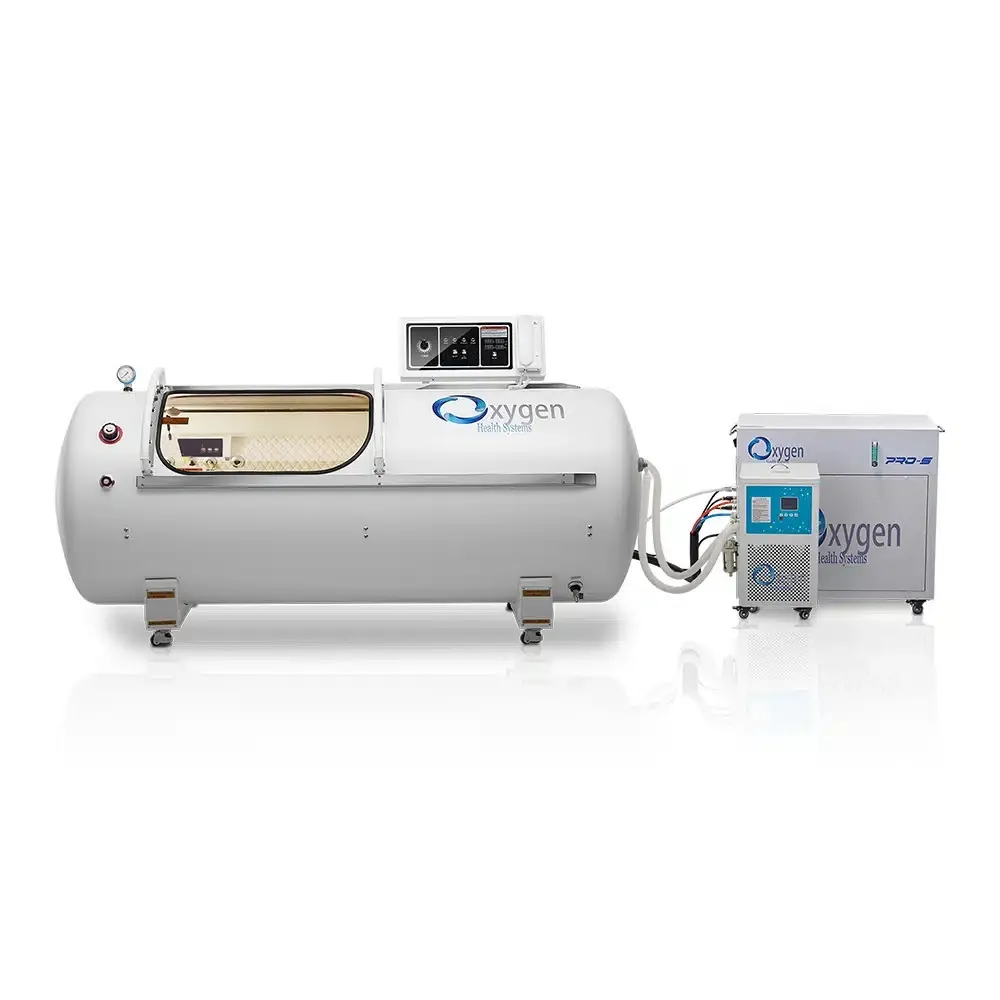
Hyperbaric Oxygen Therapy works by placing a patient inside a pressurized chamber where they breathe pure oxygen at levels far above what's possible under normal atmospheric conditions. This flood of oxygen into the bloodstream does something remarkable — it reaches tissues, organs, and cells that are starved of it, igniting the body's natural healing mechanisms. Think of it as giving the body a full tank of fuel when it's been running on empty.
But what conditions does it actually treat? Let's break it down — clearly, honestly, and with the depth that patients and providers deserve. Keep reading.
Non-Healing Diabetic Wounds and Ulcers
Diabetes is one of the most relentless conditions in modern healthcare. One of its cruelest complications is the diabetic foot ulcer — a wound that simply refuses to close. Poor circulation, nerve damage, and compromised immune response combine to create the perfect storm of slow or stalled healing.
This is where Hyperbaric Oxygen Therapy steps in like a lifeline. When a patient undergoes HBOT inside a chamber designed by leading hyperbaric chamber manufacturers, the elevated oxygen concentration super-saturates the blood and plasma. This drives oxygen deep into ischemic (oxygen-deprived) tissue — tissue that conventional wound care simply cannot reach.
Clinical studies have consistently shown that HBOT reduces the risk of amputation in diabetic patients with chronic wounds. It does this by stimulating angiogenesis (the growth of new blood vessels), enhancing white blood cell activity, and creating an environment hostile to infection. For anyone living with a wound that has ignored every other treatment, this therapy can be nothing short of a turning point.
Carbon Monoxide Poisoning
Time is tissue — and nowhere is that truer than in cases of carbon monoxide poisoning. CO poisoning is notoriously deceptive. The gas is colorless, odorless, and can silently displace oxygen from red blood cells, starving the brain and heart of what they need most.
Standard emergency treatment uses normobaric oxygen, but for severe poisoning, that often isn't enough. Hyperbaric Oxygen Therapy accelerates the elimination of carboxyhemoglobin (COHb) — the harmful compound formed when CO binds to hemoglobin — far more rapidly than breathing regular oxygen at normal pressure.
In a hyperbaric chamber, the process that might take hours under normal oxygen conditions compresses into a fraction of that time. Neurological damage, cardiac complications, and long-term cognitive decline associated with CO poisoning are significantly reduced when HBOT is administered promptly. Reputable hyperbaric chamber manufacturers engineer their systems with this exact urgency in mind — building chambers that are reliable, precise, and ready when lives are on the line.
Decompression Sickness (The Bends)
Divers know the risk well. When ascending too quickly after a deep dive, nitrogen bubbles can form in the bloodstream and tissues — a condition known as decompression sickness or "the bends." It's painful, dangerous, and in severe cases, potentially fatal or permanently disabling.
Hyperbaric Oxygen Therapy is the gold standard treatment for decompression sickness, and it has been for decades. The elevated pressure inside a hyperbaric chamber physically shrinks the nitrogen bubbles, while the high-concentration oxygen helps flush the nitrogen out of the body far more efficiently.
The precision engineering that goes into modern hyperbaric systems — a direct result of advances made by skilled hyperbaric chamber manufacturers — ensures that pressure can be carefully controlled and incrementally adjusted, which is essential for safely and effectively treating this condition. It is not an exaggeration to say that for decompression sickness, HBOT isn't just the best option — it's often the only real option.
Radiation Injury (Osteoradionecrosis and Soft Tissue Radionecrosis)
Cancer patients fight incredibly hard to survive. But for many who undergo radiation therapy, the battle doesn't end when the cancer does. Radiation can damage healthy tissue over time, leading to conditions like osteoradionecrosis (bone death in irradiated areas, often the jaw) and soft tissue radionecrosis, where irradiated tissue loses its blood supply and begins to break down. Hyperbaric Oxygen Therapy is one of the few treatments that directly addresses the root cause of radiation injury: chronic oxygen deficiency in damaged tissue.
By regularly exposing affected areas to hyperbaric oxygen, the therapy stimulates the formation of new blood vessels in previously irradiated tissue — essentially re-vascularizing areas that radiation had left barren. For patients facing jaw bone deterioration after head and neck cancer radiation, or tissue breakdown following pelvic radiation, HBOT offers a meaningful path to tissue preservation and quality of life restoration. Leading hyperbaric chamber manufacturers continue to refine their equipment to meet the exacting protocols required for radiation injury treatment, ensuring that each session delivers consistent therapeutic pressure and oxygen levels.
Serious Infections: Necrotizing Fasciitis and Clostridial Myonecrosis (Gas Gangrene)
When infection moves fast, and tissue death follows, every hour matters. Necrotizing fasciitis — the dreaded "flesh-eating bacteria" infection — and gas gangrene (clostridial myonecrosis) are life-threatening emergencies that can overwhelm even aggressive surgical and antibiotic treatment.
Hyperbaric Oxygen Therapy plays a critical adjunctive role in managing these infections. High oxygen concentrations are directly toxic to the anaerobic bacteria responsible for gas gangrene, effectively stopping the infection at a biological level. For necrotizing fasciitis, HBOT reduces tissue destruction, enhances the body's immune response, and improves the effectiveness of antibiotics.
Used alongside surgery and antibiotics — never as a replacement — HBOT has been shown to improve survival rates and reduce the extent of tissue damage in patients with these severe infections. The robustness and reliability of the chambers used in these life-or-death situations speak directly to the engineering standards that serious hyperbaric chamber manufacturers hold themselves to.
Compromised Skin Grafts and Flaps
Reconstructive surgery is a medical art form. Surgeons work with extraordinary precision to restore form and function after trauma, cancer resection, or severe burns. But even the most perfectly executed skin graft or tissue flap can fail if the blood supply is insufficient.
When a graft or flap begins to show signs of compromise — inadequate oxygen delivery, poor color, sluggish capillary refill — the clock starts ticking. Hyperbaric Oxygen Therapy is a proven, evidence-based intervention to rescue these threatened reconstructions. By saturating the blood with oxygen and promoting angiogenesis in the surrounding tissue, HBOT dramatically improves the survival rate of compromised grafts and flaps.
For patients who have already been through the physical and emotional ordeal of reconstructive surgery, the possibility of a failed graft is devastating. HBOT offers surgeons and patients a powerful tool to tip the odds back in their favor — and quality hyperbaric chamber manufacturers make sure that tool is dependable when it's needed most.
Traumatic Brain Injury and Stroke Recovery
Perhaps one of the most compelling — and still-evolving — areas of HBOT application is in neurological recovery. Traumatic brain injury (TBI) and stroke both involve regions of the brain that suffer from oxygen deprivation. In many cases, surrounding brain tissue is injured but not dead — it exists in a state of metabolic dysfunction, waiting for conditions that might allow recovery.
Hyperbaric Oxygen Therapy is showing remarkable promise in this space. By delivering supraphysiologic (above-normal) levels of oxygen to brain tissue, HBOT can awaken dormant neurons, reduce inflammation, and support neuroplasticity — the brain's ability to rewire and repair itself. Research into HBOT for TBI and post-stroke rehabilitation continues to grow, with multiple clinical studies reporting improvements in cognitive function, motor skills, and quality of life.
While HBOT for neurological conditions is used in certain clinical settings and continues to be studied, the progress being made is genuine and significant. As research matures and protocols are refined, the role of hyperbaric oxygen in brain injury recovery is becoming increasingly recognized — and the equipment behind those protocols, designed by innovative hyperbaric chamber manufacturers, plays an indispensable role in delivering consistent, safe, and therapeutic results.
Conclusion
Understanding the science behind Hyperbaric Oxygen Therapy is just the beginning. If you or someone you care for is managing a condition listed above — whether it's a stubborn diabetic wound, lingering effects from radiation treatment, or recovery from a neurological injury — the most important step is a conversation with a qualified medical professional who specializes in HBOT.
When exploring treatment options, it's equally important to ask about the equipment being used. The quality and engineering precision of a hyperbaric chamber directly affect the safety and effectiveness of every session. Patients and healthcare providers alike should seek facilities that work with reputable hyperbaric chamber manufacturers — those with a proven track record of clinical-grade design, regulatory compliance, and consistent performance standards.
Healing is rarely a straight line, but with the right information and the right tools, the path forward becomes far clearer. Hyperbaric Oxygen Therapy isn't a miracle cure — but for the right conditions, in the right hands, with the right equipment, it can be the turning point that changes everything.
























Sign in to leave a comment.