
If you have spent any time exploring kratom products or reading alkaloid labels, you have likely come across two names again and again: mitragynine and 7 hydroxymitragynine. These compounds are often discussed together, yet they are not the same. Understanding how they differ can help you make more informed decisions when comparing kratom leaves, extracts, and modern alkaloid focused products.
This guide breaks down the key differences between 7 hydroxymitragynine and mitragynine in a clear, conversational way. We will focus on sourcing, structure, concentration, product types, and why these alkaloids matter in today’s kratom market, without getting into medical or health related claims. For consumers seeking a more standardized experience, brands like 7OH.com offer pure 7-hydroxymitragynine products in tablet and
shot formats with lab-verified potency.
Understanding Kratom Alkaloids at a Basic Level
Kratom leaves naturally contain dozens of alkaloids. Alkaloids are plant based compounds that contribute to the unique characteristics of a plant. In kratom, two alkaloids tend to receive the most attention due to their prevalence and importance in product formulation.
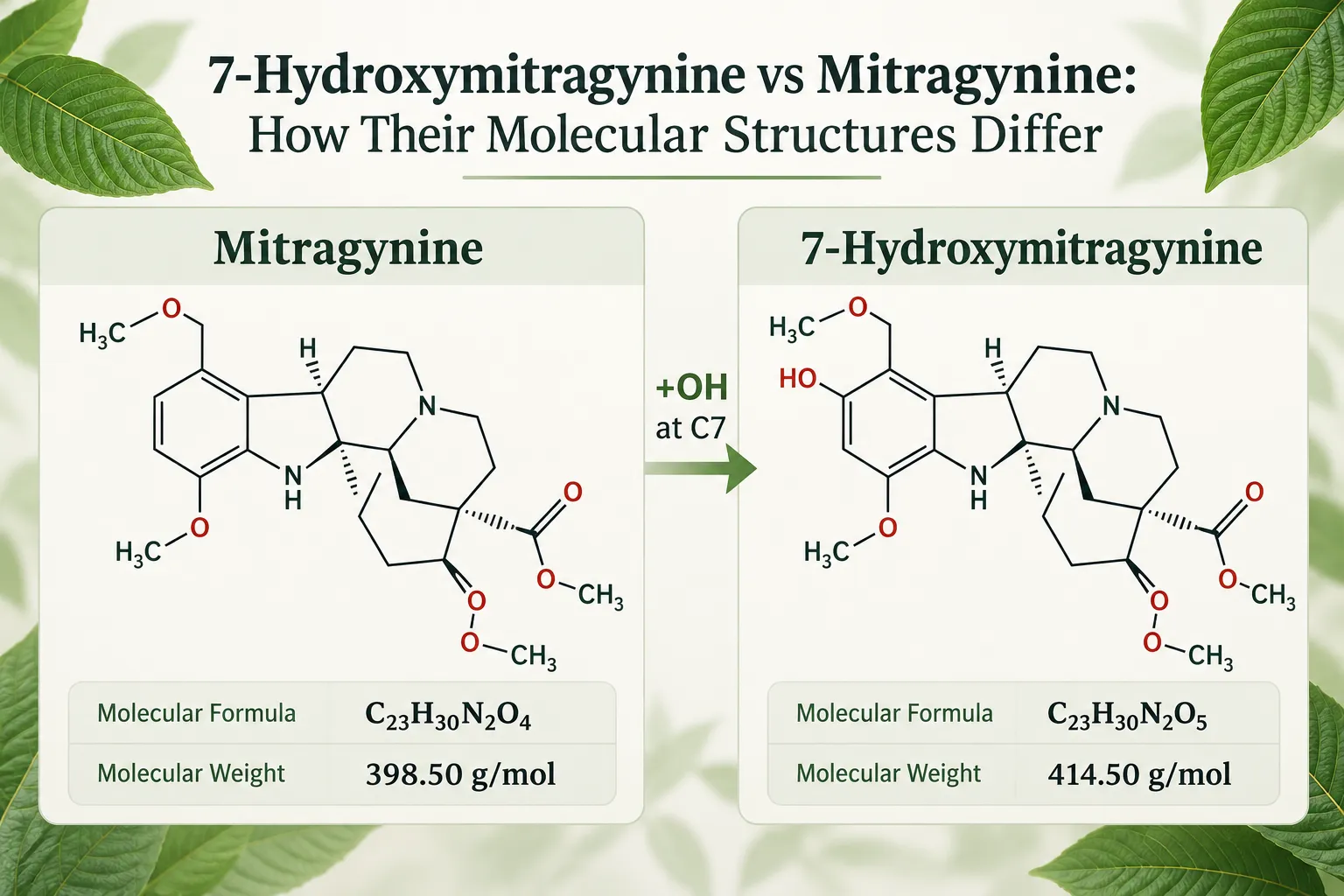
Mitragynine is the most abundant alkaloid found in kratom leaves. 7 hydroxymitragynine, on the other hand, appears in much smaller quantities. Despite its lower natural presence, it plays a notable role in certain kratom extracts and enhanced products.
Understanding these two compounds starts with knowing where they come from and how they are formed.
What Is Mitragynine
Mitragynine is the primary alkaloid found in kratom leaves. In most raw kratom powders, it makes up the largest percentage of total alkaloid content. Because of this, mitragynine is often used as a reference point when discussing kratom quality and strength.
This alkaloid is naturally produced by the kratom tree during leaf growth. Factors such as soil quality, climate, leaf maturity, and harvesting methods can all influence mitragynine levels.
When you see a lab report listing mitragynine content, it is usually expressed as a percentage. This number helps buyers compare one batch or product to another.
Read More: What is 7-Hydroxymitragynine?
What Is 7 Hydroxymitragynine
7 hydroxymitragynine is another alkaloid found in kratom, but in far smaller amounts than mitragynine. In raw kratom leaf, it typically appears at trace levels. However, it can become more prominent through processing, oxidation, or specialized extraction methods.
Unlike mitragynine, which dominates natural leaf composition, 7 hydroxymitragynine is often associated with refined or enhanced products. Many modern kratom extracts are formulated to highlight or concentrate this alkaloid.
Because of its low natural presence, products containing notable levels of 7 hydroxymitragynine are usually the result of intentional formulation rather than simple leaf grinding.
Natural Abundance and Concentration Differences
One of the most important differences between mitragynine and 7 hydroxymitragynine is how much of each occurs naturally.
Mitragynine is abundant. It is the backbone of most traditional kratom products and serves as a baseline for evaluating leaf quality. Kratom powders, capsules, and teas primarily reflect the natural mitragynine profile of the plant.
7 hydroxymitragynine is rare by comparison. In unprocessed leaves, it exists in extremely small quantities. This rarity is one reason it is often highlighted in product descriptions, especially for extracts and alkaloid specific offerings.
When comparing products, this difference in natural concentration explains why mitragynine percentages are common on labels, while 7 hydroxymitragynine is usually mentioned only in specialized formulations.
How Each Alkaloid Is Formed
Mitragynine is produced directly by the kratom plant as it grows. Its formation is influenced by environmental conditions and genetics. This makes mitragynine content relatively stable within certain regional varieties of kratom.
7 hydroxymitragynine can form through natural processes, but it is also known to appear as a result of oxidation and conversion. During drying, aging, or extraction, small amounts of mitragynine may transform into 7 hydroxymitragynine.
This difference in formation is one reason why 7 hydroxymitragynine is often associated with processed products rather than raw leaf material.
Role in Traditional Kratom Products
Traditional kratom products such as powders, crushed leaf, and basic capsules are dominated by mitragynine. These products reflect the natural alkaloid balance of the plant, with mitragynine leading the profile.
In these formats, 7 hydroxymitragynine plays a minimal role due to its low concentration. Buyers choosing traditional kratom products are primarily interacting with mitragynine and the broader alkaloid spectrum.
This is why mitragynine content is frequently discussed in relation to strain comparisons and leaf quality.
Role in Modern Extracts and Enhanced Products
Modern kratom extracts have changed how alkaloids are presented and marketed. These products often focus on specific alkaloid concentrations rather than the full leaf profile.
7 hydroxymitragynine is commonly highlighted in these formulations. Through advanced extraction and refinement techniques, manufacturers can create products where this alkaloid is more prominent than it would be in raw leaf.
Mitragynine is still present in many extracts, but its role may be secondary depending on the product’s intended profile. This shift has led to clearer distinctions between traditional kratom users and those exploring alkaloid focused options.
Differences in Product Labeling
Label transparency is another area where mitragynine and 7 hydroxymitragynine differ.
Mitragynine is usually listed as a percentage on lab reports and product descriptions. This allows buyers to compare one product to another with relative ease.
7 hydroxymitragynine is often listed as a specific measurement or highlighted as a feature. Because it is less common, its presence is frequently emphasized in marketing language.
Understanding these labeling practices can help you interpret product claims more accurately and avoid confusion when browsing online stores.
Stability and Shelf Life Considerations
Mitragynine is relatively stable in dried kratom leaf when stored properly. Exposure to excessive heat, light, or moisture can degrade alkaloid content, but mitragynine generally maintains its presence over time.
7 hydroxymitragynine is more sensitive due to its lower concentration and formation pathways. This makes storage conditions especially important for products designed to feature this alkaloid.
Reputable brands invest in proper packaging and testing to ensure consistency from batch to batch, particularly for alkaloid focused products.
Sourcing and Quality Control Differences
Since mitragynine comes directly from the leaf, its quality depends heavily on sourcing. Ethical harvesting, proper drying, and clean processing all contribute to consistent mitragynine levels.
Products featuring 7 hydroxymitragynine require additional steps beyond sourcing. Extraction methods, refinement processes, and quality control protocols play a much larger role.
This is why third party lab testing is especially important for 7 hydroxymitragynine products. It helps verify alkaloid content and ensures transparency for consumers.
Market Demand and Consumer Interest
Mitragynine remains the foundation of the kratom market. Most consumers are familiar with it, and it continues to define traditional kratom products.
7 hydroxymitragynine represents a growing segment of the market focused on innovation and specialization. Interest in this alkaloid reflects broader trends toward refined and clearly defined product offerings.
Both alkaloids serve different audiences, which is why many brands offer a range of options rather than focusing on one exclusively.
Choosing Between Mitragynine and 7 Hydroxymitragynine Products
Choosing between products centered on mitragynine or 7 hydroxymitragynine often comes down to personal preference and experience level.
Those new to kratom typically start with traditional leaf based products where mitragynine dominates. These options provide a clear introduction to the plant’s natural profile.
More experienced buyers may explore extracts or alkaloid focused products that highlight 7 hydroxymitragynine. These offerings appeal to those interested in precision and consistency.
Understanding the differences helps set realistic expectations and supports smarter purchasing decisions.
Why Knowing the Difference Matters
Knowing the difference between mitragynine and 7 hydroxymitragynine allows you to better understand product descriptions, lab reports, and marketing claims.
It also helps you recognize why certain products are priced differently or positioned as premium options. The additional processing required for 7 hydroxymitragynine products often explains their distinct place in the market.
Education leads to confidence, especially in an industry where transparency is becoming increasingly important.
Final Thoughts on Mitragynine and 7 Hydroxymitragynine
Mitragynine and 7 hydroxymitragynine are both important kratom alkaloids, but they play very different roles. Mitragynine defines traditional kratom products and reflects the natural character of the leaf. 7 hydroxymitragynine represents refinement, specialization, and modern product development.
Neither is better in an absolute sense. They simply serve different purposes and preferences. By understanding their key differences, you can navigate the kratom marketplace with greater clarity and make choices that align with what you are looking for in a product.
As the industry continues to evolve, clear information about alkaloids will remain essential for both new and experienced buyers alike.

























Sign in to leave a comment.