

When you consider adding a new supplement to your routine, one important question often arises: will it impact my job or legal status? For those exploring 7-OH tablets, this is a perfectly valid concern. You want to experience the potential benefits without the stress of an unexpected positive result on a drug screening.
Understanding how drug tests work and what they specifically target is the key to finding peace of mind. This guide will explore the science behind drug detection, explain how your body metabolizes 7-OH, and clarify the likelihood of it appearing on a test.
How Standard Drug Screenings Work
Most common drug screenings are designed to identify a very specific list of substances. These tests typically look for the five drug categories mandated by the Substance Abuse and Mental Health Services Administration (SAMHSA). This standard panel, often called a 5-panel test, includes:
- Amphetamines
- Cocaine
- Marijuana (THC)
- Opiates
- Phencyclidine (PCP)
Screenings for employment usually rely on an immunoassay test. This method uses antibodies that are engineered to bind to specific drugs or their byproducts, known as metabolites. Think of it as a broad search. If this initial screening returns a positive result, a more precise confirmation test is typically performed to rule out any errors. The crucial takeaway here is specificity. A test for THC is only looking for THC metabolites, and a test for opiates is generally searching for derivatives of morphine or codeine.
Will 7-OH Appear on Standard Tests?
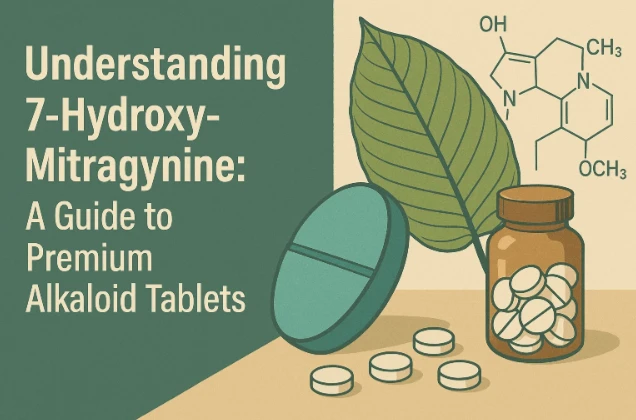
For most standard drug tests, the answer is generally no. 7-Hydroxymitragynine (7-OH) is an alkaloid from the Kratom plant. Its chemical structure is distinct from the substances included on standard 5-panel or even more comprehensive 10-panel screens.
Because 7-OH is structurally different from opiates like morphine, it does not typically cause a false positive on a standard opiate screening. The molecule simply doesn't fit the antibodies used in the common immunoassay tests. However, this doesn't mean it’s undetectable by all testing methods. It just means the most common tests used for employment are not designed to find it.
Understanding Specialized Testing
While standard tests will likely miss 7-OH, specialized tests that can detect it do exist. As Kratom and its alkaloids have grown in popularity, more laboratories have started to develop specific testing panels.
If an employer or another organization specifically requests a test for Kratom or its primary alkaloids, Mitragynine and 7-Hydroxymitragynine, then using 7-OH products could be detected. These advanced tests use methods like Liquid Chromatography-Mass Spectrometry (LC-MS) to identify the exact chemical signature of a substance.
You should be aware that testing protocols can be more rigorous in certain professions, such as transportation, law enforcement, or roles involving heavy machinery. In these situations, it's safer to assume a specialized test could identify 7-OH metabolites in your system.
How Your Body Metabolizes 7-OH
Your liver is responsible for processing 7-OH. The amount of time it remains in your system depends on several factors, including your metabolism, body mass, hydration, and how often you use it. For a deeper dive into the compound itself, you can read our guide: What is 7-OH? A Guide to 7-Hydroxymitragynine.
For casual users, the detection window is usually shorter. For frequent users who take higher doses, metabolites can build up in the body. This accumulation can extend the period in which a specialized test might detect the substance.
The Risk of False Positives
A common concern is the "false positive," which happens when a test incorrectly identifies a legal substance as an illicit one. There have been some rare, anecdotal reports of Kratom alkaloids causing false positives for methadone on certain rapid urine tests.
However, confirmation tests like Gas Chromatography-Mass Spectrometry (GC-MS) or LC-MS are highly accurate. These tests would easily clear up the error by distinguishing the unique chemical structure of 7-OH from other compounds. If you are subject to medical testing, it is always wise to disclose any supplements you are taking. This transparency helps technicians interpret the results correctly.
Tablets vs. Other Product Forms
Does the way you consume 7-OH affect drug testing? Whether you opt for tablets, gummies, or shots, the active ingredient is the same. Your body metabolizes the 7-OH alkaloid regardless of the delivery method.
Some people prefer tablets for their precise dosing, which makes it easy to track consumption. Others might enjoy the flavor of gummies. If you’re deciding between formats, our comparison can help: 7-OH Gummies vs. 7-OH Tablets: Which Form is Better for You?. The chemical metabolite that a specialized test would detect is identical, no matter which product you choose.
Factors Influencing Detection Windows
Several variables affect how long 7-OH stays in your body:
- Frequency of Use: A daily user will have a buildup of metabolites that takes longer to clear compared to someone who uses it once.
- Dosage: Higher doses require more time for your liver and kidneys to process and eliminate.
- Individual Biology: Factors like a fast metabolism, age, and overall health play a significant role in how quickly your body clears substances.
- Hydration: Drinking plenty of water supports healthy kidney function, which helps flush metabolites from your system more efficiently.
Legal Status and Workplace Policies
Even if a substance is legal, company policies can differ. Some workplaces enforce strict zero-tolerance rules for any substance they deem psychoactive, regardless of its legality.
It is always a good idea to review your employee handbook or contract. If there is a policy against "kratom" or "mitragyna speciosa," using 7-OH tablets would likely violate that rule, even if standard drug tests don’t look for it.
For most people facing typical employment screenings, 7-OH tablets are unlikely to create a problem. The specific alkaloid is not on the radar of standard test panels. But as awareness of these products increases, specialized testing is becoming more common. If your job involves rigorous testing or has strict substance policies, it's best to proceed with caution. Being informed is your best tool for making the right choice for your wellness journey.
Frequently Asked Questions
Can 7-OH cause a false positive for opiates?
This is highly unlikely because the chemical structure of 7-OH is different from opiates like morphine and codeine. Standard antibody tests should not cross-react. If a less accurate rapid test shows a positive, always request a GC-MS lab confirmation.
How long does 7-OH stay in urine?
Data is still limited compared to other substances, but alkaloids can generally be detected in urine for up to a week in heavy users. For occasional users, it may clear from the system in just a few days.
Is 7-OH legal?
7-OH is federally legal in the United States. However, some states and local jurisdictions have specific bans or regulations on Kratom and its alkaloids. Always check your local laws before purchasing.
Do at-home drug tests detect 7-OH?
Standard drug store tests will not detect it. You would need a specialty test specifically designed to detect Kratom or Mitragynine.
Does drinking water help pass a drug test?
Staying well-hydrated is good for your health and helps your body eliminate waste. However, drinking excessive amounts of water to dilute a urine sample can be flagged by labs and may require a retest.























Sign in to leave a comment.