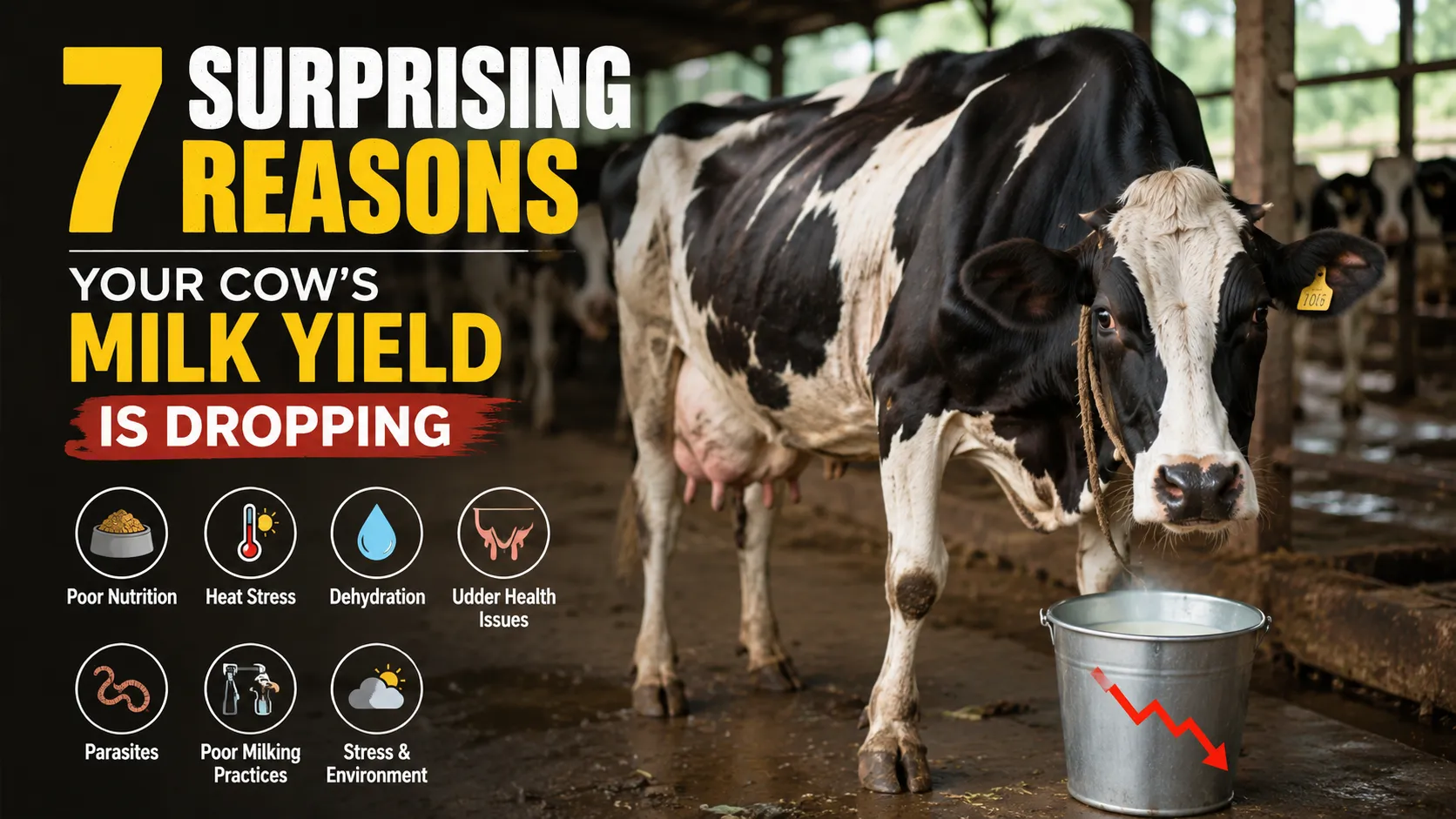

If you're a dairy farmer, few things are as frustrating as watching your cow's milk yield drop when, on the surface, absolutely nothing has changed. Same feed, same routine, same shed — yet the numbers keep falling. Here's the thing: milk production is far more sensitive than most people realize, and the real cause is rarely the diet itself. Here are 7 surprising reasons behind it, and what you can do about each one.
1. Heat Stress You Might Not Even Notice
You don't need a heatwave for this to kick in. Once temperatures cross 27–30°C, a cow's feed intake starts dropping within a day or two, even if she isn't visibly panting or showing discomfort. Less intake naturally means less milk, even though her ration hasn't changed at all.
2. Mastitis With Zero Visible Symptoms
This one catches even experienced farmers off guard. Subclinical mastitis produces no swelling, no clots, no obvious signs — but it quietly reduces milk output long before it becomes a visible infection. A simple California Mastitis Test (CMT) can catch it early, before it costs you weeks of production.
3. She's Simply Not Drinking Enough Water
Milk is over 87% water, so this is a bigger deal than most people assume. A slightly dirty trough, reduced access, or just hotter weather can quietly cut her water intake — and yield drops fast, even though it has nothing to do with what she's eating.
4. Seasonal Mineral Gaps in "The Same" Feed
Here's the surprising part: your cow's diet can look completely unchanged on paper while actually delivering fewer nutrients. Fodder quality shifts naturally with the seasons, so calcium, phosphorus, and trace minerals like selenium and zinc can quietly dip even when you haven't switched anything. This is one of the reasons many farmers turn to targeted mineral supplementation once they notice a slow decline in yield.
5. The Post-Calving Energy Gap
In early lactation, a cow needs more energy than she can physically eat in a day. If that gap isn't bridged with something more energy-dense, her body pulls from reserves — and yield drops even though she's technically eating "normally."
6. A Quietly Struggling Rumen
Stress, changes in water intake, or even slight feed spoilage (a bit of moisture or mold you might not notice) can shift rumen pH. When the rumen isn't functioning at its best, she absorbs fewer nutrients from the exact same feed.
7. Parasites Working in the Background
Internal parasites don't cause dramatic symptoms — they just slowly drain the energy your cow would otherwise put into milk production. It builds up gradually, which is exactly why it's so easy to miss without regular fecal checks.
So, What Should You Actually Check First?
Start with the basics: make sure water access is clean and sufficient (the easiest fix with the biggest impact), get a CMT test done to rule out subclinical mastitis, and check when she was last dewormed. Together, these three checks catch the majority of "mystery" yield drops on dairy farms.
If you want a deeper breakdown of each cause along with practical fixes, this guide covers it in more detail: Low Milk Yield in Cows? 7 Proven Fixes Every Indian Dairy Farmer Should Know
Final Thoughts
The next time your cow's milk yield drops without any obvious reason, resist the urge to blame the feed right away. More often than not, the real culprit is hiding in plain sight — heat, water, hidden infection, or nutrient absorption. Catching it early can save weeks of lost production and keep your herd healthier in the long run.



























Sign in to leave a comment.