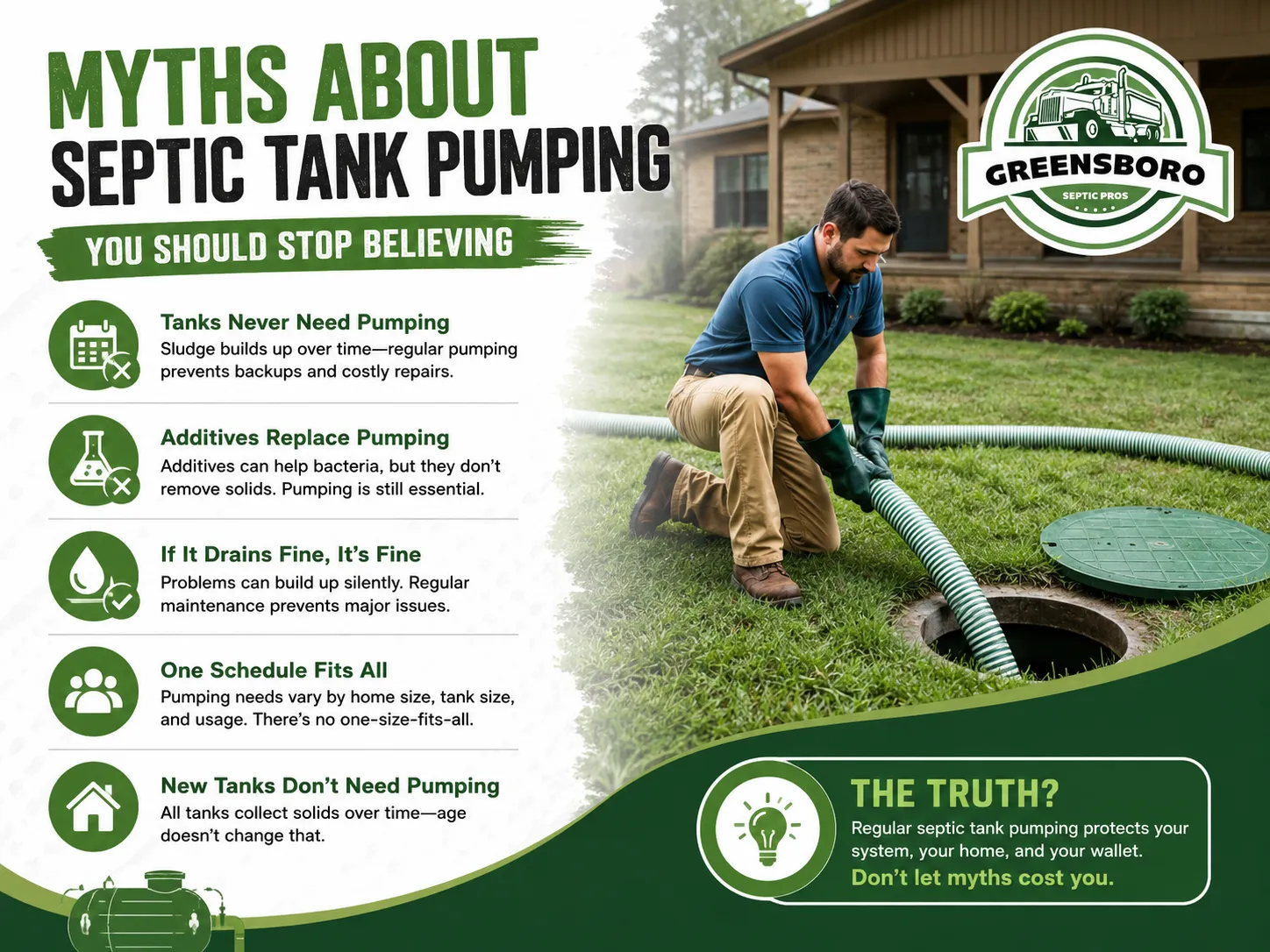

If you own a home with a septic system, you have probably heard a lot of advice about how to take care of it. Some of that advice is solid. A lot of it is not. Professional septic pumping in Alamance is one of those topics where myths spread fast - from neighbors, from online forums, and sometimes even from well-meaning family members who swear their septic tank has not been pumped in 20 years and works just fine. The problem is that believing the wrong information can lead to system failures, expensive repairs, and serious health hazards on your property.
This blog tackles the 8 most common septic tank pumping myths head-on. For each one, you will get the real facts - backed by how septic systems actually work - so you can make smarter decisions about your home's wastewater system.
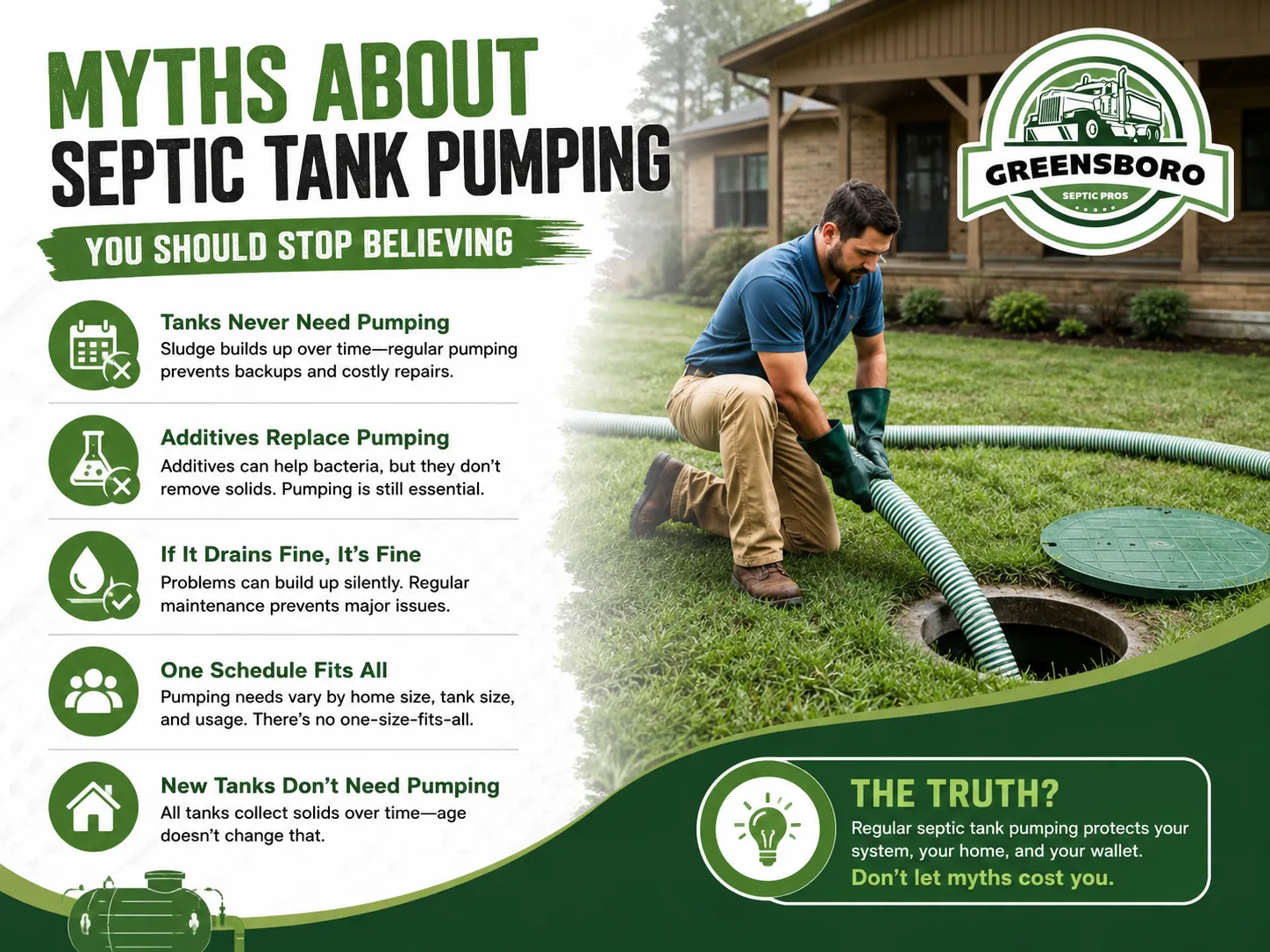
Myth 1: Your Septic Tank Does Not Need Pumping If There Are No Problems
This is probably the most dangerous myth on this list. A huge number of homeowners believe that as long as their toilets flush, their drains flow, and there is no smell coming from the yard, their septic system is fine and does not need attention. That belief leads to systems going 10, 15, even 20 years without being pumped - until something goes catastrophically wrong.
Every time wastewater enters your septic tank, solids settle to the bottom and form a layer called sludge. Lighter materials like grease and oils float to the top and form a layer called scum.When they get thick enough, they start pushing into the drain field with the effluent, clogging the soil and eventually causing the entire system to back up or fail.
The EPA recommends that most household septic tanks be pumped every three to five years. That timeline exists because it reflects how long it typically takes for solids to accumulate to a dangerous level in an average-sized tank serving an average-sized household.
Myth 2: Septic Tank Additives Can Replace Pumping
Walk into any hardware store and you will find shelves of septic tank additives - powders, liquids, and tablets that promise to break down waste, boost bacteria, and keep your system running without needing to pump. These products are heavily marketed and widely used, but they cannot do the one thing that actually matters most: remove the solid sludge that accumulates at the bottom of your tank.
No additive - biological, chemical, or enzymatic - can dissolve or eliminate solid waste to the point where pumping is unnecessary. The solids that settle in your tank are not going anywhere on their own, no matter what you pour into the system.
Some chemical additives can actually cause harm by disrupting the natural bacterial environment inside the tank, killing off the beneficial microorganisms that break down organic waste. The only thing that removes accumulated sludge from your tank is a pump truck operated by a qualified septic professional.
Myth 3: Brand New Septic Systems Do Not Need Pumping for Many Years
A lot of homeowners who buy newly built homes or have a new septic system installed assume they have a long grace period before maintenance is needed. It feels logical - if the system is brand new, how could it possibly need service already?
New septic systems do typically take longer to need their first pump-out than older systems, simply because they start with an empty tank. However, the timeline depends entirely on how many people live in the home and how much water the household uses. A family of five in a new home can fill a standard 1,000-gallon septic tank to a point where pumping is needed within three to four years. Waiting until the 10-year mark because the system is "new" can lead to the same kind of drain field damage that happens with neglected older systems.
Having your new system inspected and assessed within the first few years lets a professional measure the sludge and scum layers accurately and tell you exactly when your first pump-out needs to happen based on real data from your specific tank.
Myth 4: You Will Always Be Able to Smell a Septic Problem Before It Gets Serious
Many homeowners take comfort in the idea that a failing septic system will announce itself with an unmistakable odor long before any serious damage occurs. While it is true that a septic system backup or overflow often produces a strong smell, many of the most serious and expensive septic problems develop silently - with no odor at all until the damage is already extensive.
Drain field failure is a perfect example. As sludge slowly migrates from an overfull tank into the soil absorption area, the soil gradually loses its ability to treat and absorb effluent. This process can take years and produces no odor above ground during most of that time. Regular professional inspections, combined with scheduled pumping, are the only way to catch developing problems before they turn into expensive emergencies.
Myth 5: Septic Pumping Is Only Necessary When Something Goes Wrong
This myth is closely related to the first one, but it comes from a slightly different mindset. Some homeowners understand that pumping is eventually necessary, but they treat it as a reactive measure rather than a preventive one - something you do when problems appear, not before. This approach consistently leads to higher costs and more serious system damage over time.
Preventive pumping protects your drain field, which is the most expensive component of your entire septic system to repair or replace. When your tank is pumped on schedule, solids never get the chance to build up to the point where they migrate into the drain field. Your system keeps functioning the way it was designed to, and the natural bacterial processes inside the tank stay balanced and effective.
If you want a clearer picture of what proper septic care actually looks like, reading about septic pumping facts and fiction is a great place to start separating good maintenance habits from bad ones.
Myth 6: All Septic Pumping Companies Offer the Same Quality of Service
Not all septic service providers are equal, and assuming they are can lead to poor outcomes even when you do schedule regular maintenance. The quality of a septic pump-out depends on the experience of the technician, the condition and capacity of the equipment being used, and whether the provider actually inspects the tank while pumping or just empties it and leaves.
A thorough septic pump-out should include a visual inspection of the tank's inlet and outlet baffles, an assessment of the sludge and scum layer depths before and after pumping, a check for any visible cracks or damage to the tank walls, and an evaluation of how well the system is functioning overall. When choosing a septic company, look for state licensing, verifiable experience with your type of system, and clear communication about what is included in their service. Reviews from other homeowners in your area are also a valuable resource for identifying providers who do the job properly versus those who cut corners.
Myth 7: Flushing Yeast or Special Bacteria Products Keeps Your Tank Healthy
This myth has been circulating for decades. The idea is that flushing a packet of baker's yeast, a bottle of bacterial additive, or a specially marketed septic tablet regularly into your toilet will keep your tank's bacterial ecosystem thriving and reduce the need for maintenance. It sounds harmless at best and helpful at worst - but the reality is more complicated.
A healthy septic tank already contains billions of naturally occurring bacteria that break down organic waste effectively without any outside help. These bacteria establish themselves naturally as soon as wastewater enters the tank and do their job as long as the conditions inside the tank are not disrupted. The biggest threats to your tank's bacterial health are not a lack of added bacteria - they are antibacterial soaps, bleach-based cleaning products, excessive water usage that flushes solids out too quickly, and chemical drain cleaners that kill beneficial microorganisms on contact.
Instead of buying additive products, focus on protecting the bacteria that are already working in your tank. Use bleach and antibacterial products sparingly, spread laundry loads throughout the week rather than doing multiple loads in a single day, and never flush anything other than human waste and toilet paper. These habits do more for your tank's health than any additive ever could.
Myth 8: A Larger Septic Tank Means You Can Go Longer Between Pumpings
It makes intuitive sense - a bigger tank holds more waste, so it should need pumping less often, right? Tank size does play a role in how frequently pumping is needed, but it is only one of several factors that determine the right maintenance schedule for your system. Household size and daily water usage often matter more than tank capacity.
The volume of solids entering the tank each day is the primary driver of how quickly sludge accumulates, and that volume is determined by how many people use the system and what goes into it.
The only accurate way to know how often your specific tank needs pumping is to have it inspected by a professional who can measure the actual sludge and scum depths. From those measurements, an experienced technician can give you a personalized pumping schedule that reflects your actual usage patterns - not a generic estimate based on tank size alone.
Conclusion
Septic tank myths are more than just harmless misunderstandings - they lead to real, expensive, and sometimes dangerous consequences for homeowners who act on them. Your septic system needs regular pumping on a schedule based on your household size and usage, no additive can replace that pumping, and waiting for a visible or odor-based warning sign before taking action is a strategy that consistently leads to bigger problems and higher repair bills.
If your septic tank is due for service or you are not sure when it was last pumped, do not wait. Greensboro Septic Pros provides professional septic pumping in Alamance and surrounding areas, with experienced technicians who inspect your system thoroughly and give you honest, accurate maintenance recommendations. Contact Greensboro Septic Pros today to schedule your pump-out and protect one of your home's most important systems.
People Also Ask
How often should a septic tank be pumped in North Carolina?
The EPA recommends pumping every three to five years for most households. In North Carolina, the actual frequency depends on household size, water usage, and tank capacity. Homes with more occupants or smaller tanks may need pumping every two to three years. A professional inspection gives you an accurate timeline for your specific system.
Can heavy rain affect your septic system?
Yes, heavy rainfall can saturate the soil around your drain field, reducing its ability to absorb and treat effluent. This can cause temporary backups or slow drains. If your system is already near capacity due to accumulated sludge, heavy rain can push it into failure faster. Scheduling a pump-out before wet seasons is a smart preventive step.
Is it normal for grass to be greener over the septic drain field?
Slightly greener grass over a drain field is relatively normal because the area receives extra moisture and nutrients from the treated effluent below. However, if the grass is unusually lush, wet, or spongy, or if you notice odors, it may indicate that the system is leaking or overloaded - both situations that need professional attention right away.
What should never go into a septic system?
Never flush wipes of any kind - even those labeled "flushable" - feminine hygiene products, paper towels, medications, cooking grease, or chemical drain cleaners. These items either do not break down inside the tank or actively harm the bacterial processes that make the system work. Only flush human waste and standard toilet paper.






























Sign in to leave a comment.