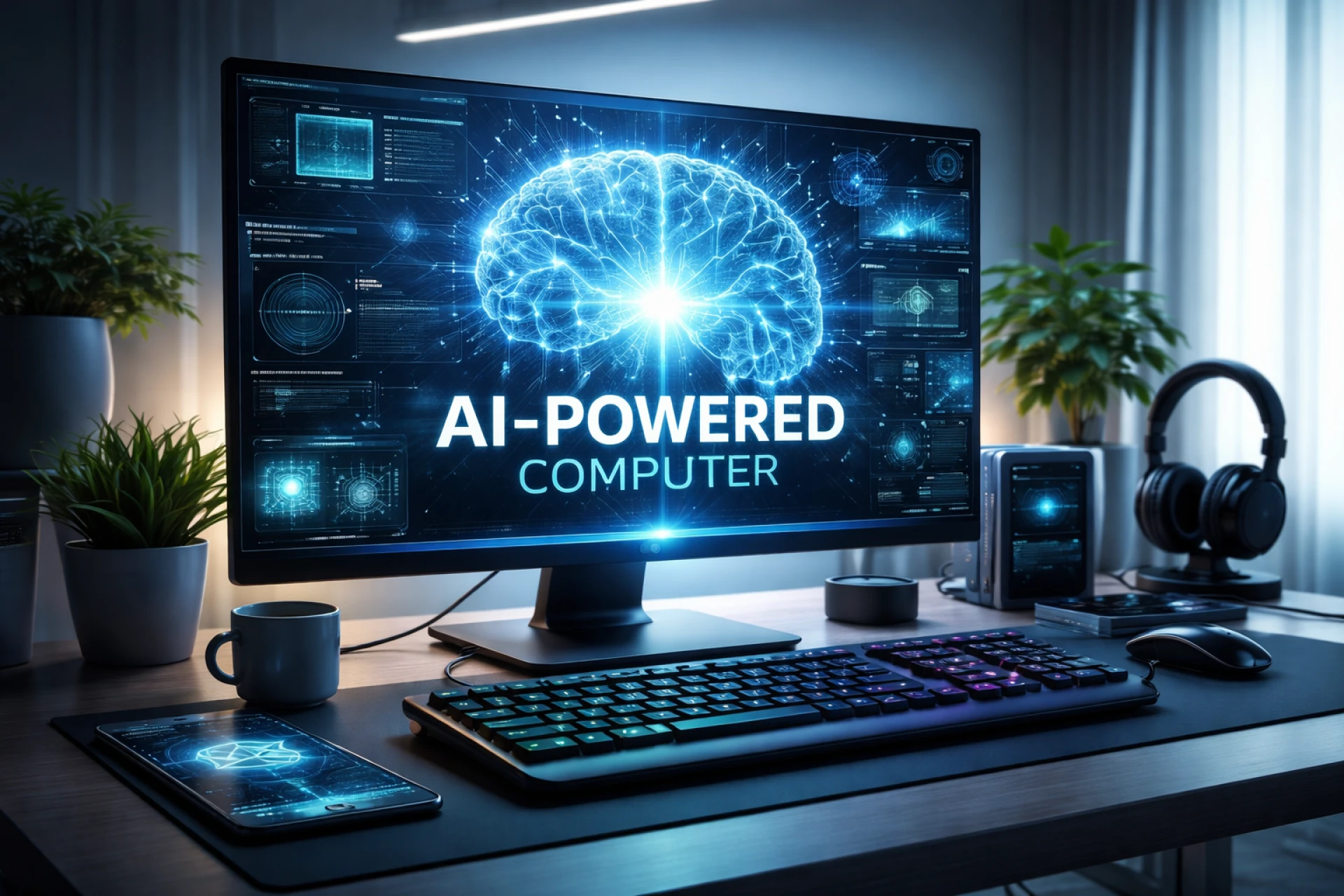

Computers are changing faster than ever before. You probably noticed your laptop getting smarter recently. It can blur your background in video calls perfectly. It can even help you write emails or edit photos with one click. These features do not happen by magic. They rely on special engines hidden inside the main chip. Each specialist handles a specific job to make the meal perfect. This article explains the eight engines that power this new world. You will learn how they work together to give you a fast and smooth experience.
Modern AI computers are not just about speed anymore. They are about smart efficiency. Understanding these parts helps you choose the right tech for your needs.
1. The Central Processing Unit or CPU
The CPU acts like the manager of the entire system. It handles the basic tasks and tells other parts what to do. It is great at quick thinking and switching between different apps. Most of your daily clicks and typing go through this engine. It ensures your operating system runs without any lag or crashes. It powers your AI-driven computer by coordinating data flow between different processing engines and ensuring every component of the system works together efficiently.
- Fast Logic: It processes linear tasks that require immediate action.
- System Control: The CPU manages how data flows between your memory and storage.
- Versatility: It can run almost any type of software code ever written.
The CPU starts the process, but it needs help for heavy lifting. That is where the next engine comes into play.
2. The Graphics Processing Unit or GPU
You might know the GPU for gaming or video editing. This engine excels at doing many small tasks all at once. It breaks down complex images into tiny pixels. The GPU serves as the main processing unit which enables AI researchers to develop their extensive models. The system performs all mathematical computations needed for artistic creation and 3D world development.
- Parallel Processing: This means it does thousands of calculations at the same time.
- Visual Magic: It makes sure your screen looks crisp, and movements stay fluid.
- High Bandwidth: The GPU moves massive amounts of data very quickly.
3. The Neural Processing Unit or NPU
The NPU is the newest star in the computer world. It is built specifically for AI tasks like voice recognition and face ID. It does these jobs while using very little battery life. This engine allows your laptop to stay smart even when it is not plugged in.
Why Efficiency Matters Today
The NPU saves your battery by taking over repetitive AI chores. This allows the CPU and GPU to rest or focus on other things.
Building a Longer Lasting Laptop
You can now run AI tools all day without hunting for a power outlet. This balance of power and efficiency defines the modern AI-driven computer.
The NPU keeps things efficient, but some tasks need extremely fast memory access.
As we move towards a more smart era of computing, an AI computer is going to be a frontrunner. As per a report, AI computers (PCs) will account for more than 55% of the total PC share in 2026.
4. The Digital Signal Processor or DSP
The DSP handles real-world data like sound and radio waves. The device converts analog signals into digital bits that the computer can process. The DSP system operates at full capacity when you activate noise cancellation on your headphones. The system removes all background noise to maintain the clarity of your voice.
- Audio Mastery: It processes sound waves in real time without any delay.
- Sensor Input: This engine manages data from your webcam and microphone.
- Low Latency: It responds instantly to changes in the environment around you.
Managing signals is important, but moving that data safely is another huge task.
5. The Image Signal Processor or ISP
The ISP lives inside your camera system. It takes raw light data and turns it into a beautiful photo. It adjusts the colors and the brightness automatically. Modern ISPs use AI to make sure you look great even in dark rooms. They can even track your eyes to keep you in focus during meetings.
- Real Time Editing: It fixes your skin tone and lighting as you record video.
- Noise Reduction: The ISP removes the grain from photos taken at night.
A great image is useless if the computer cannot remember what it just saw.
6. High Bandwidth Memory Controllers
Data needs to move between these engines at lightning speed. The memory controller acts like a super highway. The system ensures that NPU and GPU components receive their required data at precise moments. The fastest engines in the world would remain inactive without an effective controller.
- Reduced Bottlenecks: It prevents data traffic jams inside the chip.
- Smart Caching: This engine predicts what data you will need next.
- Low Power States: It slows down when you are idle to save energy.
Fast data movement is great, but keeping that data private is a top priority now.
7. The Secure Enclave or Security Engine
AI computers handle a lot of personal information. The security engine is a locked vault inside your processor. It stores your fingerprints and face data safely. It ensures that hackers cannot peek into your AI conversations or private files.
- Encryption: It scrambles your data so only you can read it.
- Boot Protection: This engine checks for viruses before the computer even turns on.
- Identity Guard: It manages your passwords and biometric logins securely.
8. The Power Management Engine
All these engines create heat when they work hard. The power management engine is the thermostat of the computer. The system maintains thermal control by distributing processing tasks to avoid overheating the chip. The system determines which engine receives maximum power distribution at each moment. The system operates your computer silently while it maintains controlled fan speeds to avoid excessive fan noise.
- Dynamic Scaling: This engine gives more power to the GPU during games.
- Sleep Modes: It shuts down unused parts of the chip to preserve the battery.
Conclusion
You now know the eight engines that make your AI-driven computer special. Each part has a unique role in making your digital life better. The CPU manages, while the GPU creates, and the NPU thinks efficiently. Together, they turn a simple machine into a powerful partner for your work. Technology will continue to shrink these engines and make them even faster. This new era of computing is just beginning for everyone.




















Sign in to leave a comment.