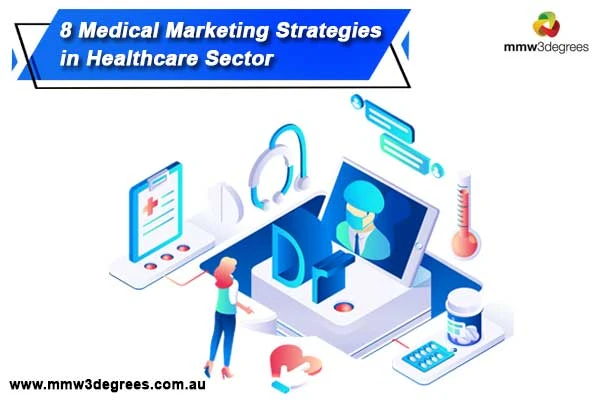

It's not always easy to jump on the next medical marketing bandwagon in the healthcare sector. There are restrictions about what you can and cannot say; you frequently discuss sensitive themes, and the internet's power means that once something is on the internet, it can't be taken down, it's there forever.
As a result, many of the healthcare organisations we interact with are obsessed with discovering and dissecting the different types of healthcare marketing methods. They're desperate to find new ways to sell their healthcare businesses and are looking for the most effective methods for succeeding in the marketing of healthcare services.
In this post, we'll show you eight marketing methods that even the most stringent healthcare companies and hospitals can put their clients foremost in their minds and presence.
Using Messaging Applications
Your clients' world is a noisy place. Advertisements can be found on television and radio, as well as in emails and social media, and much of it is simply blocked out. What, on the other hand, does not? Messages sent via text Text messages are one type of message that is likely to be read within minutes of receipt.
As a matter of fact, they're a great way to talk to patients about the most important topics. This could involve notifying them of a time-sensitive event (such as a doctors appointment slot), a treatment deadline (such as a seasonal immunization), or a notification that their medicine is about to run out. As long as the material is actually beneficial to your audience, they'll be more than willing to share their phone number. Similarly, messaging apps can be used to build new target audiences for specific communities. A group of senior patients worried about contracting the flu, for example, maybe enrol on a WhatsApp or Facebook Messenger group that sends them weekly advice or update.
Setting Up a Digital Sign
Medical Marketing of Healthcare services frequently concentrates solely on internet channels. Many opportunities are lost as a result of this. Digital signage, for example, has been shown to be effective when used in a healthcare context on numerous occasions.
Imagine setting your own private television channel that only your patients could see. Ensure they are free of any other distractions when they sit down to watch it. There are no smartphones to examine, no laptops to open, no friends to converse with, and no other channels to go to.
In essence, it is what digital signage in a healthcare facility is. Your patients will be enticed to view a private digital entertainment stream that is incredibly engaging. Medical marketing of healthcare services with digital signage has numerous advantages, including reducing perceived wait times, offering education, and even improving patient welfare.
Test Influencer Medical Marketing
Influencer marketing is a hot topic among business-to-consumer companies aiming to boost product or service approbation. Influencers are people who have created a following or community based on their personal brand.
The key is to get creative and develop a strategy that will surprise, excite, or educate potential patients while also gaining the support of influencers. Many influencers have created large followings based on their own experiences with a specific ailment. These influencers cater to a certain audience, all of whom are dealing with or know someone who is dealing with a specific sickness or diagnosis.
Creating Lead Buckets
It's becoming increasingly tough to persuade viewers to freely sign up for information. Inboxes are rapidly filling, and there is so much spam that people are wary of anything that might contribute to the noise.
Lead buckets are a form of trade you may make with potential patients in which you provide something mutually beneficial for the chance to collect their information and contact them.
Increasing Internal Medical Marketing
We're so focused on our external marketing approach that we often overlook internal communications. According to a McKinsey Global Institute study, firms whose employees feel linked increase productivity by 20-25 per cent.
Then there's employee activism. You could easily reach thousands of potential patients for free if you have 100 employees all telling their friends and family about how amazing your healthcare plans are.
According to a survey, people regard referrals from friends as the most trustworthy type of promotion. Why spend all of your money on advertisements and brand efforts when your own staff could be the most underutilised resource?
Content for Niche Communities
Healthcare is a very personal experience. We are unlikely to be interested in knowing more about a topic unless it directly impacts us. Marketing tactics that concentrate on a single topic inside a specialized community are the most effective. This could entail creating a website landing page, a printed symptom checklist, a short talk on condition management, or even a podcast for dementia or cancer caregivers.
Once you've found the ones that work, roll out to other patient groups and locations once you've found the ones that work. If your information is reliable to a community, it is more likely to be used and shared.
Social Media Engagement
According to studies, 41% of consumers would choose a doctor based on their social media reputation. Doesn't that make a social media strategy seem even more critical to your company's goals? Customers can use social media sites like Facebook, Twitter, and LinkedIn to contact you outside of their scheduled sessions. Regularly creating and releasing material across various channels keeps you top-of-mind, so patients know where to find you when you're required. Social media also provides a channel for your visitors to promote you.
Video Marketing
In the world of medical marketing for healthcare services, the role of video marketing in the healthcare sector is currently underutilised. It has been proved to efficiently attract the attention of audiences as a tactic. In fact, statistics show that 90 per cent of businesses that use video content have the potential of influencing consumer decisions.
Video marketing can be used to generate guides and information packets, share patient tales and testimonials, and present an inside look or "behind the scenes" look at your healthcare environment. It's difficult to dispute with the evidence when we see something visual, such as a video. As a result, video is a very credible and engaging medium to watch and interact with.







Sign in to leave a comment.