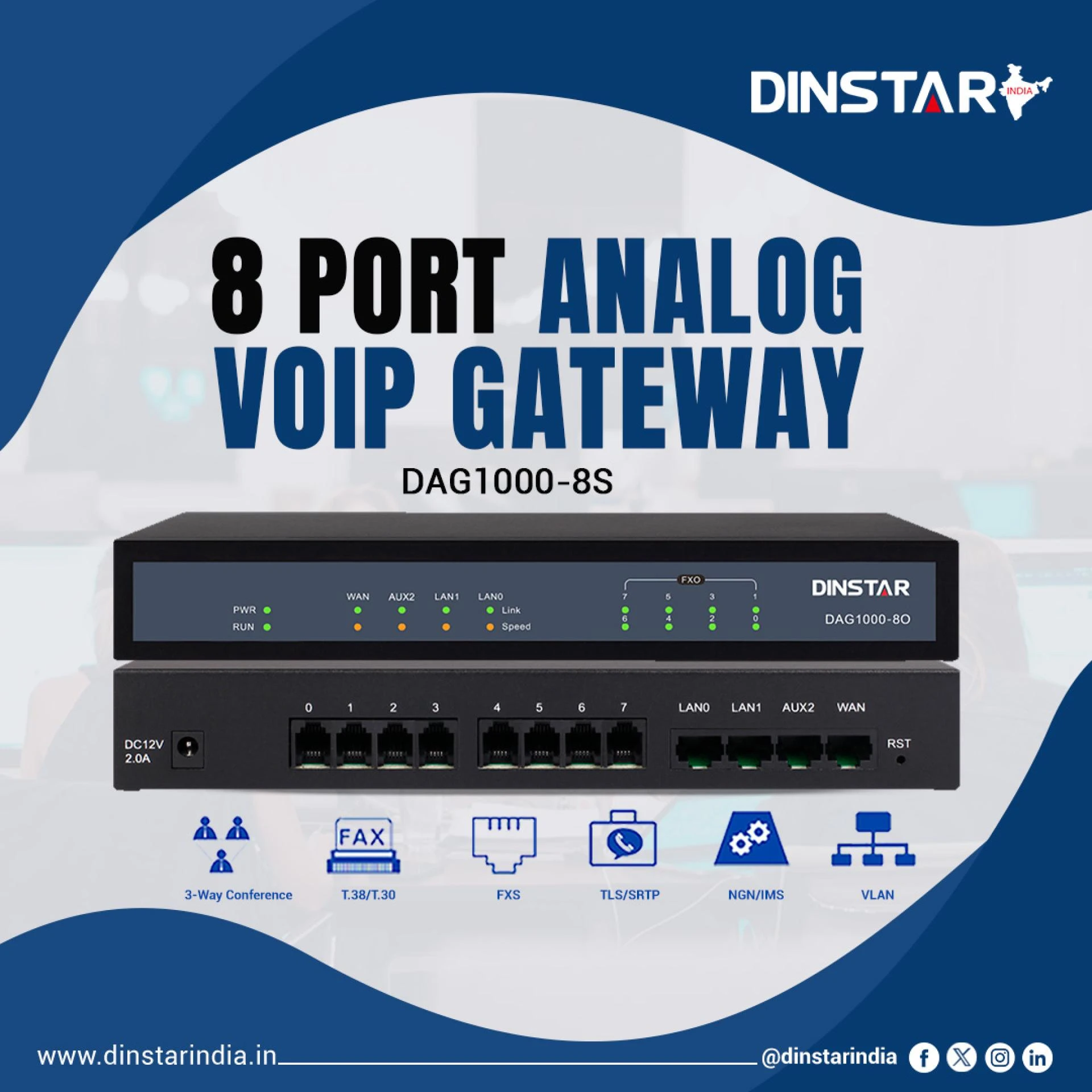

In today’s fast-paced business environment, communication plays a vital role in ensuring smooth operations and delivering exceptional customer experiences. Whether it’s handling inbound calls, connecting multiple departments, or integrating existing phone systems with modern VoIP networks, companies need reliable tools to make communication effortless. One such tool that has become essential for many businesses—especially small and medium-sized enterprises—is the 8 Port FXS Gateway.
If you are exploring ways to improve your business communication system or want to bridge the gap between your traditional telephone lines and an IP network, this blog will help you understand what an 8 Port FXS Gateway is, how it works, and why it might be the perfect solution for your organization.
What Is an 8 Port FXS Gateway?
An 8 Port FXS Gateway is a networking device designed to connect up to eight analog devices—such as traditional telephones, fax machines, or PBX systems—to a VoIP (Voice over Internet Protocol) network.
Here’s how it works:
- FXS (Foreign Exchange Station) ports: These ports deliver analog line services to devices like telephones or fax machines.
- Gateway function: The device converts voice signals from analog phones into digital packets for transmission over the internet and vice versa.
In simple words, an 8 Port FXS Gateway allows you to integrate your existing analog equipment into a modern VoIP communication system, saving you from the cost of replacing your entire infrastructure.
Why Businesses Choose an 8 Port FXS Gateway
1. Seamless Migration to VoIP
Many businesses hesitate to shift to VoIP because of the upfront cost of replacing existing analog phones. An 8 Port FXS Gateway offers a cost-effective way to migrate without abandoning your traditional hardware.
2. Scalability for Growing Teams
With 8 ports, you can connect multiple devices at once—making it suitable for growing businesses or branch offices that need to scale communication systems without major investment.
3. Enhanced Flexibility
Whether you’re running an on-premises PBX or a cloud-based phone system, an FXS Gateway bridges both worlds. It supports hybrid communication setups, which are common in small and medium-sized businesses transitioning to VoIP.
4. Cost Savings
Switching fully to IP phones and systems can be expensive. A gateway reduces costs by letting you use existing analog equipment while still benefiting from VoIP features like cheaper long-distance calls, advanced call management, and unified communications.
5. Business Continuity
An 8 Port FXS Gateway ensures that your communication system remains functional even if you mix analog and digital lines. It reduces downtime and ensures smooth operations in case of network changes or gradual migrations.
How Does an 8 Port FXS Gateway Work?
The working mechanism of an 8 Port FXS Gateway is relatively simple but highly effective:
- Connection to Analog Devices – You plug analog phones, fax machines, or legacy PBX systems into the FXS ports.
- Connection to IP Network – The gateway connects to your IP-based network or VoIP service provider using an Ethernet port.
- Signal Conversion – The gateway converts analog voice signals into digital VoIP packets for internet transmission and converts incoming VoIP calls back to analog for the connected devices.
- Call Routing – Calls are routed between the VoIP network and analog devices seamlessly, ensuring smooth communication.
Key Features to Look for in an 8 Port FXS Gateway
When choosing the right gateway for your business, pay attention to these key features:
- Port Capacity: Ensure it offers exactly what you need—8 ports for connecting multiple analog devices.
- High-Quality Audio: Look for gateways with support for HD voice and echo cancellation to enhance call quality.
- Protocol Support: Compatibility with SIP (Session Initiation Protocol) is essential for integration with most VoIP systems.
- Security Features: Support for encryption and secure protocols helps protect your communication.
- Compatibility: Ensure it works well with your existing PBX or VoIP provider.
- Ease of Configuration: A user-friendly interface or web-based management can simplify setup and administration.
Benefits of Using an 8 Port FXS Gateway
1. Preserves Your Existing Investment
There’s no need to throw away analog phones or PBX systems. This gateway extends their usability in a VoIP environment.
2. Simplifies Communication
By bridging analog and digital systems, it reduces complexity, ensuring smooth communication within your team and with customers.
3. Improves Call Quality
Modern gateways come with features like echo cancellation, noise reduction, and support for advanced codecs—delivering clear, uninterrupted voice calls.
4. Enables Cost-Effective Scaling
You can expand your communication system without replacing your entire setup. As your team grows, simply add more devices to the gateway.
5. Enhances Business Productivity
When employees can communicate without technical disruptions, productivity increases.
Common Use Cases of an 8 Port FXS Gateway
An 8 Port FXS Gateway is useful for various business scenarios:
- Small and Medium Enterprises (SMEs): Ideal for businesses that want to transition to VoIP gradually without replacing all hardware.
- Remote Branch Offices: Connect branch office analog devices to a centralized VoIP system.
- Call Centers: Use existing analog phones while taking advantage of VoIP features.
- Hotels & Hospitality: Perfect for connecting in-room analog phones to a unified communication system.
- Educational Institutions: Schools or colleges with analog phones can integrate them into a campus-wide VoIP network.
How to Choose the Right 8 Port FXS Gateway for Your Business
Choosing the right gateway can make a big difference in how well it fits your communication setup. Here’s what to consider:
- Check Compatibility: Ensure the gateway is compatible with your VoIP provider or PBX system.
- Prioritize Call Quality: Features like jitter buffering, echo cancellation, and HD codecs are crucial.
- Consider Future Needs: If your business will grow, choose a scalable solution that can integrate with larger systems.
- Security Matters: Ensure it supports encryption protocols to safeguard your calls.
- Vendor Support: Opt for brands known for reliable after-sales support and regular firmware updates.
Why Dinstar’s 8 Port FXS Gateway Stands Out
If you’re looking for a dependable solution, Dinstar’s 8 Port FXS Gateway is worth considering. It is designed for businesses that require flexibility, reliability, and excellent call quality.
Some of its standout features include:
- Support for multiple codecs for superior audio quality
- Easy integration with leading IP PBX systems and VoIP platforms
- Web-based configuration for hassle-free management
- Robust security protocols to protect communications
Dinstar gateways are trusted by businesses worldwide for their durability and performance, making them an excellent choice for organizations of all sizes.
Conclusion
An 8 Port FXS Gateway is more than just a piece of networking hardware—it’s a bridge between the past and the future of communication. By integrating your analog devices with modern VoIP systems, it helps you cut costs, improve communication quality, and scale your business without unnecessary investments in new equipment.
Whether you’re a small business looking for a cost-effective communication upgrade or a larger enterprise aiming to unify multiple branches under one VoIP network, an 8 Port FXS Gateway offers the flexibility and reliability you need.






























Sign in to leave a comment.