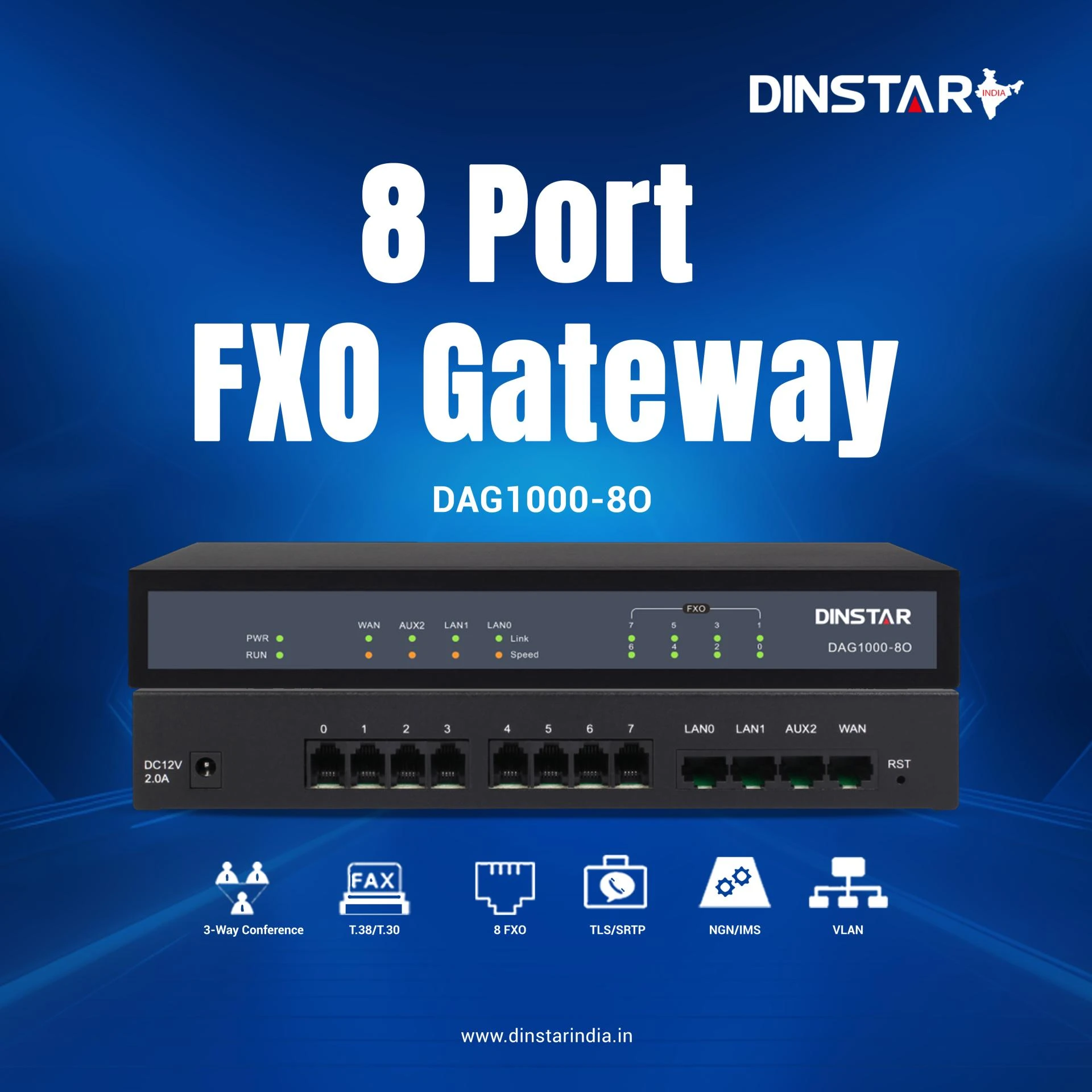

In today’s competitive business environment, communication systems need to be reliable, scalable, and cost-effective. Whether you’re running a small office, managing a large enterprise, or setting up a call center, integrating the right VoIP gateway can make a world of difference. Among the many options available, the 8 Port VoIP Gateway stands out for its balance between capacity, performance, and affordability.
In this blog, we will explore what an 8 Port VoIP Gateway is, how it works, its benefits, common applications, and factors to consider before making a purchase. We’ll also touch on how products like the UC200 PRO fit into modern telecommunication infrastructure.
What is an 8 Port VoIP Gateway?
An 8 Port VoIP Gateway is a networking device that bridges traditional telephony systems with modern Voice over IP networks. It has eight ports that can connect to analog telephones, fax machines, or PBX systems, enabling them to communicate over the internet.
This device converts analog voice signals into digital packets that travel over IP networks, and vice versa. It’s an essential component for businesses transitioning from legacy systems to advanced communication solutions without replacing existing infrastructure.
How Does It Work?
The functioning of an 8 Port VoIP Gateway can be summarized in three steps:
- Signal Conversion — The gateway converts analog voice signals from traditional devices into digital VoIP packets.
- Transmission — These packets are transmitted over your IP network or the internet to the recipient.
- Reception & Reversion — On the receiving end, the digital packets are converted back into analog signals for the connected telephone or PBX.
This process happens in real time, ensuring crystal-clear voice quality and minimal latency.
Key Benefits of an 8 Port VoIP Gateway
1. Cost Savings
Switching calls to VoIP reduces long-distance and international calling costs significantly. The gateway allows you to use internet lines instead of costly telephone lines, leading to long-term savings.
2. Smooth Transition from Legacy Systems
Instead of replacing all your analog phones, you can keep using them while enjoying VoIP features. This hybrid approach minimizes downtime and avoids the cost of completely overhauling your communication system.
3. Scalability
An 8 Port VoIP Gateway supports growth. You can start small and add more gateways or upgrade to higher capacity solutions as your business expands.
4. High-Quality Voice
Modern gateways come equipped with advanced voice codecs, echo cancellation, and jitter buffering for enhanced call clarity.
5. Enhanced Productivity
Integrating your telephony with other IP-based services, like CRM or unified communications, helps streamline workflow and improve team collaboration.
Typical Applications of an 8 Port VoIP Gateway
- Small to Medium-Sized Businesses (SMBs)
- Ideal for offices needing multiple phone lines without investing in complex PBX infrastructure.
- Call Centers
- Offers reliable connectivity for handling large volumes of inbound and outbound calls.
- Remote Branch Integration
- Connects remote offices to the headquarters over a secure IP network.
- Hospitality Industry
- Hotels and resorts use them to connect room phones to a centralized communication system.
- Educational Institutions
- Schools and universities use gateways to unify campus communications and reduce telephony costs.
Features to Look For in an 8 Port VoIP Gateway
When evaluating gateways, keep these features in mind:
- Protocol Support — Ensure compatibility with SIP or other VoIP protocols your network uses.
- Audio Quality — Look for gateways with wideband audio codecs for better clarity.
- Security — Must have encryption protocols like TLS and SRTP to protect calls from interception.
- Management Interface — Web-based configuration tools make it easier for IT teams to manage.
- Failover Options — Backup connectivity ensures minimal downtime during network issues.
Integration with Modern Communication Systems
An 8 Port VoIP Gateway works seamlessly with IP PBX systems, cloud-based telephony solutions, and even hybrid setups. Devices like the UC200 PRO are great examples of versatile communication solutions that can work alongside VoIP gateways to improve efficiency. For instance, businesses can use a UC200 PRO for advanced call routing while the gateway handles connectivity for analog devices.
Common Challenges and Solutions
1. Call Quality Issues
- Solution: Use Quality of Service (QoS) settings on your router to prioritize voice traffic.
2. Network Compatibility Problems
- Solution: Check firmware updates and ensure SIP configurations are correct.
3. Power Failures
- Solution: Use an uninterruptible power supply (UPS) to keep your gateway operational during outages.
Choosing the Right 8 Port VoIP Gateway
When selecting a gateway, consider:
- Compatibility with your existing PBX or phone system
- Support for future scalability
- Brand reputation and after-sales support
- Feature set versus cost
Popular brands offer a range of options to suit different business sizes and needs. The right choice will depend on your current infrastructure and growth plans.
Future of VoIP Gateways
As businesses increasingly adopt cloud communication platforms, VoIP gateways will remain relevant as a bridge for hybrid setups. The 8 Port VoIP Gateway, in particular, is likely to remain a go-to option for SMBs and mid-sized organizations for the foreseeable future.
With advancements in AI-driven call analytics, better encryption standards, and integration with IoT systems, these devices will continue evolving to meet modern demands.
Conclusion
An 8 Port VoIP Gateway is an excellent investment for businesses looking to upgrade to VoIP without discarding existing telephony equipment. It offers cost savings, flexibility, and reliability, making it a must-have for organizations of all sizes.
By choosing a device with robust features, ensuring proper installation, and pairing it with advanced solutions like the UC200 PRO, you can future-proof your communication network and keep your team connected effortlessly.



























Sign in to leave a comment.