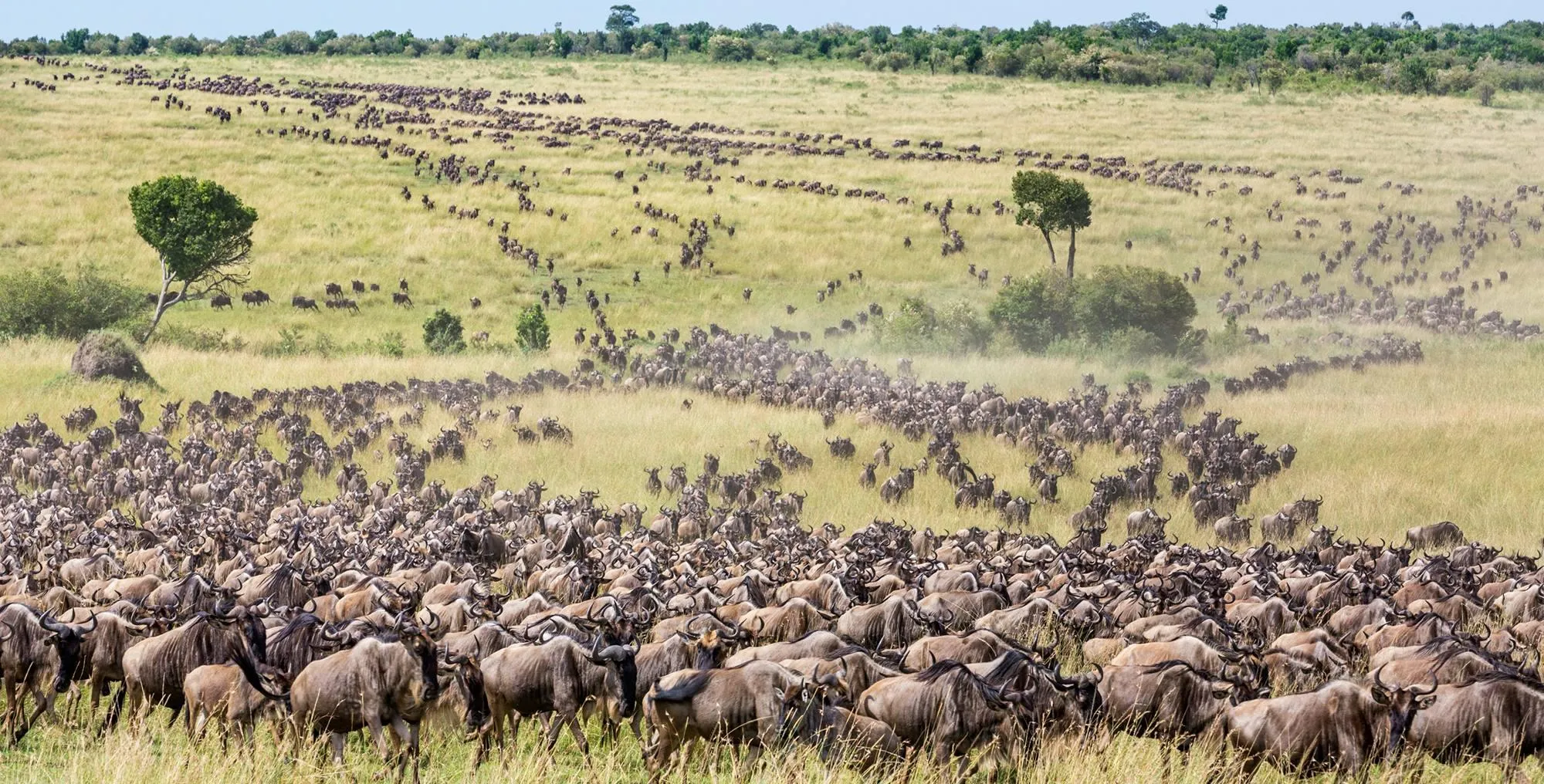

The great wildebeest migration is one of the most spectacular natural events on Earth, attracting wildlife enthusiasts, photographers, and travelers from around the world. Every year, more than a million wildebeest, along with thousands of zebras and other grazing animals, move across the vast plains of East Africa in search of fresh grass and water.
This incredible journey takes place mainly between Tanzania’s Serengeti National Park and Kenya’s Maasai Mara National Reserve. The migration follows a seasonal cycle influenced by rainfall, making each stage a unique wildlife experience.
Understanding the different stages of the great wildebeest migration helps travelers plan the perfect safari experience and witness one of nature’s most unforgettable spectacles.
Stage 1: Calving Season in the Southern Serengeti
The journey begins with the calving season, usually between January and March, when vast herds gather in the southern Serengeti and surrounding areas such as Ndutu.
During this period:
- Thousands of wildebeest calves are born within a short time
- Newborn animals learn to walk within minutes
- Predators such as lions, cheetahs, and hyenas become more active
This stage is considered one of the most dramatic moments of the great wildebeest migration because visitors can witness new life and intense predator interactions.
The nutrient-rich grasses of the southern Serengeti provide mothers with the food needed to support their young.
Stage 2: Movement Toward Western Serengeti
Around April and May, the herds begin moving westward as the grasses become less abundant. This phase marks the beginning of a long journey toward new feeding areas.
During this stage, travelers may witness:
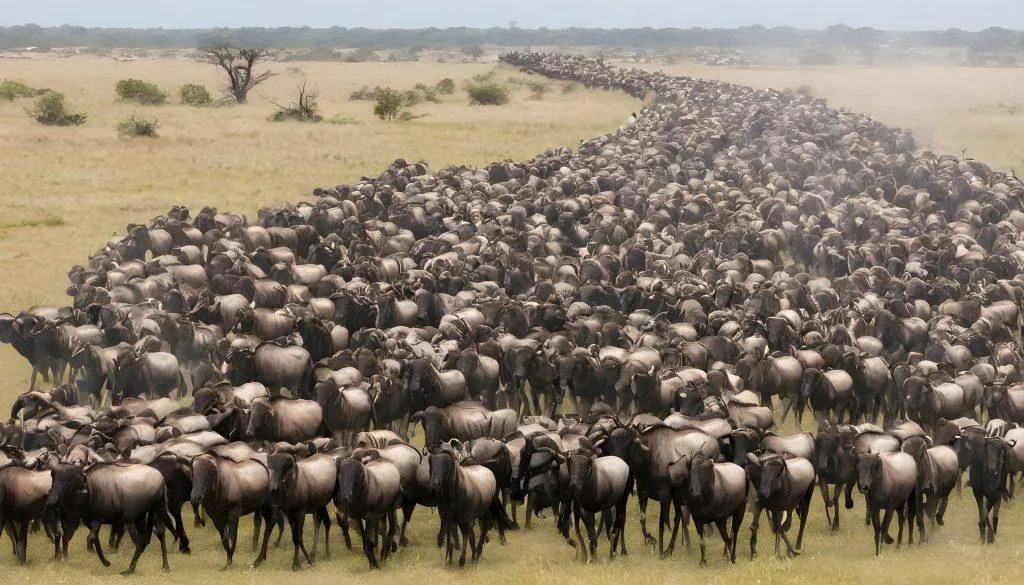
- Massive herds stretching across the plains
- Zebras traveling alongside wildebeest
- Predator encounters along migration routes
The western Serengeti becomes an important stop as animals prepare for one of the most challenging parts of their journey.
Stage 3: Crossing the Grumeti River
One of the major challenges of the great wildebeest migration occurs when herds reach the Grumeti River in western Serengeti.
The crossing can be dangerous because of:
- Strong river currents
- Large crocodiles waiting in the water
- Crowded movement of thousands of animals
Although less famous than the Mara River crossing, the Grumeti River crossing offers incredible wildlife viewing opportunities and dramatic scenes of survival.
Stage 4: Northern Serengeti Journey
Between July and August, the herds continue moving north toward the border between Tanzania and Kenya.
The northern Serengeti provides important grazing areas before animals attempt the next major challenge—the Mara River crossing.
This stage features:
- Large migrating herds
- Beautiful landscapes
- Increased predator activity
- Exciting safari opportunities
Many travelers visit northern Tanzania during this period to experience the migration before the animals cross into Kenya.
Stage 5: Mara River Crossing
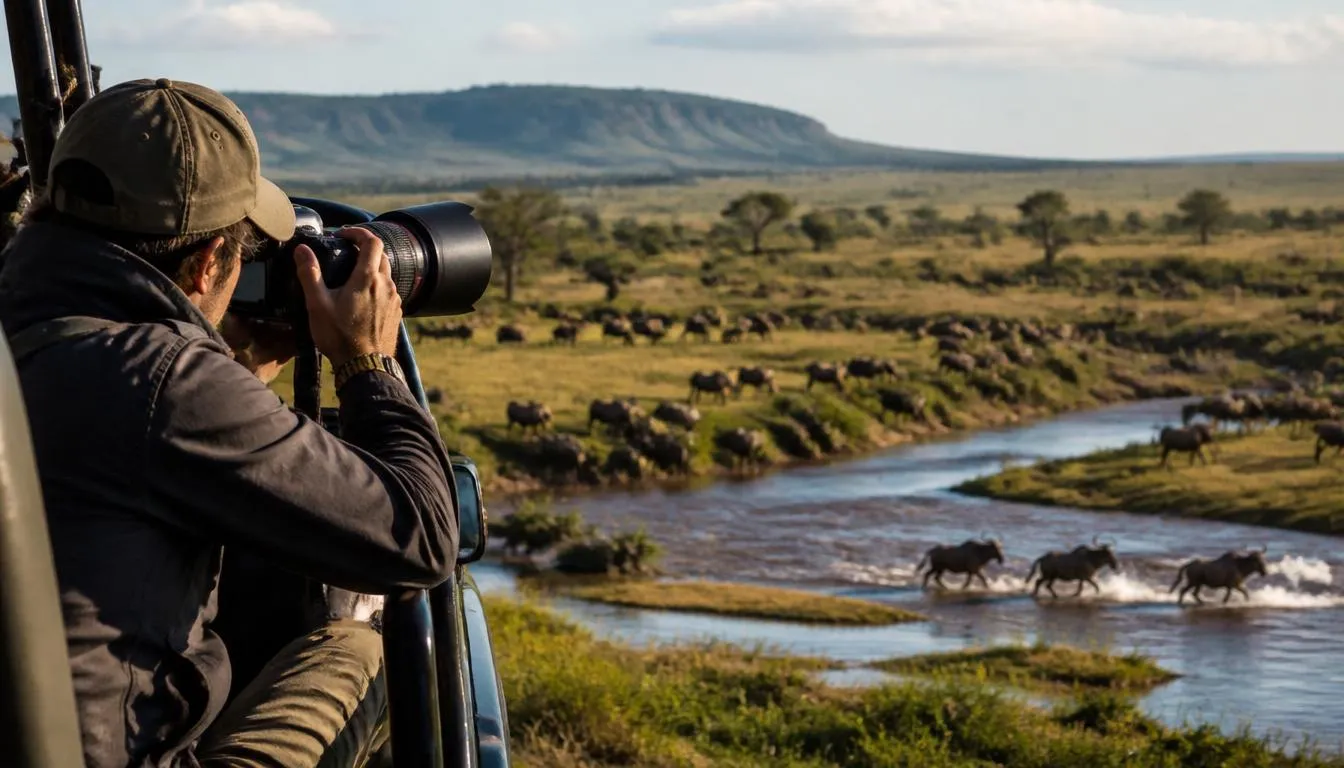
The Mara River crossing is one of the most famous highlights of the great wildebeest migration. Usually occurring between July and October, this dramatic event takes place when thousands of wildebeest attempt to cross into Kenya’s Maasai Mara.
The crossing involves:
- Steep riverbanks
- Strong currents
- Waiting predators
- Herds moving together under pressure
The timing of river crossings is unpredictable because animals respond to weather conditions and instinct rather than a fixed schedule. Witnessing this event is considered one of the greatest wildlife experiences in the world.
Stage 6: Grazing in Maasai Mara
After successfully crossing the Mara River, many animals spread across Kenya’s Maasai Mara National Reserve.
The area provides:
- Fresh grasslands
- Abundant food supplies
- Excellent wildlife viewing
- Opportunities to see resident predators
During this period, visitors can observe large herds moving across open landscapes while lions, cheetahs, and other predators follow their movements.
Stage 7: Return Journey South
As rainfall patterns change, the herds begin their journey back toward Tanzania. Usually between October and November, animals start moving south through western and eastern routes.
This stage is characterized by:
- Long-distance movement
- Fresh grazing opportunities
- Changing landscapes
- New wildlife encounters
The cycle continues as the animals follow nature’s seasonal rhythm.
Stage 8: Completing the Migration Cycle
By December, many wildebeest return to the southern Serengeti, completing the annual migration cycle. The arrival of seasonal rains creates fresh grasslands, preparing the herds for the next calving season.
The completed journey demonstrates the incredible survival instincts of these animals and the importance of protecting their natural habitats.
Best Time to Experience the Great Wildebeest Migration
The best time to witness the great wildebeest migration depends on what type of experience you want.
- January to March: Best for calving and newborn animals
- April to June: Best for seeing large herd movements
- July to October: Best for river crossings
- November to December: Best for witnessing the return journey
Each season offers a different perspective of this extraordinary natural event.
Why the Great Wildebeest Migration Is Important
The migration plays a vital role in maintaining the ecosystem of East Africa. As animals move across the landscape, they support natural processes such as:
- Grassland regeneration
- Nutrient cycling
- Predator-prey balance
- Biodiversity conservation
Protecting migration routes is essential for preserving this unique wildlife phenomenon for future generations.
Final Thoughts
The great wildebeest migration is more than just a journey—it is a powerful display of survival, adaptation, and nature’s incredible balance. From the first newborn calves in the Serengeti to the dramatic Mara River crossings and the return south, every stage tells a remarkable story.
For wildlife lovers and adventure travelers, witnessing this annual migration offers an unforgettable connection with nature. Understanding each stage helps visitors choose the right time and location to experience one of the world’s greatest wildlife wonders.





















Sign in to leave a comment.