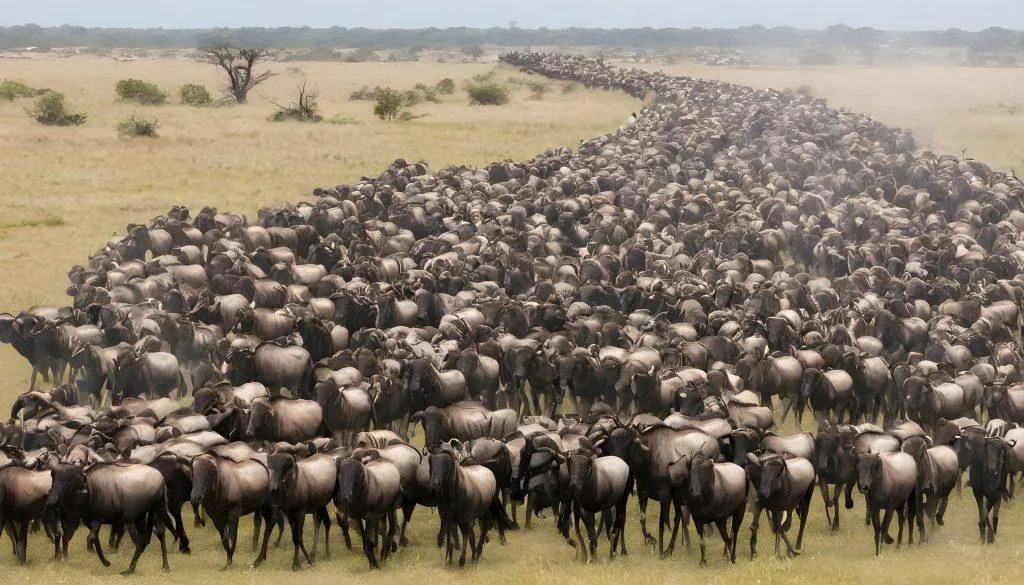

The annual movement of wildebeest across the Serengeti-Mara ecosystem is one of Africa’s greatest wildlife spectacles. While enormous herds of wildebeest are the main attraction, they are far from the only animals travelers can encounter during this remarkable journey. From zebras and gazelles traveling alongside the herds to lions and cheetahs following the abundance of prey, the migration creates an extraordinary concentration of wildlife.
For visitors interested in the wildebeest migration masai mara, understanding the animals that share this ecosystem can make every game drive even more rewarding. The migration is not simply about watching wildebeest move across the landscape; it is about witnessing an entire food web responding to their presence.
Zebras Travel With the Wildebeest
Zebras are among the most recognizable companions of migrating wildebeest. Large groups often move through the same areas, searching for fresh vegetation and water.
Their grazing habits differ from those of wildebeest, allowing both species to use the grasslands in complementary ways. Zebras can consume taller and tougher grasses, while wildebeest often prefer shorter, more nutritious vegetation.
Seeing thousands of zebras mixed with wildebeest creates one of the most memorable sights of the migration. Their contrasting black-and-white patterns make the moving herds particularly impressive against the open grasslands.
Gazelles Add Speed and Grace
Thomson’s gazelles and other antelope species can also be found around migrating herds. These smaller, agile animals move through the grasslands searching for vegetation while remaining alert to nearby predators.
Gazelles are especially fascinating to observe because of their speed and quick reactions. When danger appears, they can accelerate rapidly and use their agility to escape.
Their presence adds another dimension to the migration landscape, where different herbivore species occupy the same ecosystem while responding differently to predators and environmental conditions.
Lions Follow the Herds
Where there are huge numbers of herbivores, predators are never far away. Lions are among the most impressive predators visitors may encounter during the migration.
Wildebeest provide an important source of food, particularly when large herds pass through areas where lions are established. A pride may rest in the shade during the heat of the day before becoming more active when temperatures fall.
Watching lions observe a moving herd can reveal the natural relationship between predator and prey. The presence of thousands of animals does not mean every hunt is successful. Predators must still choose their opportunities carefully.
Cheetahs Depend on Open Grasslands
Cheetahs are another exciting species to look for around migrating herds. Unlike lions, which often rely on coordinated group hunting, cheetahs are famous for speed and short bursts of pursuit.
The open grasslands of the Serengeti-Mara ecosystem provide suitable hunting environments, particularly where visibility is good. Cheetahs may watch groups of gazelles or young wildebeest before attempting a rapid chase.
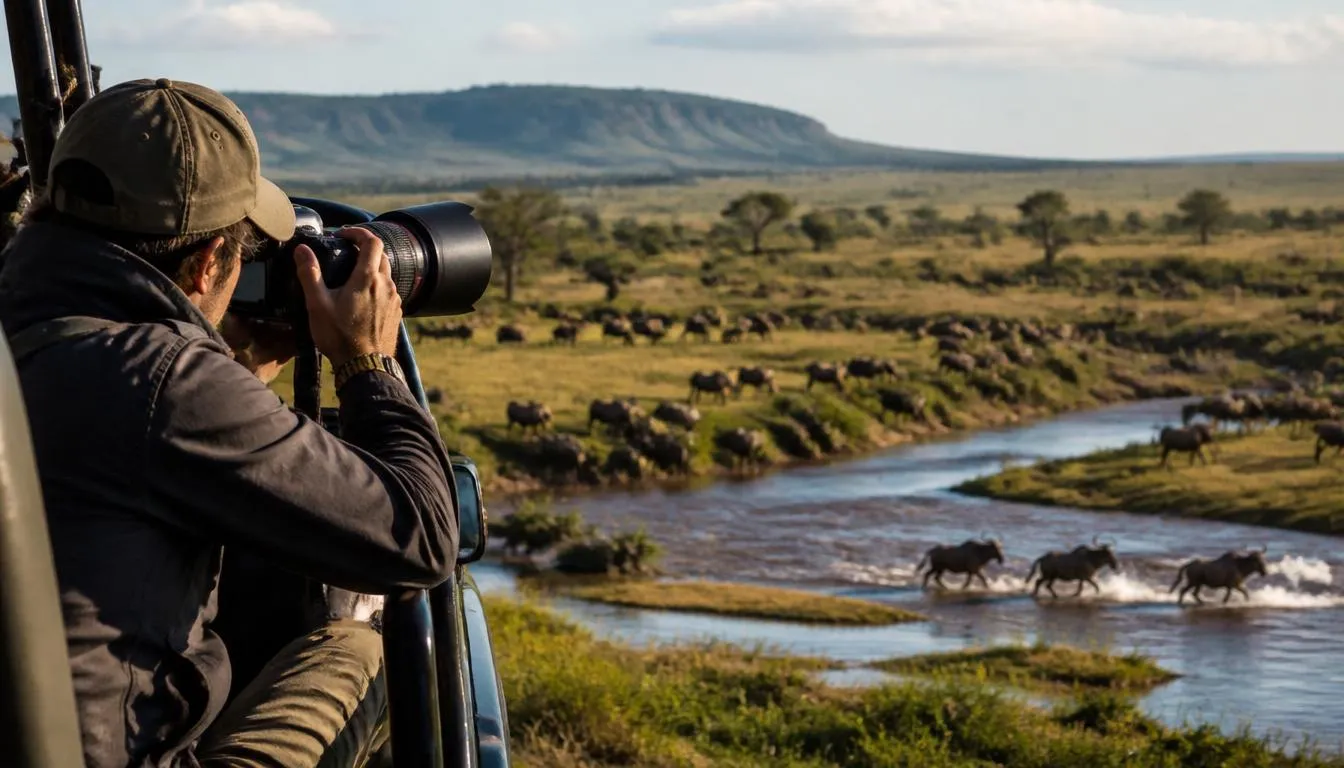
For wildlife photographers, a cheetah scanning the plains from a small rise can be an unforgettable sight, even when no hunt occurs.
Hyenas Are Highly Adaptable
Spotted hyenas are often associated with scavenging, but they are also capable and successful hunters. They can take advantage of the abundance of prey created by the migration.
Hyenas may follow herds, investigate carcasses, or hunt vulnerable animals. Their strong social structures and communication make them fascinating animals to observe.
During the wildebeest migration masai mara, the increased availability of prey can provide valuable opportunities for hyena clans to feed and raise their young.
Crocodiles Wait in the Rivers
The rivers of the Masai Mara can introduce another powerful predator into the migration story. Nile crocodiles may wait near river crossings, where they can take advantage of wildebeest entering the water.
Their hunting strategy is based largely on patience. Rather than chasing prey across open land, crocodiles conserve energy while waiting for an opportunity.
This makes river crossings particularly dramatic. The wildebeest must deal with strong currents, steep banks, and crowded conditions while crocodiles remain nearby.
Birds Follow the Activity
The migration also attracts an impressive variety of birds. Vultures may gather around carcasses, while eagles and other birds of prey search the grasslands for opportunities.
Oxpeckers can sometimes be seen around large mammals, feeding on ticks and other organisms found on their hosts. Other birds take advantage of insects disturbed by moving herbivores.
For birdwatchers, the migration provides opportunities to observe both resident and seasonal species in a constantly changing environment.
Elephants and Giraffes Remain Part of the Ecosystem
Although elephants and giraffes do not participate in the wildebeest migration in the same way, they share parts of the broader ecosystem.
Elephants may travel across the grasslands and woodlands in search of food and water, while giraffes browse leaves from trees and shrubs. Their different feeding habits help demonstrate how numerous herbivore species can coexist within the same landscape.
Encountering these larger mammals during a migration-focused safari can add variety to the experience.
Why Predators Concentrate Around Migration Routes
The movement of huge herbivore herds creates temporary concentrations of food. This can influence predator distribution across the ecosystem.
Lions, cheetahs, hyenas, and other carnivores may take advantage of these opportunities, while scavengers benefit from remains left behind after natural deaths or successful hunts.
This creates a dynamic relationship between migration and the food chain. As wildebeest move, the availability of prey changes, and predators respond accordingly.
Every Season Offers Different Encounters
The wildlife seen alongside wildebeest can vary depending on the season, location, weather, and local conditions. A visitor might spend one morning watching a pride of lions near a herd and later encounter cheetahs, elephants, giraffes, or large numbers of birds.
There is no guaranteed checklist of animals because wildlife is constantly moving. This unpredictability is one of the reasons the Masai Mara remains such an exciting safari destination.
Travelers should also remember that responsible wildlife viewing is essential. Keeping a safe distance, following guide instructions, and avoiding actions that disturb animals helps preserve the natural behavior that makes these encounters so special.
Final Thoughts
The wildebeest migration masai mara is much more than a journey involving millions of herbivores. It is a moving ecological event that affects predators, scavengers, birds, and other grazing animals across the Serengeti-Mara ecosystem.
Zebras and gazelles accompany the herds, while lions, cheetahs, hyenas, and crocodiles take advantage of opportunities created by the abundance of prey. Elephants, giraffes, and countless bird species add even more diversity to the landscape.
For safari travelers, this means the real excitement lies beyond the wildebeest themselves. Every migrating herd becomes part of a larger story of feeding, hunting, survival, and adaptation. That interconnected spectacle is what makes experiencing the migration in the Masai Mara truly unforgettable.




























Sign in to leave a comment.