

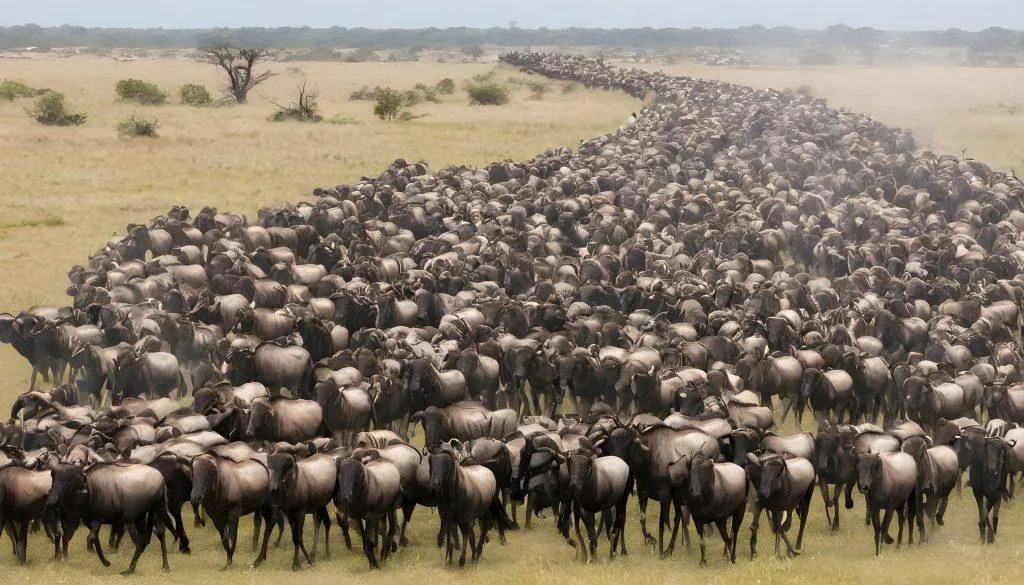
The wildebeest migration in Tanzania is one of the most breathtaking wildlife spectacles on Earth. Every year, millions of wildebeest, zebras, and gazelles move across the Serengeti ecosystem in search of fresh grazing land, creating a continuous cycle of movement, survival, and natural drama.
Tanzania is widely considered the best destination to witness this incredible phenomenon in its most natural and untouched form.
🐃 Why Tanzania is the Core of the Migration
Tanzania is home to the majority of the Serengeti ecosystem, where most of the migration takes place throughout the year. Unlike other regions, Tanzania offers:
- Vast open plains of the Serengeti
- Year-round wildlife movement
- Multiple migration stages within its borders
- Less crowded safari zones in many areas
The wildebeest migration Tanzania experience covers calving, grazing, and dramatic river crossings.
🌿 Serengeti National Park: The Heart of Migration
The Serengeti is the central stage of the Great Migration. It is here that millions of animals gather, giving tourists a front-row seat to nature’s most powerful wildlife event.
Key highlights include:
- Southern Serengeti calving season
- Western corridor movement
- Northern Serengeti river crossings
- Predator interactions across open plains
This makes Serengeti the most important location for migration viewing.
🕒 Best Time to Witness Migration in Tanzania
The migration is a year-round event, but key highlights include:
- January–March: Calving season in southern Serengeti
- April–June: Herd movement toward western regions
- July–October: River crossings in northern Serengeti
- November–December: Return migration to southern plains
Each phase offers unique wildlife viewing opportunities for visitors.
🌊 Famous River Crossings in Tanzania
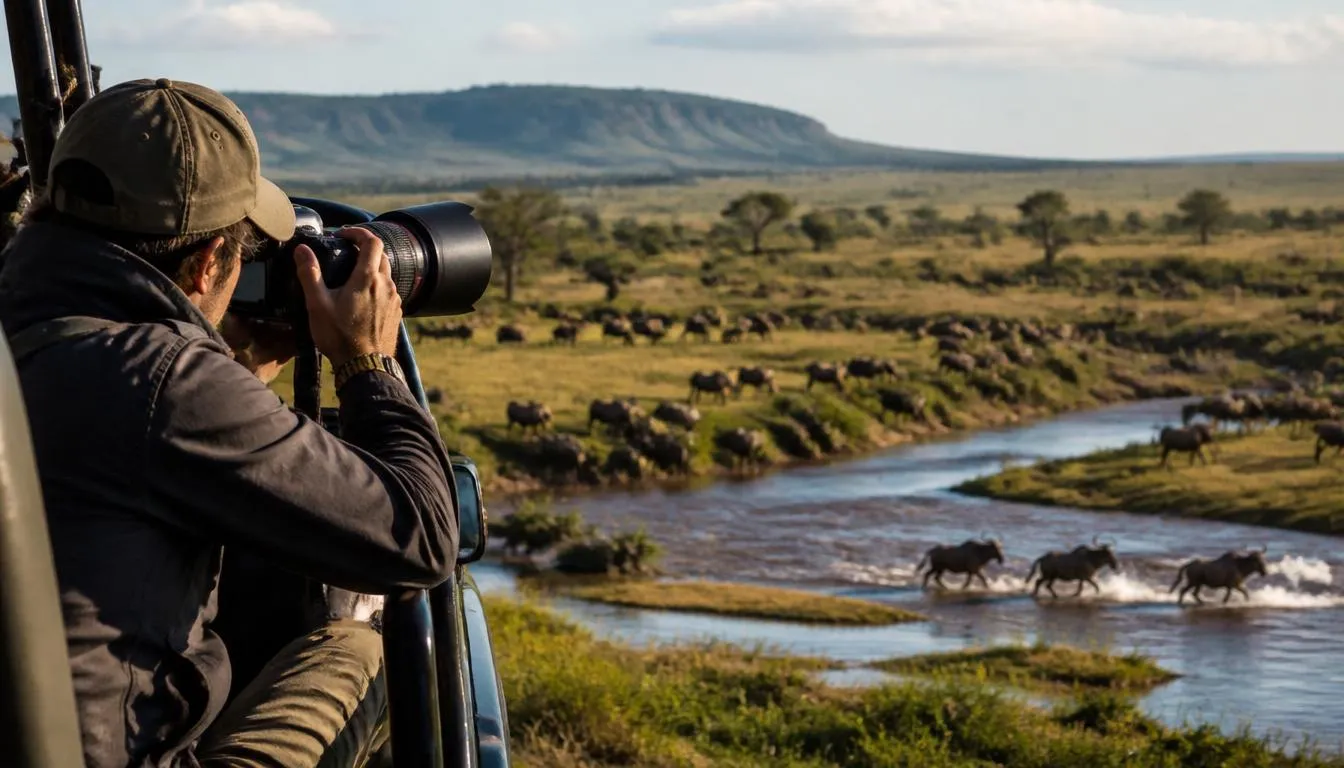
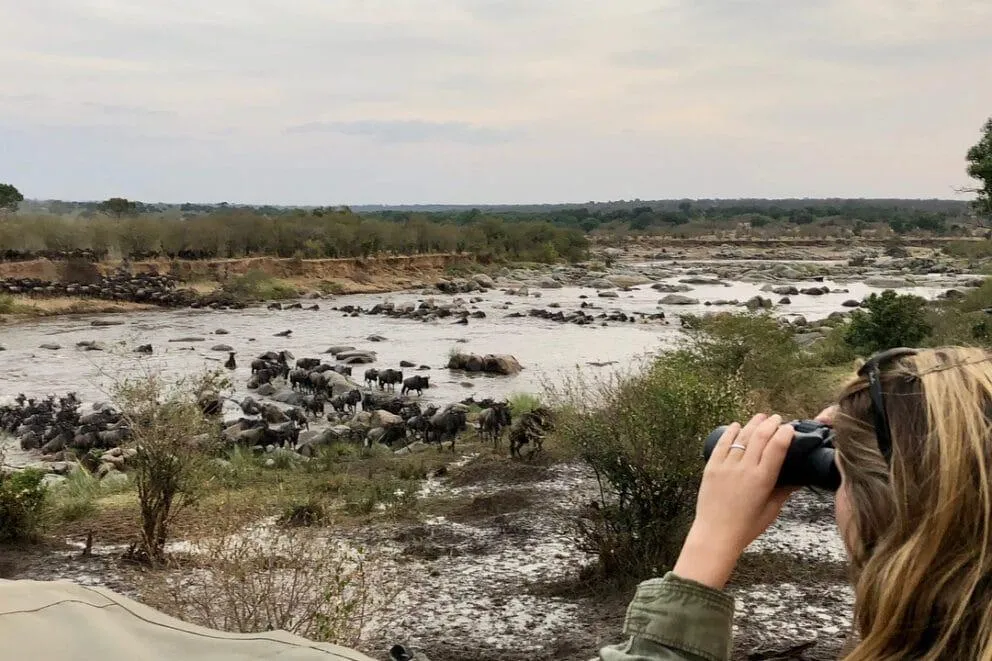
One of the most dramatic parts of the wildebeest migration Tanzania experience is the river crossing.
Key rivers include:
- Mara River (Northern Serengeti)
- Grumeti River (Western Corridor)
These crossings involve crocodiles, strong currents, and intense survival challenges, making them a highlight for safari travelers.
🐆 Wildlife Diversity During Migration
Tanzania’s migration season is not just about wildebeest. It also includes:
- Lions hunting in open plains
- Cheetahs chasing fast-moving prey
- Hyenas following herds
- Crocodiles in river systems
- Thousands of zebras and gazelles
This makes the ecosystem incredibly rich and dynamic.
🧳 Safari Experience in Tanzania vs Other Regions
While Kenya’s Maasai Mara is famous for river crossings, Tanzania offers a more complete migration experience:
- Longer migration duration within Serengeti
- Wider landscape and fewer crowds
- More diverse wildlife encounters
- Better chances to see all migration phases
This is why many experts consider Tanzania the best overall destination for migration safaris.
🎯 Conclusion
The wildebeest migration in Tanzania experience is unmatched in scale, diversity, and natural beauty. From calving in the southern plains to dramatic river crossings in the north, Tanzania offers the most complete and authentic view of the Great Migration.
For travelers seeking the ultimate safari adventure, Tanzania remains the best destination to witness one of nature’s greatest spectacles.
Frequently Asked Questions
When is the best time to witness the wildebeest migration in Tanzania?
The best time to witness the wildebeest migration in Tanzania varies throughout the year. Key highlights include the calving season from January to March in the southern Serengeti, herd movements towards the western regions from April to June, dramatic river crossings in the northern Serengeti from July to October, and the return migration to the southern plains from November to December.
What are the key locations for viewing the wildebeest migration?
The key locations for viewing the wildebeest migration in Tanzania include the southern Serengeti for calving, the western corridor for herd movements, and the northern Serengeti for river crossings. Each area offers unique opportunities to observe different phases of the migration and the diverse wildlife interactions.
How does the wildebeest migration in Tanzania compare to other regions like Kenya?
While Kenya's Maasai Mara is famous for its river crossings, Tanzania offers a more comprehensive migration experience. This includes a longer migration duration, wider landscapes, fewer crowds, and more diverse wildlife encounters, making it a preferred choice for many safari enthusiasts.
What wildlife can I expect to see during the migration in Tanzania?
During the wildebeest migration in Tanzania, visitors can expect to see not just wildebeests, but also thousands of zebras and gazelles. Additionally, predators like lions, cheetahs, and hyenas are often seen hunting, while crocodiles lurk in the rivers during crossing events, creating a dynamic wildlife viewing experience.
What makes the river crossings so special during the migration?
The river crossings during the migration are particularly special due to the dramatic and intense survival challenges the animals face. Key rivers, such as the Mara and Grumeti, are fraught with crocodiles and strong currents, making these crossings a highlight for safari travelers seeking thrilling wildlife encounters.
Is it worth visiting Tanzania for the wildebeest migration?
Absolutely! Tanzania is considered the best destination for witnessing the wildebeest migration due to its vast open plains, year-round wildlife movement, and less crowded safari zones. The sheer scale, diversity, and natural beauty of the migration create an unforgettable experience for travelers seeking adventure and connection with nature.




















Sign in to leave a comment.