

In the digital enterprise, scalability is not a luxury; it is a survival mechanism. When a startup transitions into an enterprise, or when an established corporation digitizes its core operations, the demands on its software infrastructure change fundamentally. The application is no longer just serving a few thousand users; it must handle millions of concurrent requests, process terabytes of data, and integrate with dozens of third-party systems—all while maintaining 99.99% uptime.
Scalability is often misunderstood as simply "adding more servers." In reality, true enterprise scalability is architectural. It is about building a system that can grow linearly in capacity without growing exponentially in complexity or cost. This requires a shift in mindset from "making it work" to "engineering it to last."
For CTOs and product leaders, selecting the right partner is crucial. A mature web application development company understands that scalability must be baked into the code from day one, not bolted on as an afterthought. Below, we explore nine essential, enterprise-grade features that form the backbone of a truly scalable web application.
1. Microservices Architecture (Decoupling for Growth)
The era of the monolithic application—where the user interface, business logic, and data access layers are all woven into a single, massive codebase—is fading in the enterprise sector. While monoliths are easier to build initially, they become a bottleneck as the team and the user base grow. If one component fails, the entire application crashes. If one feature needs an update, the entire system must be redeployed.
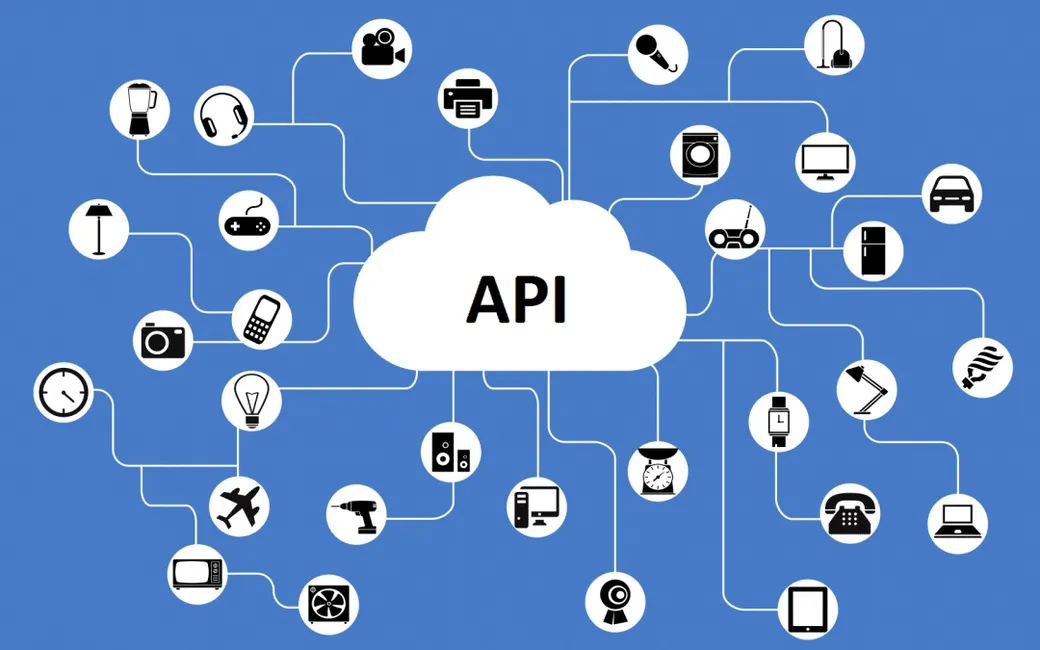
To achieve scalability, enterprise apps must adopt a Microservices Architecture. This approach breaks the application down into small, independent services that communicate via APIs. For example, the "User Authentication," "Payment Processing," and "Inventory Management" functions run as separate services. This allows teams to scale specific parts of the app independently. If Black Friday traffic spikes your payment gateway, you can allocate more resources just to the payment service without over-provisioning the rest of the app. This granular control is the foundation of modern horizontal scaling.
2. Containerization and Orchestration (Kubernetes)
Building on microservices, the deployment strategy determines how fluidly an application can scale. Enterprise-grade applications rely on Containerization (using tools like Docker) to package code and its dependencies into lightweight, portable units. This ensures that the app runs exactly the same way on a developer's laptop as it does in the production cloud environment, eliminating the "it works on my machine" syndrome.
However, managing hundreds of containers manually is impossible. This is where Orchestration tools like Kubernetes come in. Kubernetes automates the deployment, scaling, and management of containerized applications. It acts as a traffic controller, automatically spinning up new containers when traffic surges and shutting them down when demand subsides. This auto-scaling capability ensures the application remains responsive during peak loads while optimizing cloud costs during quiet periods.
3. Advanced Caching Strategies (Redis and CDNs)
Database queries are expensive. They consume CPU power and take time to execute. In a high-traffic enterprise app, hitting the primary database for every single user request is a recipe for latency and eventual downtime. Scalability requires aggressive Caching Strategies.
There are two critical layers to this:
Application Caching: Using in-memory data stores like Redis or Memcached. These tools store frequently accessed data (like user session data or product catalogs) in RAM rather than on a hard disk. Retrieving data from RAM is microseconds fast, significantly reducing the load on the primary database.
Content Delivery Networks (CDNs): For static assets like images, videos, and CSS files, CDNs are non-negotiable. They distribute these files across a global network of servers. A user in London downloads images from a London server, not from your main data center in New York. This reduces latency and offloads massive amounts of traffic from your core infrastructure.
4. Database Sharding and Read Replicas
As an application accumulates data, a single database server will eventually hit its physical limits (Vertical Scaling limits). To bypass this, enterprise apps implement Database Sharding. Sharding involves breaking a massive database into smaller, faster, more manageable pieces called "shards," usually spread across multiple servers. For instance, you might store data for users A-M on Server 1 and users N-Z on Server 2.
Additionally, Read Replicas are essential for read-heavy applications. Instead of funneling all traffic to one master database, the system replicates data to multiple "read-only" copies. The master database handles the "writes" (updates/inserts), while the replicas handle the "reads" (viewing data). This ensures that a surge in users viewing content doesn't block users trying to post content. Implementing these complex data layers is often where specialized web app development solutions prove their value, ensuring data integrity is maintained across distributed systems.
5. Asynchronous Messaging Queues (Event-Driven Architecture)
In a standard web request, the user waits for the server to finish a task before the page loads. This is synchronous processing. However, some tasks—like generating a PDF report, processing a video, or sending a batch of emails—take too long. If the user has to wait for these, the experience feels sluggish, and server connections remain blocked, limiting concurrency.
Enterprise scalability relies on Asynchronous Messaging Queues (using tools like Apache Kafka or RabbitMQ). When a user initiates a heavy task, the interface says "Processing..." and immediately frees up the user to do other things. The task is sent to a queue in the background, where a separate worker process picks it up and executes it. This "fire and forget" mechanism prevents heavy background jobs from clogging up the main application thread, allowing the server to handle thousands of incoming requests simultaneously without hanging.
6. API-First Design and GraphQL
Legacy applications often suffer from "over-fetching" or "under-fetching" data because the API endpoints are rigid. This wastes bandwidth and slows down the client-side application. Modern enterprise apps are adopting an API-First Design, often utilizing GraphQL.
Unlike traditional REST APIs that require loading multiple endpoints to get related data, GraphQL allows the client to request exactly the data it needs in a single query—nothing more, nothing less. This reduces the size of data payloads transferred over the network, which is particularly crucial for mobile users on unstable connections. Furthermore, an API-first approach ensures that the backend logic is decoupled from the frontend, allowing you to scale your web app, mobile app, and third-party integrations from a single, robust backend source.
7. Role-Based Access Control (RBAC) and SSO
Scalability isn't just about technical performance; it's about administrative scalability. As an organization grows to thousands of employees and millions of users, managing permissions individually becomes a security nightmare and an operational bottleneck.
Enterprise apps must implement granular Role-Based Access Control (RBAC). Instead of assigning permissions to users, you assign permissions to roles (e.g., "Admin," "Editor," "Viewer") and assign users to those roles. This simplifies management. Furthermore, Single Sign-On (SSO) integration (using protocols like SAML or OIDC) is critical. It allows enterprise users to log in using their existing corporate credentials (like Microsoft Azure AD or Okta). This reduces password fatigue, lowers the volume of "forgot password" support tickets, and streamlines the onboarding/offboarding process, allowing the user base to scale securely.
8. Automated CI/CD Pipelines
You cannot scale a product if you are afraid to deploy code. In large monolithic systems, deployments are often high-stress events that happen once a month because the risk of breaking something is high. To scale development velocity, enterprise apps rely on Continuous Integration and Continuous Deployment (CI/CD) pipelines.
A CI/CD pipeline automates the testing and deployment process. Every time a Web developer commits code, the system automatically runs a battery of unit tests, integration tests, and security scans. If the code passes, it is automatically deployed to a staging environment (or even production). This allows engineering teams to deploy updates multiple times a day. If a bug is introduced, the system allows for an instant rollback. This automation is what allows companies like Netflix and Amazon to innovate rapidly at a massive scale.
9. Observability and AI-Driven Monitoring
The final piece of the scalability puzzle is visibility. You cannot fix what you cannot see. Traditional monitoring tells you if the server is down. Enterprise Observability tells you why it is slow.
Modern observability platforms (like Datadog, New Relic, or Prometheus) aggregate logs, metrics, and distributed traces from all microservices into a single dashboard. They visualize the journey of a request as it travels through your system. In 2025 and beyond, this is augmented by AI. AI-driven monitoring establishes a baseline of "normal" behavior and alerts engineers to anomalies—such as a 5% increase in error rates or a slight uptick in database latency—long before they become critical failures. This proactive stance is essential for maintaining trust and performance at an enterprise scale.
Conclusion
Building a web application that serves ten users is fundamentally different from building one that serves ten million. The latter requires a deliberate architectural strategy that prioritizes decoupling, automation, and efficiency. From the database structure to the deployment pipeline, every layer must be engineered to handle growth.
While the initial investment in these technologies may be higher than building a simple prototype, the long-term ROI is undeniable. A scalable architecture reduces technical debt, prevents costly downtime, and provides the agility needed to capture new market opportunities. For leaders looking to future-proof their digital ecosystem, the mandate is to build web applications that are not just functional for today, but ready for the exponential demands of tomorrow.




























Sign in to leave a comment.