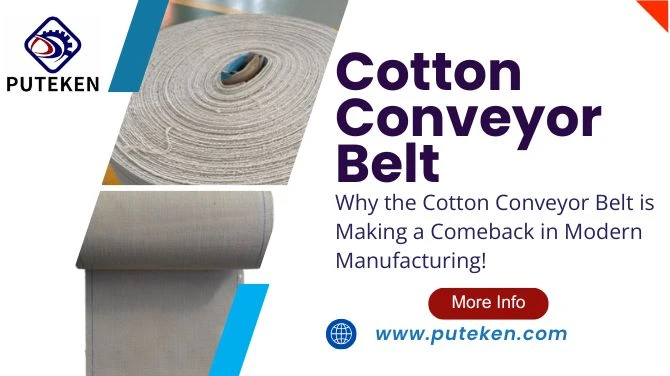

In the age of high-speed automation and synthetic materials, the idea of returning to natural fiber-based solutions in manufacturing may seem counterintuitive. Yet, across various industries—textile, tobacco, paper, packaging, and light assembly—one particular material is quietly regaining popularity: the Cotton Conveyor Belt.
Once considered too traditional or outdated for modern processes, the Cotton Conveyor Belt is now being re-evaluated as manufacturers prioritize sustainability, low-noise operations, product protection, and temperature stability. Cotton belts, with their anti-static, breathable, and non-marking properties, are proving to be uniquely beneficial in many industrial applications where synthetic alternatives sometimes fall short.
At Shanghai Puteken Transmission System Co., Ltd., we’ve seen a growing demand for cotton-based conveyor solutions as manufacturers balance environmental responsibility with performance. With high-quality cotton belting that’s engineered for modern applications, we help clients align with global sustainability standards while maintaining efficiency and consistency on the production floor.
What is a Cotton Conveyor Belt?
A Cotton Conveyor Belt is a type of conveyor belt made primarily from cotton fibers, sometimes blended with polyester or other natural materials for added strength. These belts come in endless woven designs or layered fabric forms and may be manufactured with or without surface coatings, depending on the intended application.
Unlike synthetic belts such as PVC or PU, cotton belts are naturally breathable, anti-static, and non-abrasive. These properties make them ideal for delicate or temperature-sensitive applications where product interaction and contamination must be minimized.
Typical specifications of a cotton conveyor belt may include:
- Width: Customizable (50mm to 2000mm)
- Thickness: 2mm to 10mm
- Ply count: 2-ply to multi-layered belts
- Surface type: Plain weaves, twills, or specialty finishes
- Colors: Natural cream, tan, or custom dyeing
Whether transporting paper sheets, textile rolls, plastic components, or delicate electronics, cotton belts offer a soft yet stable platform for internal transport systems.
Why Manufacturers Are Returning to Cotton Conveyor Belts?
From eco-friendly operations to improved product handling, the modern-day revival of the Cotton Conveyor Belt is powered by tangible benefits that align with today’s industrial goals.
1. Sustainability and Eco-Friendliness
Perhaps the most important driver behind the return of cotton belts is the global shift toward sustainable manufacturing. As companies pledge to reduce their carbon footprint and eliminate plastics where possible, natural fiber belts provide a biodegradable and renewable alternative to synthetic options.
- No toxic residues left during wear-down
- Easier disposal and decomposition
- Reduced emissions during production-
- Base material sourced from renewable agriculture
At Shanghai Puteken, our cotton belts use responsibly sourced materials and are free from harmful dyes and coatings, aligning with RoHS and REACH compliance.
2. Low Heat Retention and Thermal Resistance
Synthetic belts often soften or deform under high temperatures, especially when used near heat presses, ovens, or drying units. Cotton’s natural structure maintains dimensional stability and doesn’t absorb heat as quickly, making it ideal for:
- Textile heat-setting operations
- Tobacco drying lines
- Packaging lines near sealing machines
- Paper mills and offset printing stations
3. Product Safety and Non-Marking Surfaces
For applications handling smooth-surfaced goods—like plastic panels, anodized metal plates, or laminated packages—scratches and surface marks are unacceptable. This is where the soft, lint-free texture of a cotton belt shines.
- Minimizes product rejection rates
- Protects delicate surfaces
- Non-abrasive performance
- Clean hand-off in transfer points
Cotton conveyor belts also reduce static electricity, which is a major concern in packaging and electronics handling.
4. Noise Reduction in Operation
In high-speed, repetitive conveyor systems, noise from plastics or hard-surface rollers can lead to:
- Worker fatigue
- Hearing protection requirements
- Lower overall workplace comfort
Cotton conveyor belts absorb some of this environmental noise thanks to their fabric softness and damping characteristics.
5. Breathability and Moisture Wicking
Textile drying or humid environments require a belt that won’t hold moisture or foster mold growth. Cotton is naturally breathable and evaporative, resulting in:
- Better airflow for transported goods
- Lower moisture retention
- No mildew or foul odor buildup
Applications of Cotton Conveyor Belts in Modern Manufacturing
The Cotton Conveyor Belt, though simple in concept, is extremely versatile. Let’s look at real-world examples where cotton belts are outperforming synthetic options:
1. Textile Mills and Garment Factories
In fabric inspection, cutting, dyeing, and pressing lines, cotton belts prevent static buildup and preserve soft fabric finishes.
2. Paper and Pulp Industry
Used for transporting paper sheets and unfinished rolls, cotton belts ensure no surface scratching, aid drying, and operate quietly.
3. Tobacco & Tea Processing
Cotton’s moisture-wicking abilities make it ideal for handling organic plant materials in drying rooms, ensuring even curing.
4. Packaging and Light Assembly
Used in flattened operations such as flap folding, box gluing, or direct print-to-package lines, where static and marking must be minimized.
5. Printing and Lamination
Where paper, board, or films are laminated or printed, a cotton belt’s non-slip yet soft surface ensures accurate processing.
Modern Engineering Upgrades to Cotton Conveyor Belts
While the base material remains traditional, recent advancements have made Cotton Conveyor Belts more durable and industry-ready than ever:
- Blended fibers (cotton + polyester) for added tensile strength
- Anti-fray edges to prevent wear in high-speed rollers
- Heat or resin-impregnated finishes for added wear resistance
- Double-layered fabrics for extended life cycles
- Precision endless belt splicing for smoother rotation and junctions
At Shanghai Puteken Transmission System Co., Ltd., we continuously invest in innovative processing techniques to ensure our cotton belts meet the speed, load, and longevity demands of today’s operations.
A Timeless Belt for the Future of Manufacturing
The return of the Cotton Conveyor Belt to modern manufacturing is more than a trend—it’s a response to evolving industry needs for sustainable, quiet, product-safe, and versatile materials. Cotton combines the simplicity of traditional solutions with the dependability and customization potential required for 21st-century manufacturing ecosystems.
Frequently Asked Questions (FAQ)
- Is a cotton conveyor belt biodegradable?
Yes. 100% cotton conveyor belts are naturally biodegradable and decompose faster than synthetic materials, making them an eco-friendly choice.
- How long does a cotton conveyor belt last?
On average, cotton belts last 6 to 18 months, depending on usage, load, speed, and environmental conditions. Blended cotton-polyester variants offer longer life cycles.
- Can I use cotton belts in high-speed applications?
Yes, but with design optimization. Use reinforced edges and heat-treated surfaces for better wear resistance and stability under high RPM.
- Is cotton safe for food handling applications?
While cotton is a natural material, we recommend synthetic FDA-approved belts for direct food contact. However, cotton belts are excellent for packaged food handling.
- Can cotton belts run on standard plastic or steel rollers?
Yes. They are compatible with most roller materials. We also offer custom splicing and endless loop solutions for precision roller systems.
- Are color options available?
Yes. While natural cotton is typically cream or tan, dyed options are available upon request for product separation or visual identification purposes.



























Sign in to leave a comment.