
The importance of gate valves in landscape development and irrigation system installation cannot be overstated. However, there is frequently confusion when distinguishing between two types of gate valves: rising stem gate valves and non-rising stem gate valves.
Many consumers who are faced with this decision may struggle to understand the differences between these types. Understanding the differences between a rising stem gate valve and a non-rising stem gate valve is essential in landscaping and irrigation.
Join us as we analyse the unique features of these valves and their impact in landscaping and irrigation systems.
A Glimpse about Gate Valve in Landscape and Irrigation
Gate valves serve as pivotal components in landscape and irrigation systems, playing a vital role in controlling water flow. Their significance lies in providing efficient regulation of liquid movement, particularly in maintaining optimal water flow within these systems. These valves are favoured for their ability to offer complete flow passage with minimal pressure drop when fully open.
In the context of landscape irrigation, gate valves stand out as essential devices, ensuring consistent and controlled water distribution to sustain healthy plant growth. Their reliability and capability to manage flow efficiently make them indispensable assets within irrigation setups, contributing significantly to the maintenance of vibrant and thriving landscapes.
Rising Stem Gate Valve:
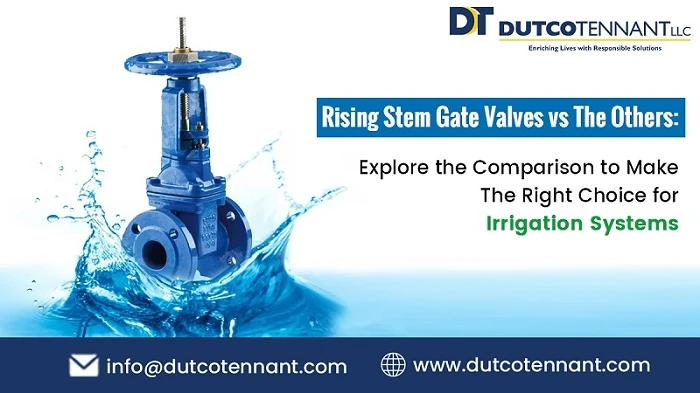
The mechanism of the rising stem gate valve is straightforward yet effective. A round handle facilitates the rotation of a threaded shaft connected at its center. This rotational movement is pivotal, causing the stem to ascend, thereby opening the valve, or descend, resulting in valve closure.
This design's brilliance lies in its visual indicator: observing the exposed stem indicates whether the valve is open or closed. When the handle aligns flush with the pipe, signaling no exposed stem, the valve stands closed. Conversely, a noticeable length of the stem being exposed signifies the valve's open position.
Key Features include:
Full rubber wedge for enhanced performance. An outside Screw and yoke Gate valve design, ensuring efficiency and reliability. Tailored for the specific function of regulating the flow of drinking water. Capable of withstanding temperatures of up to 70 degrees Celsius and pressure reaching up to 16 bars, underlining its durability and versatility in various conditions.Non-Rising Stem Gate Valve:
The non-rising stem gate valve showcases cutting-edge technology with its wedges and stem mechanisms ensuring smooth functionality and low torque operation. Crafted from robust materials like brass, bronze, and cast iron, this valve is ideal for confined spaces where vertical clearance is limited, such as areas with underground pipes. Its operation is straightforward, fully opening when the handle is rotated left and closing when turned right.
Notably, it features a new guiding system for the wedge with a male composite sliding skate, meeting rigorous endurance standards. This system guarantees durability and reliability, making it an excellent choice for precise and resilient applications in tight spaces.
Distinguishing Rising Stem Gate Valves from Non-Rising Stem Gate Valves
Operational Method: The fundamental contrast between these gate valve variants lies in how they function. Rising stem gate valves exhibit a visible vertical movement in their stem as they open or close, serving as a clear visual indicator of the valve's position. In contrast, non-rising stem gate valves operate internally without any visible stem movement.
Space Utilization: Consider the spatial requirements when choosing between these valves. Rising stem gate valves typically demand more vertical clearance due to the movement of their stem. Conversely, non-rising stem gate valves boast a more compact design, making them suitable for installations where vertical space is limited.
Visibility and Maintenance Convenience: The design of rising stem gate valves facilitates easy visual inspection of the valve's status, simplifying maintenance and troubleshooting. On the other hand, non-rising stem gate valves may require additional effort to determine their status during maintenance due to the absence of visible stem movement.
These differences in operational mechanisms, space utilization, and maintenance considerations play a pivotal role in determining the suitability of rising stem gate valves or non-rising stem gate valves for specific irrigation and industrial applications. Understanding these distinctions aids in making informed decisions regarding the most appropriate valve type for a given system or installation.
Bottom Line:
Understanding the differences between rising stem gate valves and non-rising stem gate valves is crucial for selecting the appropriate valve for specific applications. While rising stem valves offer clear visibility and ease of maintenance, non-rising stem valves excel in compact spaces or underground installations.
In various industries, including irrigation, industrial processes, and infrastructure development, the choice between these valve designs significantly impacts operational efficiency and maintenance requirements. Dutco tenant LLC, a leading provider of industrial solutions, offers a range of valve options, including Rising Stem Gate Valves, catering to diverse needs across different sectors.
Careful consideration of these valve types ensures optimal performance and longevity, contributing to smoother operations and efficient fluid or gas control within various systems.


























Sign in to leave a comment.