
Hair loss can affect appearance, confidence, and everyday styling choices, particularly when thinning becomes noticeable around the hairline, crown, temples, or other visible areas. For individuals experiencing persistent hair loss, a hair transplant can provide a restoration option that uses suitable follicles from a donor area. The procedure involves moving healthy hair follicles into areas where natural growth has become limited. Because hair loss patterns and donor availability differ between individuals, treatment requires careful assessment and planning. Understanding the procedure, recovery process, growth timeline, and potential results can help individuals make informed decisions.
Why Hair Loss Happens
Hair loss can develop for many reasons, including hereditary factors, ageing, hormonal changes, nutritional concerns, stress, certain medical conditions, and physical tension caused by hairstyles. Some forms of thinning may be temporary, while others can progress gradually over many years. Identifying the likely cause is important because transplantation may not be appropriate for every type of hair loss. A practitioner can assess the scalp, review the individual’s history, and consider the pattern of thinning before recommending treatment. This assessment helps establish whether restoration is suitable and what outcome may realistically be achieved.
When Hair Transplantation May Be Considered
Individuals may consider transplantation when hair loss has created noticeable areas of reduced density that have not improved through other approaches. Some people may want to restore a receding hairline, while others may be concerned about thinning around the crown or central scalp. The procedure can also be considered for certain forms of localised hair loss where sufficient donor follicles are available. However, treatment suitability depends on several factors. A stable pattern of hair loss, adequate donor density, healthy scalp condition, and realistic expectations can all contribute to determining whether transplantation is appropriate.
Assessing the Pattern of Hair Loss
The pattern of hair loss can provide important information during consultation. Some individuals may have a clearly defined receding hairline, while others experience diffuse thinning across a broader region. The practitioner can assess the distribution of existing hair and identify areas where the scalp has become more visible. Understanding whether hair loss is stable or continuing to progress is also important. If natural hair is still thinning rapidly, treatment planning may need to account for future changes. A detailed assessment can therefore help create a restoration plan that considers both current and potential future hair loss.
Evaluating the Donor Area
The donor area provides the follicles used for transplantation, making its quality one of the most important factors in treatment planning. The practitioner can examine hair density, thickness, texture, growth pattern, and scalp condition in potential donor regions. A strong donor area may provide enough follicles to restore selected areas, while limited density can restrict how much coverage is realistically achievable. The practitioner must also consider how follicle extraction could affect the appearance of the donor area. Responsible donor management is important for maintaining a balanced appearance both during and after restoration.
Why Donor Hair Matters
The characteristics of donor hair can significantly influence the final appearance of a transplant. Thick hair may create greater visual coverage, while fine hair may require more strategic placement. Curly, wavy, or straight hair can also produce different density effects. The practitioner can evaluate these characteristics before deciding how follicles should be distributed. The number of transplanted follicles is therefore only one part of the outcome. Donor quality, hair texture, existing hair density, recipient area, implantation technique, and individual healing can all influence how natural and full the final result appears.
Choosing the Appropriate Technique
Several transplantation techniques can be considered depending on individual circumstances, with follicular unit extraction being a commonly used approach. FUE involves removing individual follicular units from a suitable donor area and transferring them to carefully prepared recipient sites. The technique allows follicles to be selected and placed individually, which can be useful when creating a natural hairline or addressing specific areas of thinning. The most appropriate method depends on donor availability, treatment goals, hair characteristics, scalp condition, and practitioner assessment. Individuals should discuss the recommended approach before treatment to understand why it has been selected.
Individual Follicle Extraction
During individual follicle extraction, suitable grafts are carefully removed from the donor area before being prepared for implantation. Precision is important because the follicles need to remain viable and the donor area should be managed carefully. The practitioner can determine how many follicles are required and where they should be obtained. Excessive extraction from a concentrated region can potentially affect the appearance of the donor area, so careful distribution is important. A well planned extraction process aims to preserve donor resources while collecting enough suitable follicles to address the areas selected for restoration.
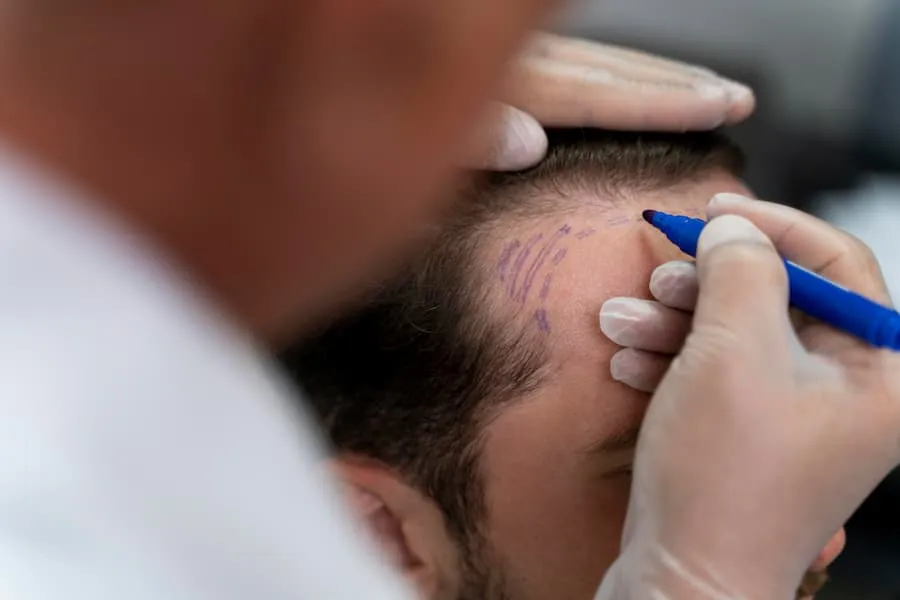
Planning the Hairline
The hairline is one of the most visible aspects of hair restoration, making its design particularly important. A natural hairline usually contains subtle variations in density and direction rather than forming a completely straight or uniform boundary. The practitioner can consider facial proportions, age, existing hair, forehead shape, and the individual’s desired appearance when creating the design. Fine hairs can be positioned toward the front to create a gradual transition into denser growth behind them. Careful planning can help the restored hairline appear appropriate for the individual rather than looking artificially constructed.
Considering Facial Proportions
Facial proportions can influence where the hairline should be positioned. A hairline that is placed too low may appear unnatural, while one that remains too high may not provide the desired improvement. The practitioner can assess the forehead, temples, existing hairline, and overall facial structure before determining an appropriate design. Natural asymmetry should also be recognised because hairlines are rarely perfectly identical from one side to the other. The goal is generally to create a balanced appearance that complements the individual’s features while allowing transplanted follicles to integrate naturally with surrounding hair.
Understanding the Transplant Procedure
The procedure generally begins with preparation of the donor and recipient areas according to the agreed treatment plan. Individual follicular units are carefully harvested from the donor region and prepared for transplantation. Recipient sites are then created in areas where additional density is required, with attention given to the intended direction, angle, spacing, and distribution of the follicles. The prepared grafts are placed into these sites according to the planned design. Treatment duration can vary depending on the number of follicles required and the complexity of the restoration. The practitioner should explain each stage beforehand.
Precision During Implantation
The implantation stage requires careful attention because the direction and angle of each follicle can influence the final appearance. Hairline follicles may need a finer and more gradual arrangement, while areas farther behind the hairline can require different density and orientation. Existing natural hairs also need to be considered so that transplanted follicles blend with the surrounding growth. Appropriate spacing can help prevent an overly concentrated appearance. Precision is therefore important not only for achieving coverage but also for ensuring that the transplanted hairs follow a pattern that appears consistent with natural hair growth.
Preparing Before Treatment
Preparation usually involves a detailed consultation covering medical history, medications, scalp health, hair loss progression, previous treatments, and expected results. The practitioner may provide individual instructions before treatment depending on the chosen technique and personal circumstances. Individuals should provide accurate information about relevant medications, supplements, scalp conditions, and previous procedures. Following professional preparation guidance can help make the treatment process more straightforward. Preparation is also an opportunity to discuss concerns about recovery, temporary shedding, hair growth, aftercare, and the likely amount of density that can be achieved with the available donor follicles.
Setting Realistic Expectations
Clear expectations can make the restoration journey easier to understand. Some individuals may want to restore a receding hairline, while others may primarily want additional coverage around the crown or central scalp. The practitioner can assess these goals and explain what may realistically be achieved. The amount of available donor hair can limit the extent of restoration, so complete recreation of previous density may not always be possible. Discussing these limitations before treatment can help individuals understand the difference between improving visible coverage and completely reversing every aspect of hair loss.
What Recovery May Involve
Recovery following transplantation can involve temporary redness, swelling, tenderness, sensitivity, and small crusts around the donor and recipient areas. The extent and duration of these effects vary between individuals and can depend on the number of follicles treated. The practitioner should provide specific aftercare instructions covering scalp cleansing, sleeping, exercise, styling, and other activities. Individuals should follow these instructions carefully because newly transplanted follicles require time to establish themselves. The appearance during the first few days or weeks should not be considered the final result because the scalp is still undergoing healing and adjustment.
Caring for the Scalp
The scalp should generally be treated gently during the early recovery period. Excessive rubbing, scratching, pressure, or unsuitable hair products may irritate the treated areas. The practitioner can explain when normal washing, exercise, styling, and other activities can safely resume. Individuals should avoid making independent changes to their aftercare routine without professional guidance. Temporary redness or changes in hair appearance can occur during recovery and do not necessarily indicate a problem. If unusual or persistent symptoms develop, the individual should contact the treating professional for appropriate assessment and advice.
Understanding Temporary Hair Shedding
Temporary shedding can occur after transplantation and may surprise individuals who expect newly implanted hairs to continue growing immediately. The visible hair shaft can fall away while the follicle remains within the scalp and enters a resting phase. This process is sometimes referred to as shock shedding and can occur during the early stages of restoration. Shedding does not automatically indicate that the transplant has failed. The follicle may later return to an active growth phase and begin producing new hair. Understanding this possibility before treatment can make the recovery period easier to manage.
Why Shedding Happens
Hair follicles naturally move through cycles of growth, rest, and shedding, and transplantation can temporarily influence these cycles. After being moved to a new location, follicles may require time to adjust before returning to active growth. Different follicles can respond at different rates, meaning that shedding may not happen uniformly across the scalp. Some hairs may remain visible while others temporarily fall away. Individuals should avoid judging the success of treatment during this stage because the final result cannot be accurately assessed until the follicles have had sufficient time to recover and develop new growth.
When New Hair Growth Begins
New hair growth develops gradually as transplanted follicles recover and re enter an active growth phase. The exact timing can vary according to individual biology, hair cycle, donor characteristics, healing response, and other factors. Some individuals may notice early signs of growth sooner than others, while certain areas may develop more slowly. The first new hairs can also appear fine before becoming more established. Individuals should therefore avoid expecting immediate fullness. A practitioner can provide general guidance about the expected timeline, but the precise rate of growth cannot be guaranteed because each person responds differently.
Gradual Development of Density
As additional follicles enter their active growth stage, the treated areas can gradually appear fuller. The process may be difficult to notice from one day to the next, making periodic photographs useful for observing changes. Early hairs can initially look fine or uneven before becoming more established. The surrounding natural hair can also influence the appearance of density during this period. Individuals should remain patient and allow sufficient time for the transplanted follicles to develop. Evaluating progress too early can create unrealistic concerns about the final outcome.
Factors That Affect Results
The final result can be influenced by donor hair quality, number of transplanted follicles, recipient scalp condition, hair texture, implantation technique, aftercare, individual healing, and the underlying cause of hair loss. The stability of existing natural hair is also important because non transplanted follicles can continue to thin over time. This means that transplantation does not necessarily prevent future hair loss elsewhere on the scalp. A detailed consultation can help identify these factors and establish realistic expectations. The practitioner can also discuss how donor resources may need to be managed for potential future requirements.
The Role of Existing Hair
Existing hair can have a major effect on the long term appearance of restoration. If surrounding natural follicles continue to thin, the transplanted area may appear different from nearby regions. The practitioner may therefore consider potential future hair loss when determining the placement and density of grafts. A conservative and balanced approach can sometimes provide a more sustainable appearance over time. Individuals should understand that transplanted follicles and existing follicles can behave differently. Long term monitoring can help identify changes and determine whether further professional management may eventually be appropriate.
Understanding Hair Texture and Thickness
Hair texture and thickness can significantly influence visual density. Thick hair may create greater coverage with fewer follicles, while fine hair may require more strategic placement to reduce visible scalp. Curly or wavy hair can also create a different coverage effect compared with straight hair. The practitioner can consider these characteristics when planning the restoration. Individuals should understand that two people receiving a similar number of follicles may experience different visual results. Hair colour and contrast with the scalp can also influence how noticeable thinning appears and how much improvement is visible after transplantation.
Matching Existing Hair
A natural looking restoration should ideally blend with surrounding natural growth. The practitioner can consider the thickness, texture, direction, and density of existing hair when positioning transplanted follicles. This is particularly important around the hairline because the area is highly visible. Fine follicles can help create a softer transition at the front, while thicker follicles can provide greater density behind the initial hairline. Appropriate placement can reduce the visual difference between transplanted and existing hair. The goal is generally to improve coverage while maintaining the characteristics that make the individual’s hair appear natural.
Treating Crown and Vertex Thinning
The crown can be a challenging area to restore because hair grows in a circular or swirling pattern that differs from the straightforward direction found around other parts of the scalp. The practitioner needs to consider the natural direction of existing hairs when planning recipient sites. Density requirements can also differ depending on the size and visibility of the thinning area. The available donor follicles may determine how much coverage can realistically be achieved. A strategic approach can focus on improving the overall appearance while preserving donor resources for potential future needs.
Understanding the Growth Pattern
The natural growth pattern around the crown requires careful attention because follicles do not all point in one direction. Incorrect placement can make transplanted hairs look less natural even when they grow successfully. The practitioner can assess the existing swirl and use it as a guide when determining the direction of recipient sites. The distribution of follicles may also need to change gradually throughout the crown. This detailed planning can help transplanted hair blend more effectively with existing growth and create a more cohesive appearance once the follicles become fully established.
Hair Transplantation for Different Individuals
Hair transplantation can be considered by a wide range of individuals, but the appropriate approach can vary according to age, hair loss pattern, donor availability, hair characteristics, and long term expectations. Men may commonly seek treatment for receding hairlines or crown thinning, while women may experience diffuse thinning or reduced density around the parting and temples. Some individuals may also seek restoration after previous procedures or localised hair loss. Each situation requires personalised assessment. A standard treatment plan may not provide the same suitability or outcome for every person.
Considering Individual Needs
The individual’s priorities should form part of the treatment planning process. Someone concerned about the hairline may require a different approach from someone primarily concerned about crown density. The practitioner can identify which areas are most noticeable and determine how available donor follicles can be used effectively. Facial proportions, existing hair, future hair loss, and desired density may also influence the design. A personalised plan can help ensure that treatment focuses on areas likely to provide the greatest visual improvement while avoiding unnecessary use of limited donor resources.
Considering Scarring and Scalp Conditions
The condition of the scalp can influence whether transplantation is appropriate. Previous surgery, burns, injuries, or other causes of scarring may affect the recipient area and require additional assessment. Active scalp concerns may also need to be addressed before treatment is considered. Individuals should provide complete information about previous procedures, scalp symptoms, and relevant hair loss history. The practitioner can assess the skin and determine whether the recipient area appears suitable. Understanding the condition of the scalp beforehand can help identify potential limitations and support a more realistic treatment plan.
Assessing Scarred Areas
Scar tissue can differ from healthy scalp skin, which may influence how transplanted follicles establish themselves. Individuals with significant scarring should discuss this during consultation so that the practitioner can evaluate the area carefully. The amount of available donor hair and the extent of scarring can also affect how much coverage is achievable. Treatment may require careful placement and realistic expectations. A thorough assessment can help determine whether transplantation is appropriate and whether the expected outcome may differ from restoration performed on healthy scalp tissue.
Long Term Hair Maintenance
Hair transplantation can provide continuing growth from successfully established transplanted follicles, but it does not necessarily stop the underlying process that caused natural hair loss. Existing non transplanted hair can continue to thin over time. For this reason, long term hair management may remain important after transplantation. Individuals may need ongoing monitoring and professional guidance depending on their circumstances. Transplanted hair can generally be washed, cut, and styled after it has fully established. Understanding the distinction between transplanted and natural hair can help individuals maintain realistic expectations about the long term appearance.
Monitoring Future Changes
Regular monitoring can help individuals recognise whether natural hair density is changing after transplantation. If further thinning occurs, a practitioner can assess the situation and determine whether additional treatment or another approach may be appropriate. Not every individual will require another procedure, and decisions should be based on personal circumstances. Maintaining a long term perspective can help preserve balance between transplanted and natural hair. The goal should be to manage hair restoration responsibly over time rather than focusing solely on achieving the greatest possible density during the initial procedure.
Choosing an Experienced Practitioner
The practitioner’s qualifications and experience are important considerations because transplantation requires precision during follicle extraction, recipient site creation, and implantation. Individuals should investigate relevant experience, treatment planning methods, donor management, and approaches to natural hairline design. Before and after photographs can provide examples of previous work, but they cannot guarantee an identical outcome. During consultation, individuals should feel comfortable asking about expected density, recovery, potential risks, future hair loss, and long term maintenance. A thorough consultation can provide useful information about whether the proposed treatment is suitable for the individual.
Reviewing Previous Results
Before and after photographs can help individuals understand how different patterns of hair loss may respond to transplantation. The most useful examples are often those involving similar hair characteristics, age ranges, and areas of concern. Photographs should ideally have comparable lighting, angles, hair lengths, and styling because these factors can significantly change how density appears. The timing of the final photograph also matters because transplanted hair may continue developing over an extended period. Reviewing multiple examples can provide a broader understanding of possible outcomes than relying on a single particularly impressive photograph.
Understanding Possible Risks
Hair transplantation is a surgical procedure and can involve potential risks such as temporary swelling, redness, tenderness, infection, scarring, folliculitis, uneven density, poor growth, or undesirable hair direction. Individual risks can vary according to health, scalp condition, treatment technique, number of follicles, and practitioner experience. These possibilities should be discussed during consultation before treatment. Understanding potential complications does not mean that problems are expected, but it allows individuals to make informed decisions. Appropriate aftercare and professional follow up can also help identify and manage concerns if they develop during recovery.
Prioritising Professional Care
Safe treatment should begin with an appropriate assessment of medical history, scalp health, donor availability, and treatment expectations. The practitioner should provide clear preparation and aftercare instructions and explain when follow up may be required. Individuals should avoid choosing treatment solely according to price or promises of guaranteed results. A professional consultation can provide greater clarity about the suitability of transplantation and the likely limitations. The decision should be based on informed guidance, realistic expectations, appropriate practitioner experience, and a clear understanding of both the benefits and potential risks.
Emotional Considerations
Hair loss can affect confidence and personal wellbeing, particularly when thinning becomes difficult to conceal. Some individuals may feel more comfortable after improving visible hair density, but transplantation cannot guarantee a specific emotional outcome. The treatment also requires patience because the visible result develops gradually. Understanding the recovery process, temporary shedding, and growth timeline can help individuals approach restoration with more realistic expectations. It can also reduce unnecessary concern when the scalp does not immediately appear fuller. Individuals should consider their personal goals carefully and understand what the procedure can realistically achieve.
Setting Achievable Goals
A clear treatment goal can help guide the restoration process. One individual may want to rebuild a receding hairline, while another may want greater coverage around the crown. Some people may primarily want to reduce the appearance of visible scalp rather than achieve maximum density. The practitioner can discuss these priorities and determine how available donor follicles can be distributed. Setting achievable goals before treatment can make the final result easier to evaluate. It also helps ensure that the procedure is designed around the individual’s actual concerns rather than general expectations about hair restoration.
Making an Informed Decision
Anyone considering transplantation should evaluate the cause of hair loss, donor supply, scalp condition, hair characteristics, treatment technique, expected recovery, possible risks, growth timeline, long term maintenance, and practitioner experience. A detailed consultation can bring these factors together and help determine whether transplantation is appropriate. Individuals should also understand that transplanted follicles do not necessarily produce immediate visible growth and that existing hair may continue thinning independently. Taking time to understand the entire process can support a more informed decision and create realistic expectations about the potential outcome.
Focusing on Natural Looking Results
A successful restoration involves more than adding a large number of follicles. Hairline design, density, spacing, follicle direction, donor selection, implantation technique, and integration with existing hair all influence the final appearance. The practitioner should consider how transplanted follicles will develop alongside natural hair over time. A balanced improvement may be more appropriate than maximum density because the result should complement the individual’s appearance. Individuals should therefore focus on whether the proposed treatment is personalised to their hair characteristics, facial proportions, donor availability, and specific pattern of hair loss.
Conclusion
Hair transplantation can provide a long term restoration option for individuals experiencing suitable forms of persistent hair loss, but careful assessment and realistic expectations are essential. Donor availability, hair characteristics, scalp condition, treatment technique, hairline design, recovery, temporary shedding, new growth, and future natural hair loss can all influence the outcome. The final result develops gradually and should be assessed only after the transplanted follicles have had sufficient time to establish themselves. Individuals seeking professional guidance about suitability, treatment planning, recovery, and expected results can consult Este Medical Group for support throughout their hair restoration journey.
























Sign in to leave a comment.