
Presenting your baby with solid foods is a thrilling achievement but for you, overwhelming. At six months, your baby is ready to discover flavours and textures yet continues to use breast milk or formula for most of his or her nutrition. Implementing conventional weaning with a set timetable or experimenting with a baby-led weaning (BLW) strategy, nevertheless, you wish to master the balancing of meals and nutrients to ease the process.

When and How to Begin Weaning at 6 Months
World Health Organization (WHO) and paediatricians both advise giving solids at six months because by then the baby is ready developmentally. Ready cues include:
● Sitting with very little support
● Exhibiting curiosity about food (reaching out for food that you're eating)
● Relinquishing the tongue-thrust reflex (pushing food out on its own)
● Parting the mouth in response to an offered food
● Food at this point is mostly for taste and exploration, with breast milk or formula still being the dominant source of nutrients.
● Begin with one meal a day and add more as your baby becomes accustomed to solids.
A Sample Weaning Schedule for a 6-Month-Old
Having a weaning schedule for 6 months in place assists in gradually introducing foods while still providing your baby with the required nutrients. Below is a sample daily routine:
● Morning (7-8 AM)
Breast milk or formula
First solid meal (mashed banana, avocado, or iron-fortified single-grain cereal with milk)
● Mid-Morning (10-11 AM)
Breast milk or formula
Provide a soft finger food such as steamed carrot sticks or cucumber slices
● Afternoon (1-2 PM)
Breast milk or formula
Small amount of puréed or mashed sweet potato, apple, or pear
● Evening (5-6 PM)
Breast milk or formula
Another small amount of solids (mashed lentils, well-cooked rice, or mashed peas)
● Before Bed (8-9 PM)
Breast milk or formula feeding
This plan provides an equilibrium between solids and milk feeds while allowing the baby to settle in without cutting back on important milk intake too early.
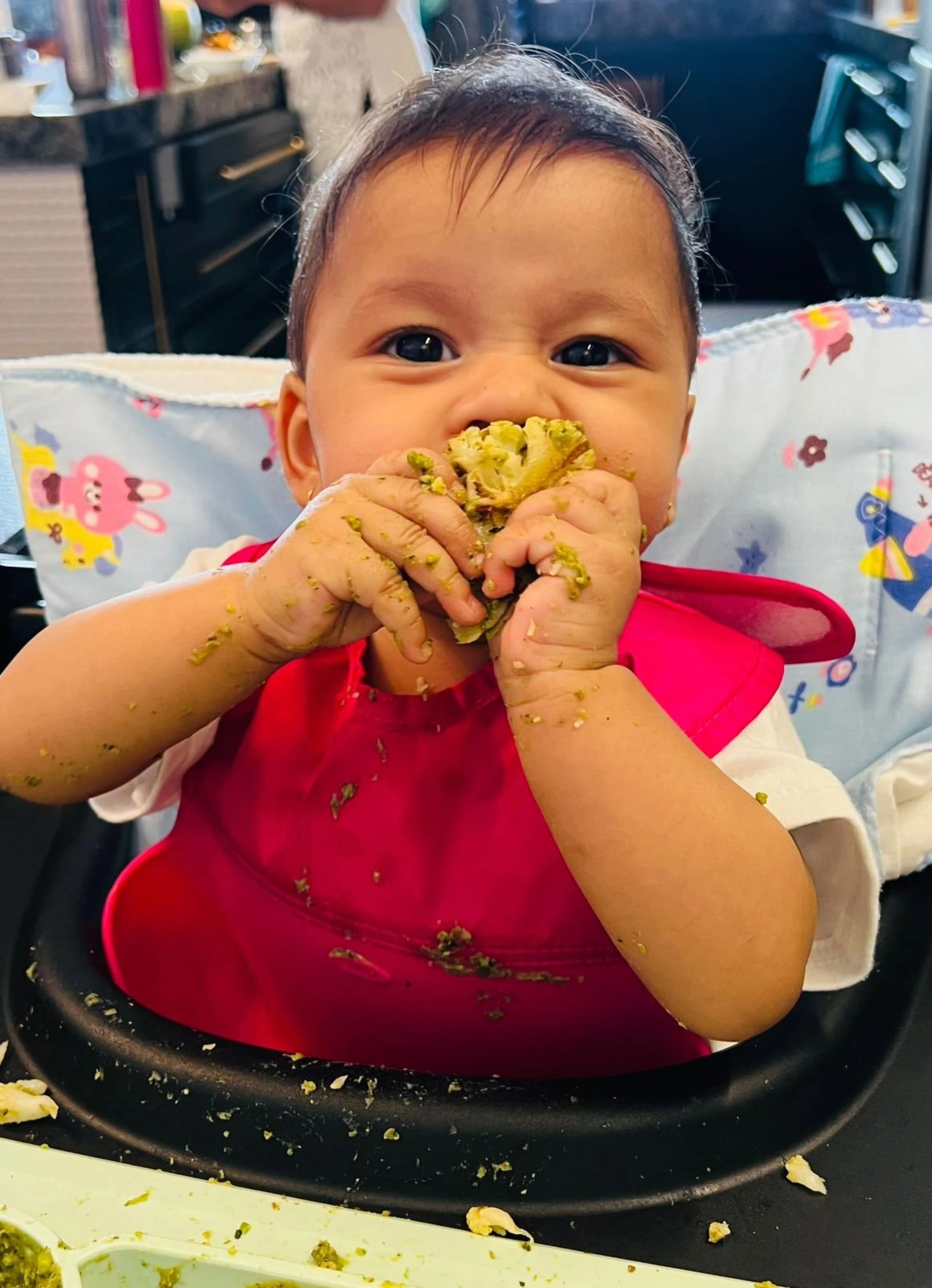
A Simple Baby-Led Weaning Meal Plan for a Week
Day 1
Breakfast: Steamed broccoli florets with soft scrambled eggs
Lunch: Toast strips with mashed avocado on top
Dinner: Baked sweet potato wedges
Day 2
Breakfast: Soft pieces of banana with yoghurt
Lunch: Steamed carrots and shredded chicken
Dinner: Mashed peas with whole-wheat pasta
Day 3
Breakfast: Diced soft pears with cinnamon and oatmeal
Lunch: Sliced boiled egg wedges and avocado
Dinner: Soft-cooked salmon with mashed potatoes
Day 4
Breakfast: Blueberries with cottage cheese
Lunch: Hummus with soft slices of cucumber
Dinner: Well-cooked quinoa with mashed lentils
Day 5
Breakfast: Whole wheat pancakes with fruit puree
Lunch: Steamed zucchini with shredded beef tender
Dinner: Mashed butternut squash with brown rice
Day 6
Breakfast: Scrambled tofu on whole-grain toast
Lunch: Sliced mango and yoghurt
Dinner: Soft-cooked chickpeas with rice
Day 7
Breakfast: Mashed banana with almond butter
Lunch: Cheese cubes and steamed green beans
Dinner: Mashed lentils with roasted carrots
Tips for a Smooth Weaning Process
● Add One New Food at a Time: This is to try out the potential allergies.
● Offer Iron-Rich Foods: The infant requires more iron when he or she is six months old and should be provided with foods containing lentils, eggs, and meat.
● Make It Calm: Allow your baby to explore food at his or her speed without pressure.
● Expect Mess: It is a sensory learning experience to eat, and messy eating is part of the learning experience.
Conclusion
Baby-led weaning meal plan or home weaning, the aim is to give your baby a healthy eating experience. Giving a variety of nutrient-rich foods appropriate to your baby's age will promote healthy eating habits along with proper growth and development. For a complete guide on how to introduce solids, visit Sanchita Daswani's Intro to Solids.




























Sign in to leave a comment.