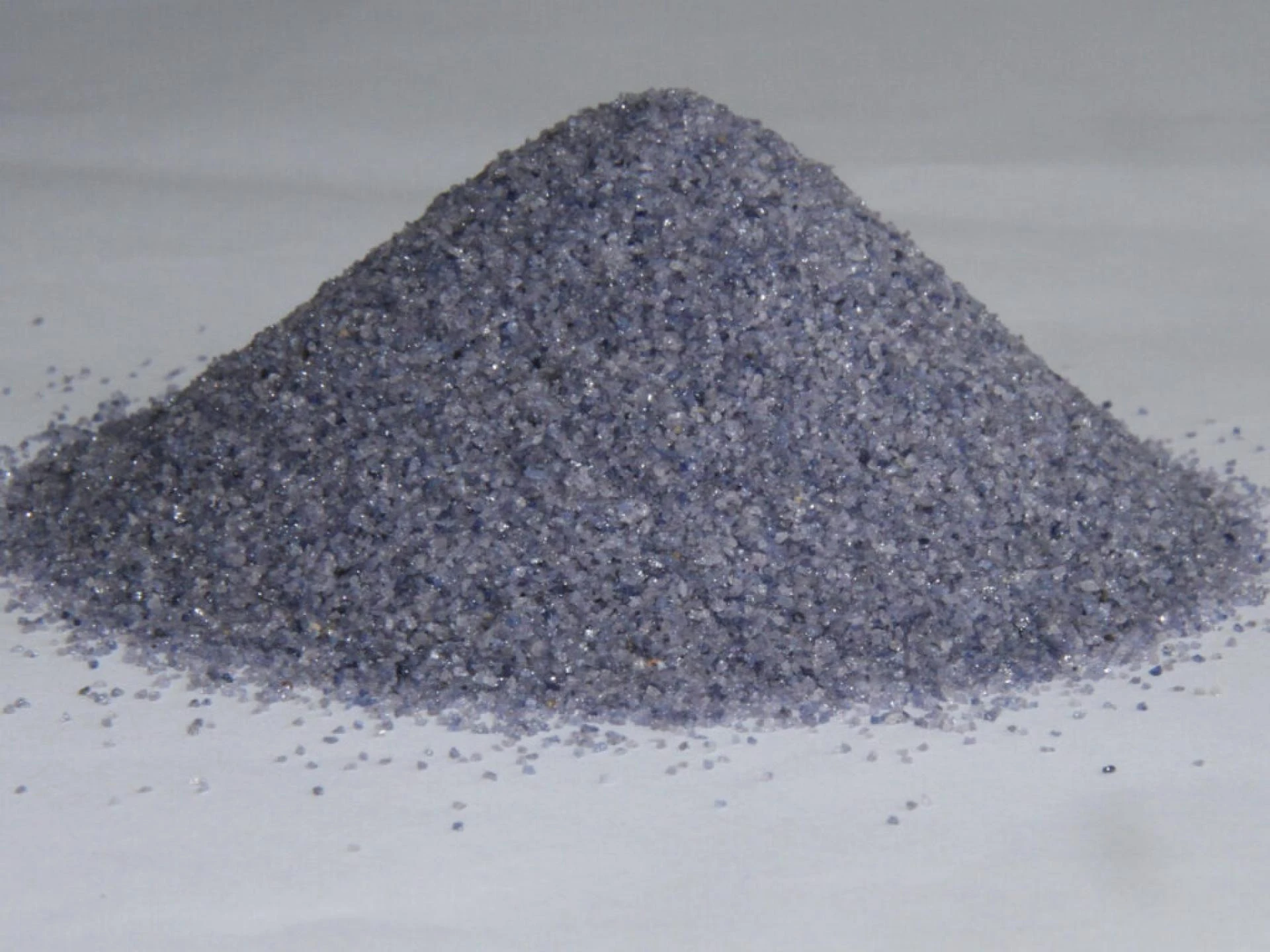

Why Particle Size Matters in Abrasive Performance
In the world of industrial surface treatment, precision is everything. The success of an application—whether it is sandblasting steel, cutting granite with a water jet, or polishing an optical lens—hinges on the materials used. While the type of abrasive material is important, there is another, more subtle factor that has a massive impact on the final result: the abrasive particle size.
Choosing the right grit size is not just a minor detail; it is a critical decision that directly influences cutting speed, surface finish, and overall operational efficiency. Using a particle that is too large can ruin a delicate workpiece, while one that is too small will fail to perform the task effectively, wasting time and resources. Understanding the relationship between particle size and performance is fundamental to achieving high-quality, repeatable results.
This guide will break down the crucial role of abrasive particle size in industrial applications. We will explore how it affects the balance between speed and finish, and explain why sourcing abrasives with guaranteed size consistency from a certified supplier is your best strategy for maximizing productivity and profitability.
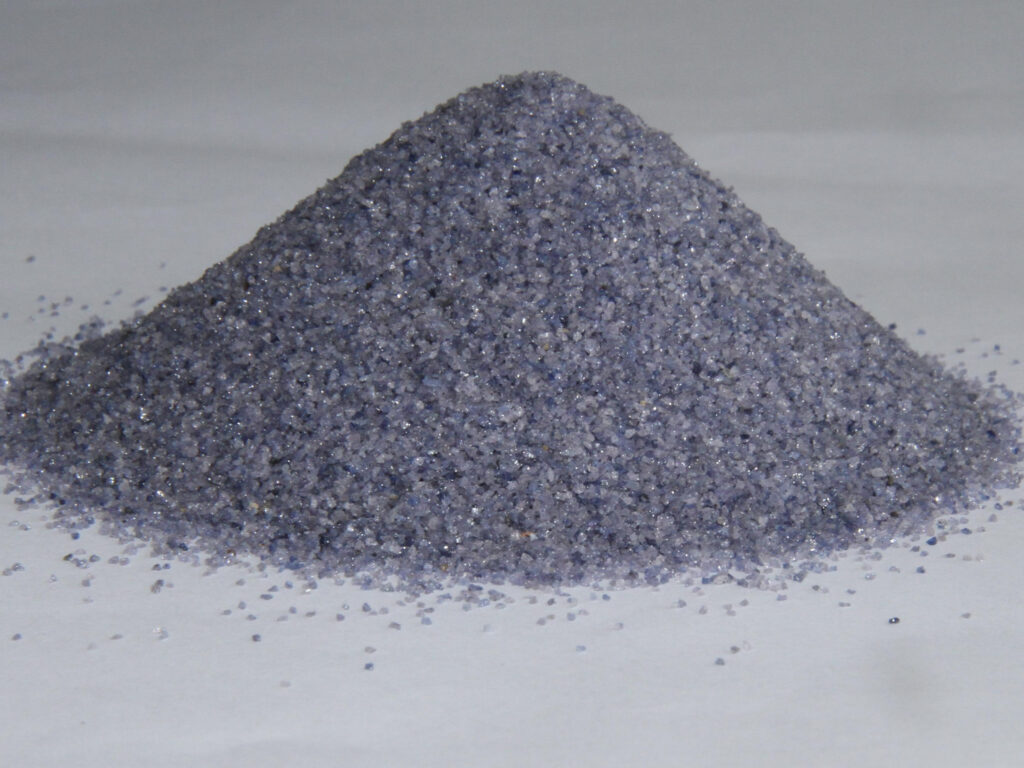
The Fundamentals of Abrasive Sizing
Abrasive particles, also known as grits, are sorted and graded according to their size. This is typically done by passing the material through a series of screens or sieves with specific mesh sizes. The resulting grades are assigned a number, which can be confusing at first glance: a lower grit number corresponds to a larger, more aggressive particle, while a higher grit number indicates a smaller, finer particle.
For example:
- Coarse Grits (e.g., 24, 36, 40): These are large particles designed for heavy-duty tasks like aggressive material removal, stripping thick coatings, and fast cutting.
- Medium Grits (e.g., 60, 80, 100): This is a versatile range used for general-purpose grinding, cleaning, and preparing surfaces for painting.
- Fine Grits (e.g., 120, 180, 220): These smaller particles are used for light cleaning, deburring, and creating a smooth pre-finish.
- Very Fine Grits (e.g., 240 and up): Often called microgrits, these are used for polishing, lapping, and achieving a mirror-like or satin finish.
The choice of grit size forces a trade-off between the speed of the operation and the quality of the surface finish.
Impact on Cutting Speed and Material Removal
When the goal is to remove a large amount of material quickly, coarse grits are the answer. The size of the abrasive particle directly correlates to its cutting power.
Larger, heavier particles carry more kinetic energy. When propelled in a sandblasting or water jet stream, each individual particle strikes the surface with greater force. This increased impact energy allows the abrasive to dislodge more material with each hit, whether it is rust, mill scale, or the base material itself.
Think of it like using a sledgehammer versus a finishing hammer. The sledgehammer (a coarse grit) can demolish a concrete block in a few swings, while the finishing hammer (a fine grit) would take far longer to make a significant impact. In industrial terms, this means using a coarse abrasive particle size allows for faster stripping rates and shorter project times. This is ideal for applications like cleaning structural steel, removing old paint from a ship's hull, or rough grinding a new casting.
Impact on Surface Finish and Precision
While coarse grits are champions of speed, they come at the cost of precision. The aggressive impact of large particles leaves behind a rough, heavily textured surface. The deep valleys and sharp peaks they create, known as the "anchor profile," are excellent for helping paint adhere but are undesirable for a final finish.
This is where fine grits come in. Smaller, lighter particles have less mass and create a much gentler impact. They remove microscopic amounts of material at a time, effectively smoothing out the rough texture left by coarser abrasives. Instead of gouging the surface, they create a dense pattern of very small scratches that the human eye perceives as a smooth, satin, or even reflective finish.
For applications requiring a high-quality aesthetic or a precise, non-directional finish, using a fine abrasive particle size is non-negotiable. This is essential for:
- Polishing: Creating a mirror finish on stainless steel or aluminum.
- Lapping: Achieving a perfectly flat surface on engine components or optical lenses.
- Deburring: Removing small, sharp edges from precision-machined parts without altering their dimensions.
- Cleaning Delicate Surfaces: Removing contaminants from soft metals like brass or aluminum without damaging the substrate.
The Hidden Danger of Inconsistent Particle Size
The theory of choosing between coarse and fine grits seems simple enough. However, the real-world performance of an abrasive depends entirely on the consistency of the batch. A bag of abrasive labeled as "80 grit" should contain particles that fall within a very tight size range. If the quality control is poor, that bag can become a cocktail of different sizes, leading to disastrous results.
The Problem with "Wild Grains"
Imagine you are polishing a sensitive aerospace component with a 220-grit abrasive. If the batch contains a few stray 80-grit particles (known as "wild grains"), those oversized grains will act like rogue cutting tools, carving deep, random scratches into the otherwise smooth surface. A single wild grain can ruin a part that has already undergone hours of expensive machining.
The Problem with "Fines"
Conversely, if a batch of coarse abrasive for sandblasting is contaminated with too much fine dust, its cutting power is severely diminished. These tiny particles, or "fines," lack the mass to do any effective work. They simply absorb energy from the air stream, create a cloud of dust that obscures the operator's view, and slow down the entire project. You end up using more abrasive and more time to achieve the desired result.
The Solution: A Commitment to Quality Control Standards
To avoid the problems of inconsistent sizing, it is crucial to source abrasives from a manufacturer that adheres to strict, internationally recognized quality control standards. This is where certifications like ISO 9001 become your guarantee of reliability.
An ISO-9001-certified supplier has a documented, audited system for ensuring quality at every stage of production. For abrasive particle size, this means:
- Precise Screening: Using calibrated sieves and advanced sorting technology to ensure every batch is graded accurately.
- Process Control: Maintaining strict controls over crushing and milling processes to produce a consistent particle shape and size.
- Final Inspection: Testing samples from every batch to verify that the particle size distribution meets the specified grade before it is packaged and shipped.
Working with a certified supplier eliminates the guesswork. You can be confident that the 80-grit you order today will perform exactly like the 80-grit you order six months from now, allowing you to standardize your processes and achieve repeatable results.
Becens: Your Partner for Consistent Abrasive Performance
At Becens Co., Ltd., we have built our reputation over more than ten years on a foundation of proven quality. We understand that our customers in the abrasives and refractories fields depend on the consistency of our products to run their operations efficiently and profitably.
Our commitment to quality is formalized through our adherence to the ISO-9001: 2008 quality management system. This rigorous framework governs our entire production and inspection process, ensuring that every batch of abrasive we produce has a consistent and accurate abrasive particle size. This dedication allows us to supply materials that meet a variety of global standards, including FEPA, JIS, and ANSI, giving you the confidence that our products will perform predictably in your specific application.

Make the Right Choice for Your Application
The size of your abrasive particles is not a small detail—it is a critical variable that defines the outcome of your work. By understanding the trade-off between speed and finish, you can select the appropriate grit for the job. More importantly, by partnering with a supplier committed to strict quality control, you ensure that the abrasive you choose will deliver the performance you expect, every single time. Investing in consistently graded abrasives is a direct investment in your company's quality, efficiency, and success.
Ready to see how precision-graded abrasives can improve your operational results? Explore our complete product catalog to find the ideal abrasive with the perfect particle size for your industrial needs.

Sign in to leave a comment.