

In a world where global collaboration happens at the click of a button, clear communication has become a competitive advantage. Whether you’re pitching to an overseas client, teaching an online class, or joining a multinational team, the ability to be understood instantly can make the difference between success and missed opportunity. That’s where accent translation AI steps in—a combination of real‑time voice clarity technology and AI‑driven accent modification software designed to bridge linguistic gaps without the need for lengthy language courses or manual editing.
What Is “Accent Translation AI”?
At its core, accent translation AI is a cloud‑based engine that listens to spoken language, detects regional pronunciation patterns, and instantly renders the speech in a neutral, widely understood accent. Unlike traditional transcription services that only convert audio to text, this technology preserves the natural flow of conversation, allowing participants to hear one another in a clear, consistent voice while retaining the original speaker’s intent.
Key capabilities include:
| Feature | How It Works | Benefit |
| Real‑time phoneme mapping | AI models trained on thousands of hours of global speech data recognize subtle variations in vowel and consonant production. | Reduces misinterpretation caused by unfamiliar accents. |
| Dynamic speech synthesis | Once the accent is identified, the system re‑synthesizes the audio in a target accent (e.g., General American, RP English, or neutral Mandarin). | Listeners hear a familiar accent without the speaker needing to relearn pronunciation. |
| Latency under 200 ms | Edge computing and optimized neural networks keep the processing delay imperceptible. | Enables live meetings, webinars, and call‑center interactions. |
AI Accent Modification Software: More Than Just “Voice‑Changing”
Many people think of accent modification as a one‑size‑fits‑all voice filter, but modern AI accent modification software takes a far more nuanced approach. The system:
- Analyzes personal speech patterns – It creates a speaker‑specific model, identifying which phonemes cause the most comprehension friction.
- Offers guided training – Users receive targeted exercises (e.g., minimal‑pair drills) that focus only on problem areas, cutting training time by up to 60 %.
- Applies on‑the‑fly adaptation – During live conversation, the software subtly adjusts articulation without disrupting the speaker’s natural rhythm, making the change feel organic rather than robotic.
The result is a tool that can be used both as a real‑time voice clarity solution for instant meetings and as a self‑improvement platform for professionals who want to polish their spoken English, Spanish, or any other language.
Real‑World Use Cases
| Industry | Scenario | Impact |
| Customer Support | Call‑center agents in India handle English‑speaking customers from the U.S. | Average call resolution time drops by 18 % thanks to clearer speech. |
| Education | International teachers conduct live classes for students worldwide | Student satisfaction scores rise as accent‑related misunderstandings disappear. |
| Sales & Marketing | A multinational sales team presents to prospects across three continents | Pitch conversion rates increase; stakeholders feel “heard” despite language diversity. |
| Healthcare | Tele‑medicine consultations between doctors and patients of different linguistic backgrounds | Diagnostic accuracy improves as patients can describe symptoms without being misunderstood. |
Getting Started: Simple Integration, Immediate Benefits
Most accent translation AI platforms offer SDKs for popular conferencing tools (Zoom, Teams, Webex) and APIs that can be embedded into custom applications. Implementation typically follows these steps:
- Create an account – Choose a subscription tier based on expected volume (e.g., 5 k minutes/month for small teams).
- Select target accent(s) – Pick the neutral accent that best matches your audience.
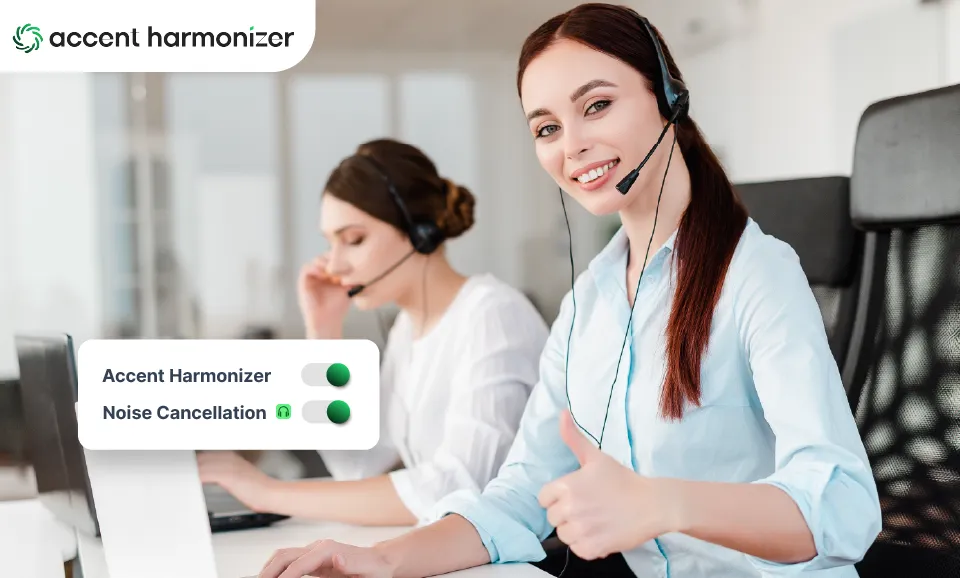
- Enable real‑time processing – Turn on the “voice clarity” toggle within your meeting software.
- Optional: Enable personal training mode – Let the AI accent modification software analyze your speech and suggest daily practice drills.
Because the processing happens in the cloud, there’s no need for expensive hardware upgrades. Companies can see measurable improvements within the first week of deployment.
The Bottom Line
Accent translation AI isn’t a futuristic gimmick; it’s a practical, real‑time voice clarity solution that eliminates one of the most persistent barriers to global communication. Coupled with sophisticated AI accent modification software, it empowers individuals and organizations to speak—and be heard—clearly, instantly, and confidently.
If you’ve ever felt the frustration of being misunderstood because of an accent, or watched a meeting stall while participants ask for repetitions, it’s time to explore this technology. In today’s hyper‑connected marketplace, the ability to communicate without a linguistic bottleneck isn’t just nice to have—it’s a strategic necessity.































Sign in to leave a comment.