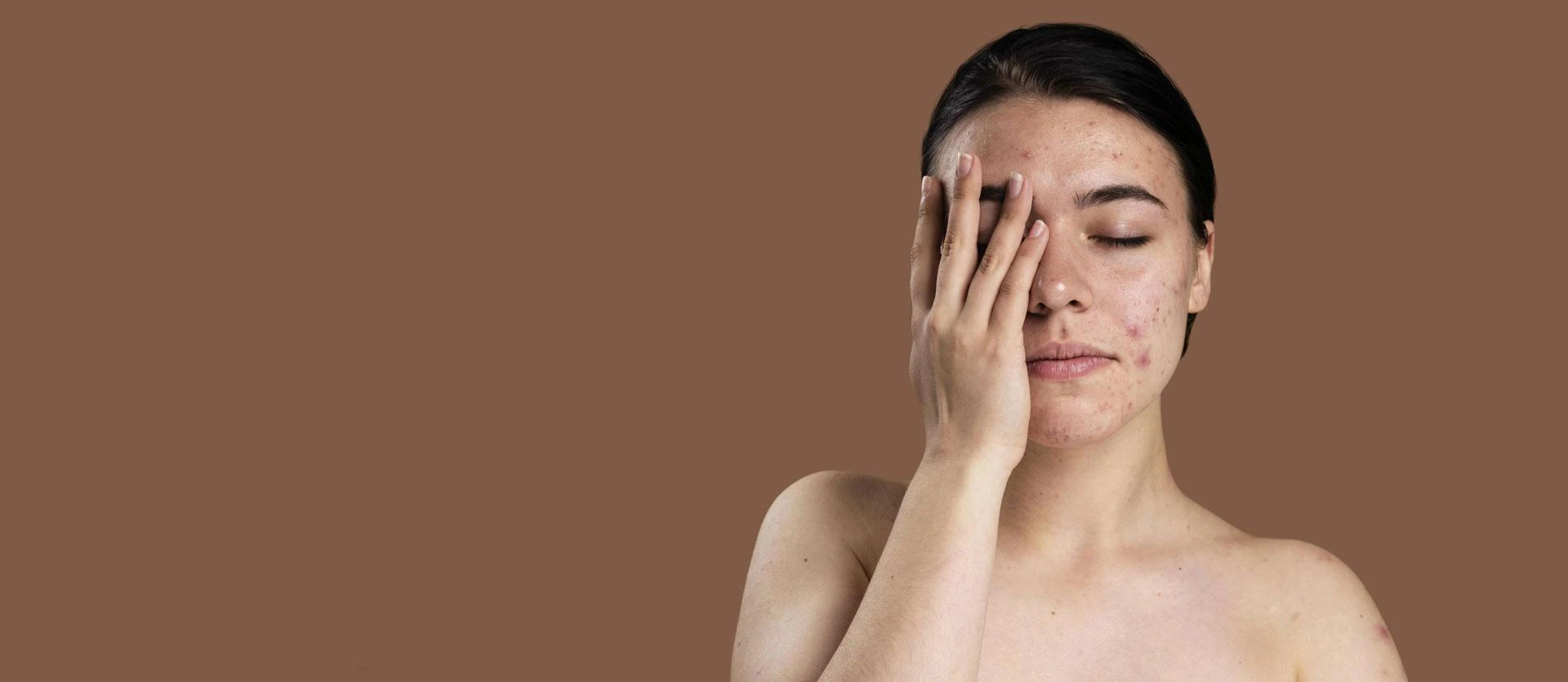

Acne Scars
Acne scars are caused by the body's normal healing process following severe or protracted acne outbreaks. When acne lesions, such as pimples or cysts, penetrate deeply into the skin, they can cause harm to the surrounding tissues, including the collagen and elastin fibers that give the skin its strength and suppleness. The body attempts to heal the damage by creating new collagen fibers, but the process is not always smooth, resulting in scar development. Visit the Skination Clinic for the best Acne Scar Treatment in South Delhi.
Types of Acne Scars
Acne scars can take a variety of forms, including:
Ice pick scars: These are deep, thin, and pitted scars that extend into the skin's deeper layers.Boxcar scars: They have sharp edges and look like little craters with larger indentations. They are often wider and shallower than ice-pick scars.Rolling scars: They give the skin a wavy or uneven look because collagen fibers that support the skin have been lost.Hypertrophic or keloid scars: They form when the body creates an excessive amount of collagen during the healing process, resulting in elevated and thicker scars.Factors that can contribute to acne scarring
There are numerous factors that can contribute to acne scarring, including:
Acne severity: The more severe the acne, the greater the chance of scarring.Inadequate or delayed treatment: Failure to treat acne immediately or adequately might increase the likelihood of scarring.Picking or popping acne: Squeezing or picking at acne lesions can exacerbate inflammation and damage the skin, resulting in scarring.Genetic predisposition: Some people are predisposed to acquire acne scars due to a genetic tendency.How can acne scars be prevented?
While acne scars cannot always be totally avoided, there are numerous methods that can reduce the scars. Here are some preventative steps to think about:
Early and effective acne treatment: It is critical to treat acne as soon as it develops to prevent it from worsening and inflicting deeper skin damage. Consult a dermatologist, who will be able to prescribe appropriate treatment choices based on the skin type and the severity of the acne.Picking or popping acne lesions is not recommended: Picking at acne lesions can aggravate the inflammation and raise the risk of scarring. It may also bring germs into the skin, resulting in further outbreaks. Resist the urge to crush or pop pimples; instead, let them heal naturally or seek expert extraction.Mild skincare routine: Washing the face twice a day with a mild cleanser to remove excess oil, debris, and germs. Scrubbing too hard or using abrasive cleansers can irritate the skin and potentially aggravate acne or cause scarring. To lessen the likelihood of breakouts, use non-comedogenic (non-pore-clogging) skincare products.Sun protection: It is critical to protect the skin from the sun's damaging UV radiation. Excessive sun exposure can darken and make acne scars more visible. Even on cloudy days, use broad-spectrum sunscreen with an SPF of 30 or greater and wear protective gear and helmets while spending time outside.Avoid irritants: Certain skincare products, particularly those containing harsh chemicals or scents, can irritate the skin and aggravate acne. Choose mild, non-comedogenic products that are appropriate for your skin type.Address inflammatory acne as soon as possible: Scarring is more frequent with inflammatory acne, such as cysts or nodules. Seek treatment from a dermatologist as soon as possible to reduce the risk of scarring associated with this form of acne.Professional treatments: If skin is prone to acne scars or already has them, different dermatological procedures might help enhance the look. Chemical peels, microdermabrasion, laser treatment, micro-needling, skin fillers, and surgical methods are among them. Consult a dermatologist to identify the best treatment choices.What are the dermatological treatments for acne scars?
Dermatological acne scar treatments enhance skin appearance by stimulating collagen formation, resurfacing the skin, or altering scar tissue. The following are some of the most prevalent dermatological treatments for acne scars:
Chemical peels: A chemical solution is applied to the skin, which exfoliates the top layer and encourages the formation of new, smoother skin. Superficial peels can help with small acne scars, while deeper peels are better for moderate to severe scarring.Microdermabrasion: This technique includes utilizing a portable instrument to gently exfoliate the skin's outer layer. It can help to enhance skin texture and minimize the appearance of moderate acne scars.Laser resurfacing: Laser treatments remove damaged skin while also stimulating collagen production. Depending on the form and severity of the scars, several types of lasers, such as fractional lasers or ablative lasers, can be employed.Microneedling: Microneedling is the use of a device with small needles to induce controlled micro-injuries in the skin. This procedure encourages collagen formation and skin remodeling, resulting in less visible acne scars.Dermal fillers: Injectable dermal fillers, such as rolling or boxcar scars, can be used to elevate depressed scars. The filler is injected behind the scar to raise it and bring it up to the level of the surrounding skin. The results are only transitory, and further treatments are frequently required.Subcision: This is a process that includes putting a needle under the scar to break apart the fibrous tissue that binds the scar to deeper layers of skin. The skin can lift and enhance the look of some types of acne scars by releasing these attachments.Punch techniques: Punch excision, punch elevation, and punch grafting are surgical procedures used to heal deep ice pick or boxcar scars. The scar is surgically removed via punch excision, and the incision is stitched together. Punch elevation is the process of elevating the scar's base to bring it level with the surrounding skin. The scar is excised and replaced with a skin graft obtained from another section of the body through punch grafting.It's important to note that the most appropriate treatment for acne scars depends on various factors, such as scar type, severity, and individual skin characteristics. Get a consultation at the Skination Clinic. They have the Best Skin specialist in Chhattarpur to determine the best treatment plan for the specific situation. Evaluate the scars and recommend the most suitable options to achieve optimal results. Book an appointment today.



























Sign in to leave a comment.