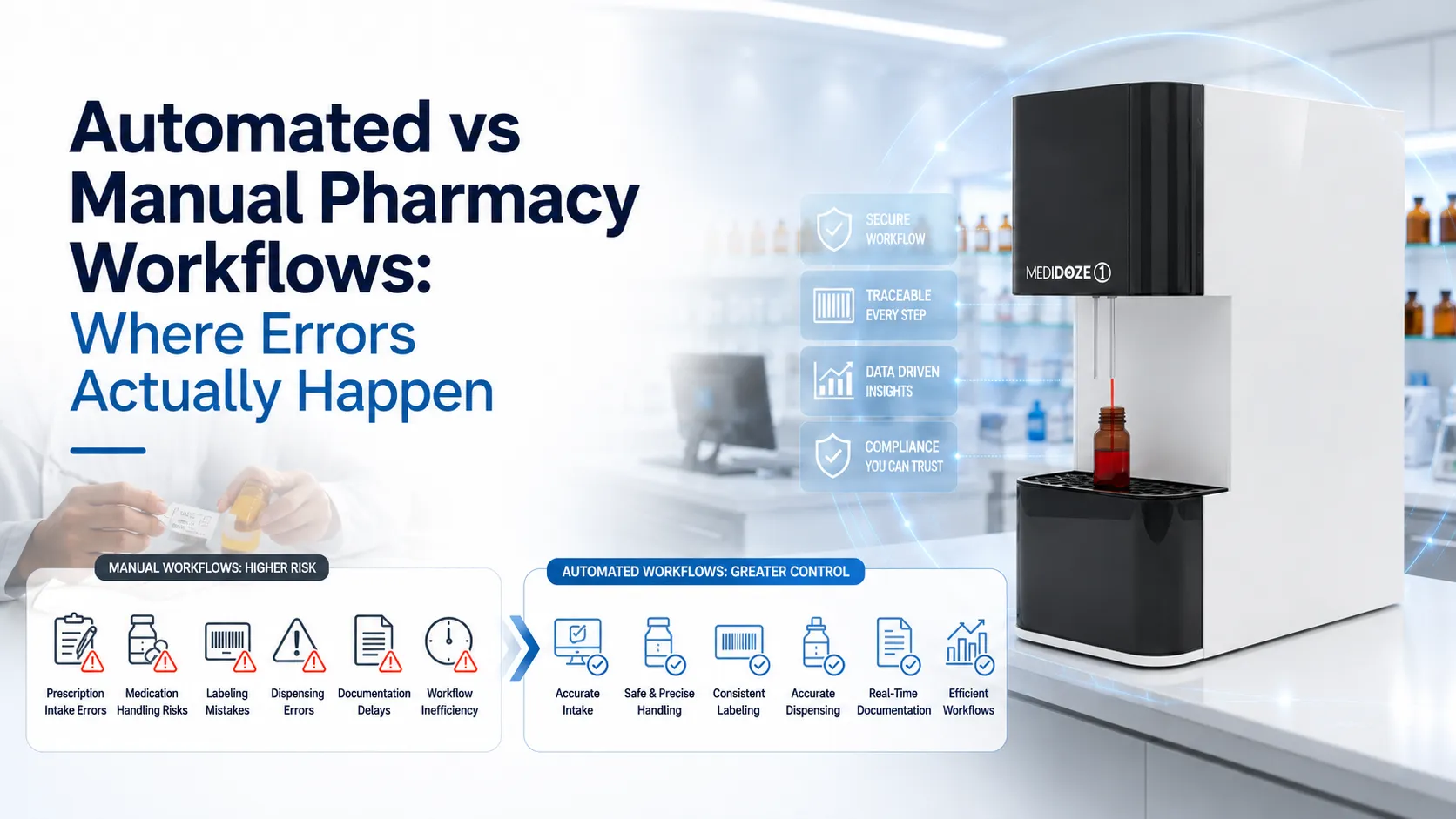

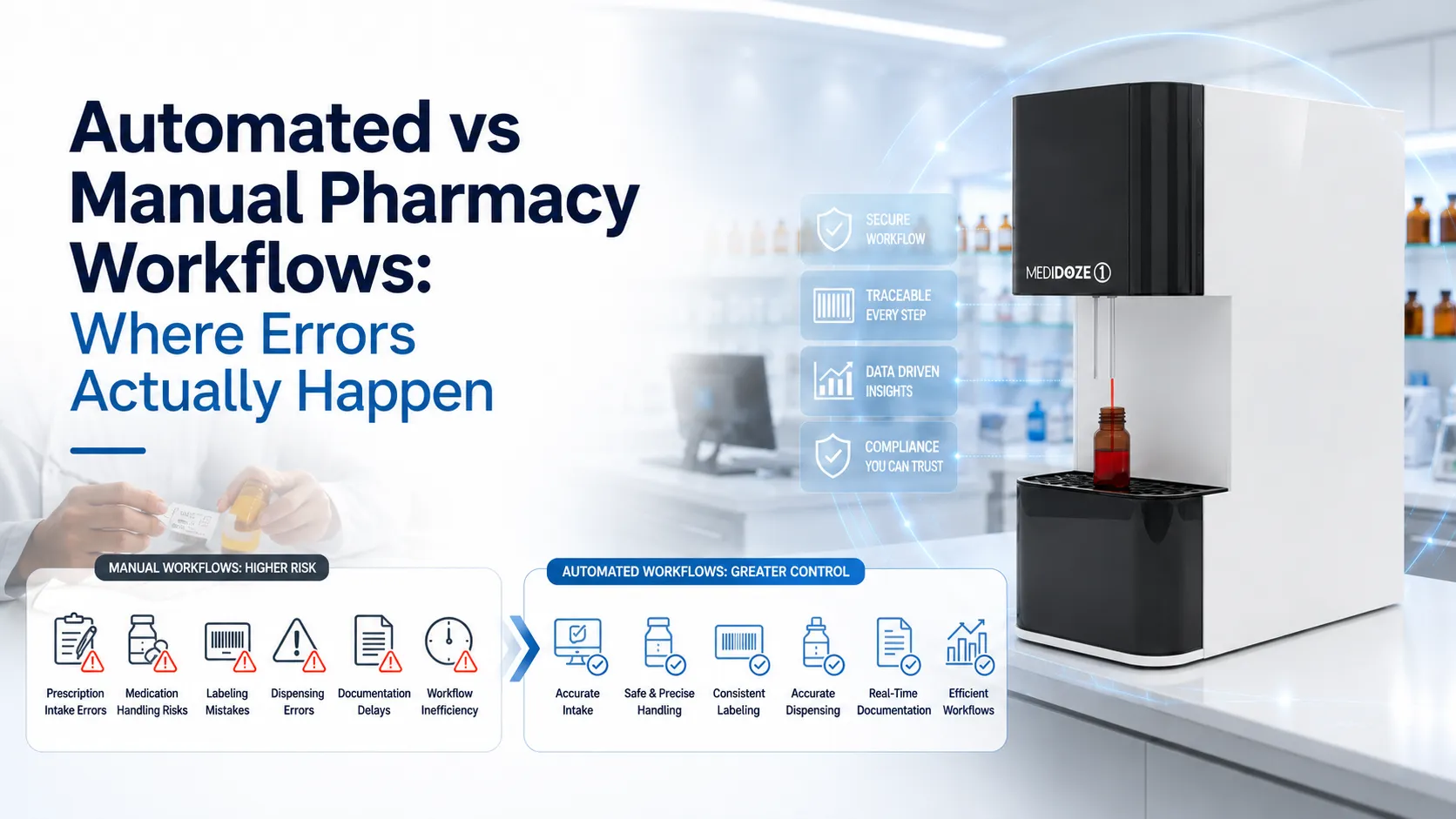
Pharmacy workflow errors rarely happen because of one obvious mistake. More often, they build quietly across small daily steps: prescription intake, verification, preparation, medication handling, labeling, documentation, and handoff.
In manual workflows, each step depends heavily on memory, focus, timing, and repeated human checking. That does not mean pharmacists are careless. It means the system around them can create pressure. The World Health Organization states that unsafe medication practices and medication errors remain a major cause of avoidable harm worldwide, with errors possible at different stages of the medication-use process.
What Are Pharmacy Workflow Errors?
Pharmacy workflow errors are mistakes or weak points that happen while a prescription moves from order to patient. A dispensing error may involve the wrong drug, wrong dose, wrong route, incorrect administration instruction, or incorrect quantity. NCBI also notes that pharmacy-driven medication errors are commonly linked with workload, similar drug names, interruptions, limited support staff, and insufficient time for counselling.
Where Manual Workflow Risks Begin
Manual workflow risks usually begin before the medication is even prepared.
A prescription may arrive with unclear instructions. A staff member may need to re-enter data. The pharmacist may be interrupted during verification. A product may look similar to another product on the shelf. A label may be printed before all details are fully checked.
These are small moments, but they matter.
In a busy pharmacy, manual workflow risks increase when staff are forced to move quickly between:
- patient questions
- phone calls
- prescription intake
- insurance issues
- dose preparation
- inventory checks
- final verification
This is where workflow inefficiency becomes a safety issue. A slow or fragmented process creates pressure. Pressure increases the chance that something is missed.
Why Automation in Pharmacy Is Being Discussed More
Automation in pharmacy is not about replacing pharmacists. It is about reducing repetitive manual pressure where the workflow is most exposed to error.
A 2025 systematic review found that pharmacy automation technologies can support medication error reduction, traceability, inventory management, and workload relief. The same review also notes that cost, integration, and staff training remain real challenges. [Source]
That balance is important. Automation works best when it supports pharmacist judgment, not when it pretends to replace it.
Manual vs Automated Pharmacy Workflows: Error Points Compared
Manual systems are not automatically unsafe. Automated systems are not automatically perfect.
The real question is: where does the workflow create risk?
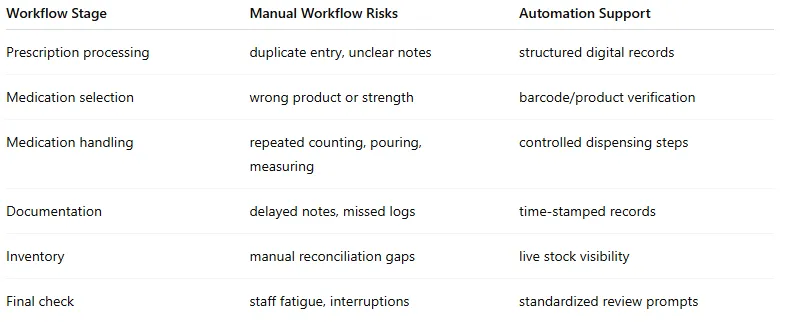
A 2025 systematic review on pharmacy automation found that automation can support medication safety, traceability, inventory management, and workload reduction when implemented properly. It also notes that training, cost, and integration are real adoption challenges. [Source]
Where Errors Actually Happen in Methadone Dispensing Workflows
Methadone dispensing is different from regular prescription filling.
It is repetitive, dose-sensitive, documentation-heavy, and often time-sensitive. In manual methadone workflows, risk may appear during:
- patient-specific dose confirmation
- liquid measurement
- manual pouring
- label preparation
- witness or double-check steps
- inventory reconciliation
- audit documentation
This is where manual workflow risks become more visible. A small delay in documentation or a small inconsistency in measurement can create extra review work later.
For pharmacies managing controlled medication workflows, the goal is not just faster dispensing. The goal is a clearer chain of control.
How Automation in Pharmacy Helps Reduce Workflow Inefficiency
Automation in pharmacy is most useful when the same high-risk task happens again and again.
For example, automated systems can help pharmacies:
- reduce repetitive manual handling
- standardize dose preparation steps
- connect dispensing activity with documentation
- improve visibility into inventory movement
- create cleaner audit trails
- reduce avoidable workflow interruptions
A 2025 review of digital technologies in hospital pharmacy found that tools such as automated dispensing systems, barcode medication administration, computerized order entry, and robotic dispensing can support medication safety and workflow efficiency.
But automation should not remove professional oversight. [Source]
Pharmacists still remain responsible for clinical review, prescription verification, patient safety, counselling, and legal compliance.
Frequently Asked Questions
What are the most common pharmacy workflow errors?
Common errors include wrong patient selection, wrong medication, wrong strength, incorrect quantity, labeling mistakes, documentation gaps, and unclear staff handoffs.
Why do dispensing errors happen in pharmacies?
Dispensing errors often happen because of workload pressure, interruptions, similar product names, manual workflow risks, and workflow inefficiency.
Can automation in pharmacy reduce medication handling errors?
Yes. Automation can reduce repetitive medication handling, standardize preparation steps, and improve documentation. It still requires pharmacist review and proper staff training.
Does pharmacy automation replace pharmacists?
No. Automation supports the workflow. Pharmacists still handle clinical judgment, prescription checks, patient counselling, and professional accountability.
Conclusion
Most pharmacy workflow errors do not begin at the final check. They often begin much earlier: during intake, medication handling, preparation, labeling, documentation, or staff handoff.
Manual workflows depend on repeated attention under pressure. That creates risk when the pharmacy is busy, interrupted, or handling complex medications.
Automation does not replace pharmacists. It supports them by reducing repetitive manual pressure, improving consistency, and making workflow activity easier to track. For high-control areas like methadone dispensing, that difference matters.
























Sign in to leave a comment.