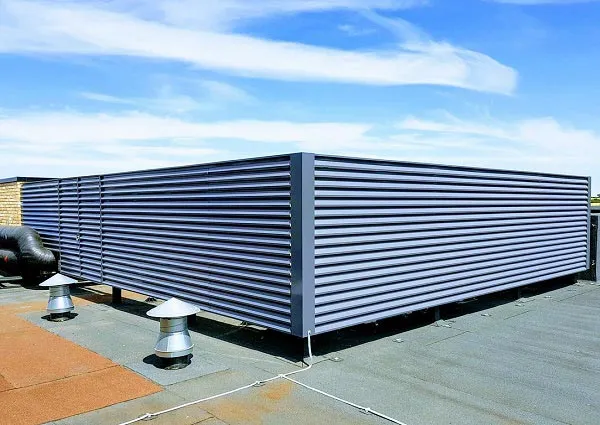

Modern industrial and commercial facilities require a balance between effective ventilation and reliable noise control. In environments where generators, HVAC systems, compressors, turbines, and other mechanical equipment operate continuously, excessive noise can affect employee comfort, regulatory compliance, and overall productivity. Acoustic louver panels have emerged as an advanced solution that addresses both airflow and sound attenuation requirements without compromising performance.
Acoustic louver panels are specially engineered ventilation components designed to reduce sound transmission while allowing air to flow freely through openings. Unlike conventional louvers, these panels incorporate sound-absorbing materials and acoustically optimized blade designs that minimize noise leakage. They are widely installed in power plants, manufacturing facilities, data centers, commercial buildings, hospitals, and generator rooms where maintaining airflow is essential.
One of the primary advantages of acoustic louvers is their ability to provide effective noise reduction without creating significant airflow restrictions. Traditional sound barriers often block or limit ventilation, leading to overheating and operational inefficiencies. Acoustic louvers overcome this challenge by combining aerodynamic design with sound-absorbing technology. This unique construction enables facilities to maintain proper ventilation while significantly reducing unwanted noise.
The design of acoustic louver panels plays a critical role in their performance. High-quality panels are typically manufactured using galvanized steel, aluminum, or stainless steel and are filled with specialized acoustic insulation materials. The blades are strategically positioned to absorb, deflect, and dissipate sound waves across a broad frequency range. In addition to noise control, these panels can also provide protection against rain, dust, and environmental contaminants, making them suitable for both indoor and outdoor installations.
Another important benefit of acoustic louvers is their versatility. They can be customized to meet project-specific requirements, including varying airflow volumes, noise reduction targets, and architectural preferences. Whether a facility requires compact panels for limited spaces or large-scale installations for industrial applications, acoustic louvers can be designed to match exact operational needs. This flexibility makes them a preferred choice for engineers, architects, and facility managers.
Energy efficiency is also a significant consideration in modern building design. By ensuring unrestricted airflow, acoustic louver panels support the efficient operation of HVAC systems and mechanical equipment. Proper ventilation helps maintain stable temperatures, reduces equipment stress, and contributes to lower energy consumption. As organizations continue to focus on sustainability and operational efficiency, acoustic louvers provide a practical solution that supports long-term performance goals.
Applications for acoustic louver panels continue to expand across multiple industries. In data centers, they help maintain cooling efficiency while minimizing noise from ventilation equipment. In healthcare facilities, they contribute to a quieter environment that supports patient comfort. Manufacturing plants use acoustic louvers to control machinery noise, while commercial buildings rely on them to reduce sound generated by mechanical rooms and air-handling units. Their ability to combine ventilation and noise control makes them an essential component in modern infrastructure projects.
In conclusion, acoustic louver panels are an effective and reliable solution for facilities seeking to manage noise without sacrificing airflow. Their advanced design, durability, customization options, and energy-efficient performance make them an ideal choice for industrial, commercial, and institutional applications. As noise control standards become increasingly important, investing in high-quality acoustic louvers can help organizations create safer, quieter, and more efficient environments for both equipment and occupants.

























Sign in to leave a comment.