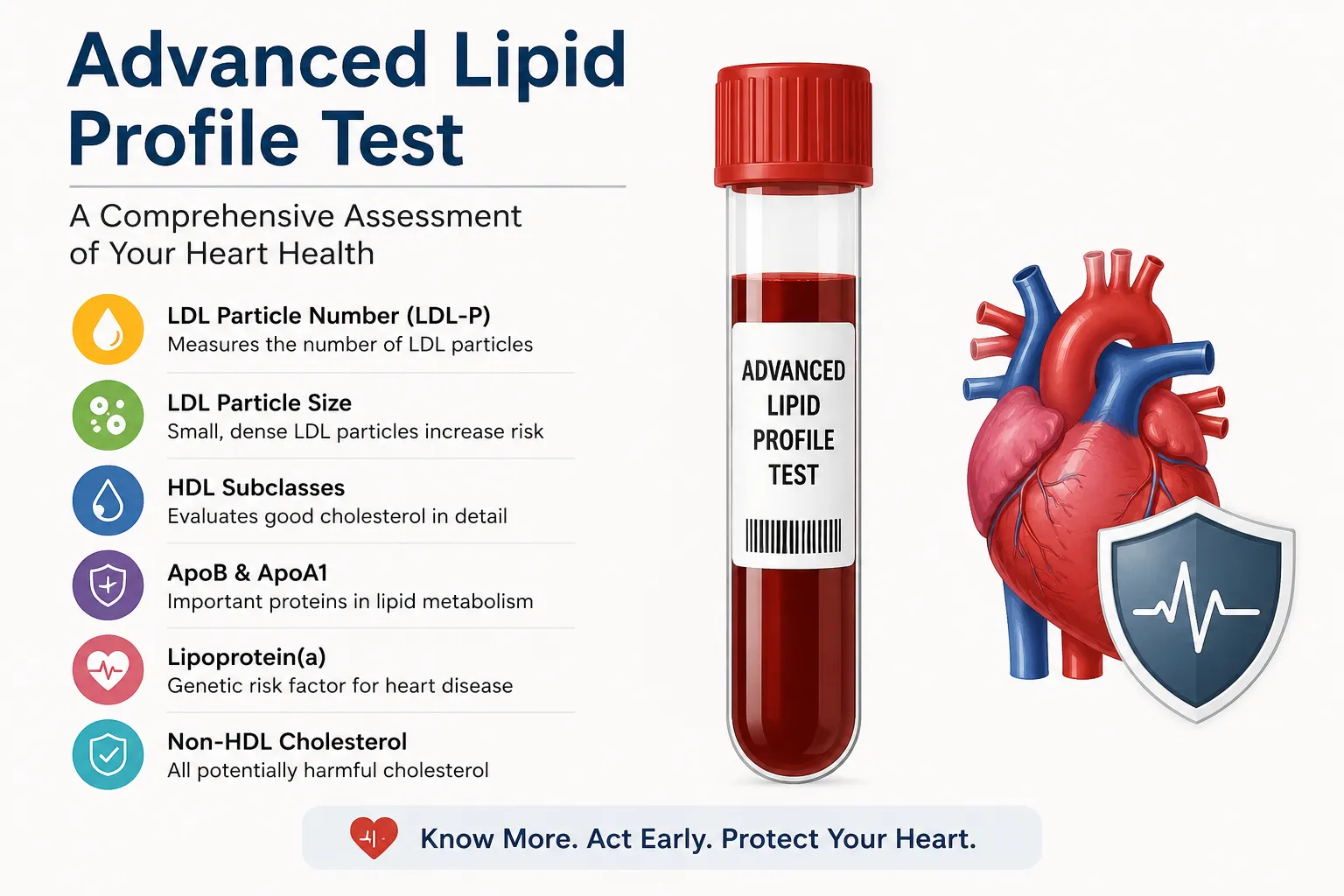

Heart disease remains one of the leading causes of death worldwide, making early detection and prevention more important than ever. While a standard cholesterol test provides valuable information, it may not reveal the complete picture of your cardiovascular health. This is where an Advanced Lipid Profile Test becomes essential.
Unlike traditional lipid testing, an advanced lipid profile evaluates additional markers that offer deeper insights into cholesterol particles, inflammation, and cardiovascular risk. It helps healthcare professionals identify hidden risk factors and develop more personalized treatment strategies.
In this guide, we'll explore what an advanced lipid profile test is, what it measures, who should consider getting tested, and why it plays a vital role in preventing heart disease.
What Is an Advanced Lipid Profile Test?
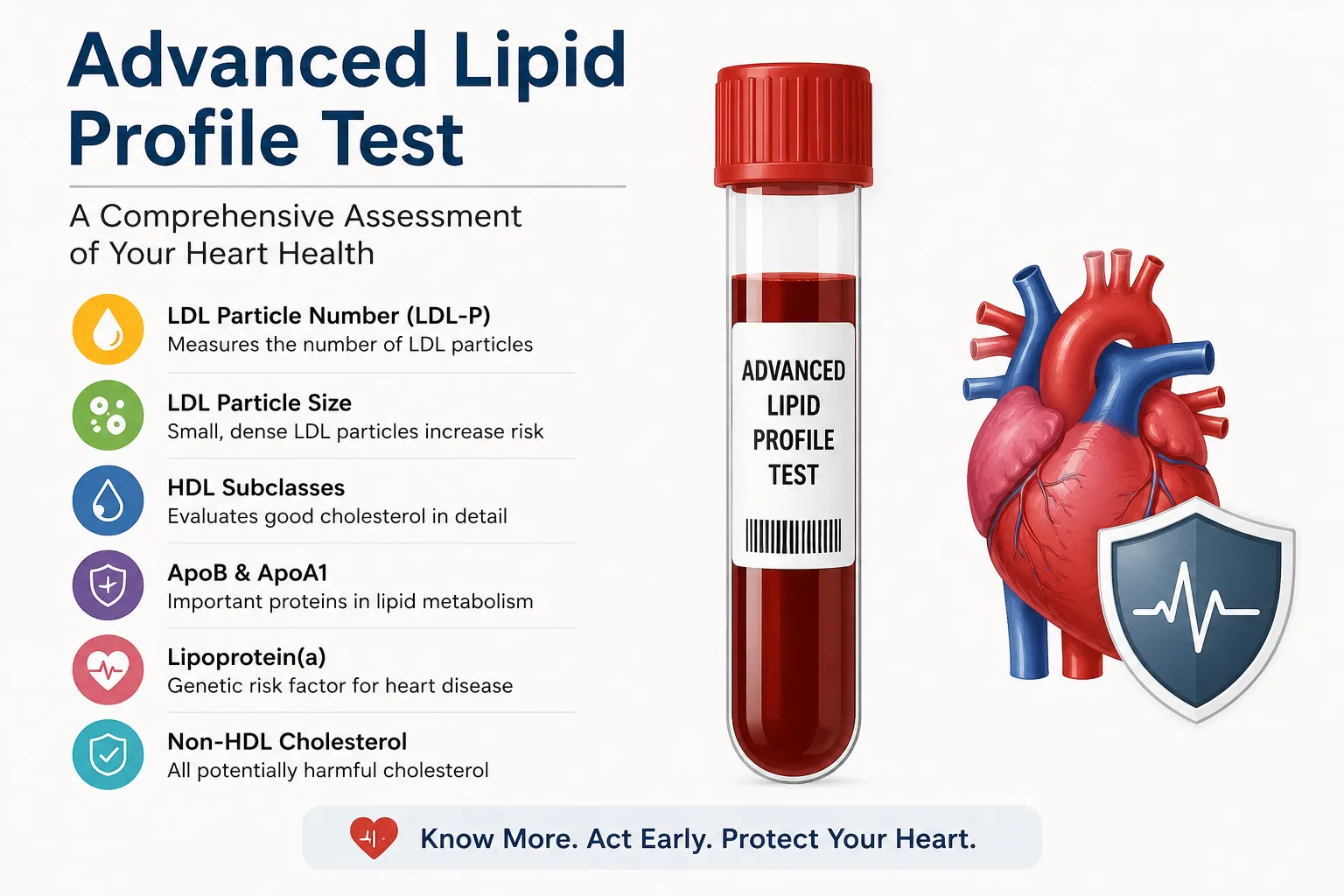
An Advanced Lipid Profile Test is a comprehensive blood test designed to assess various components of your lipid metabolism beyond the standard cholesterol panel. It provides detailed information about the size, number, and quality of cholesterol particles that circulate in your bloodstream.
While a routine lipid profile measures:
- Total cholesterol
- LDL (Low-Density Lipoprotein)
- HDL (High-Density Lipoprotein)
- Triglycerides
An advanced lipid profile examines additional biomarkers that can identify cardiovascular risk even when standard cholesterol levels appear normal.
What Does an Advanced Lipid Profile Measure?
Depending on the laboratory, the test may include several specialized markers.
LDL Particle Number (LDL-P)
Rather than simply measuring the amount of LDL cholesterol, this marker counts the actual number of LDL particles. Research suggests that LDL particle number may predict cardiovascular disease more accurately than LDL cholesterol alone.
LDL Particle Size
Small, dense LDL particles are considered more harmful because they penetrate artery walls more easily and are more likely to contribute to plaque formation.
HDL Subclasses
HDL is often referred to as "good cholesterol," but advanced testing evaluates different HDL particle sizes and concentrations, offering a better understanding of its protective effects.
Apolipoprotein B (ApoB)
ApoB is the primary protein found on LDL particles. Higher ApoB levels indicate a greater number of cholesterol-carrying particles, which increases cardiovascular risk.
Apolipoprotein A1 (ApoA1)
ApoA1 is the major protein component of HDL cholesterol and reflects the body's ability to remove excess cholesterol from arteries.
Lipoprotein(a) or Lp(a)
Lp(a) is a genetically inherited lipid marker associated with increased risk of heart attacks, stroke, and aortic valve disease. Elevated levels often cannot be reduced through lifestyle changes alone.
Non-HDL Cholesterol
This represents all cholesterol particles that may contribute to plaque buildup and is considered an important predictor of cardiovascular disease.
Why Is an Advanced Lipid Profile Important?
Traditional cholesterol testing works well for many people, but it doesn't always identify individuals at high risk for cardiovascular disease.
An advanced lipid profile helps by:
- Detecting hidden cardiovascular risk
- Identifying inherited lipid disorders
- Assessing residual risk despite normal cholesterol
- Guiding personalized treatment decisions
- Monitoring response to medications and lifestyle interventions
- Supporting long-term heart disease prevention
This additional information allows healthcare providers to create more targeted treatment plans.
Who Should Get an Advanced Lipid Profile Test?
Your doctor may recommend this test if you have one or more of the following:
- Family history of heart disease
- High cholesterol
- Diabetes or prediabetes
- Obesity
- High blood pressure
- Metabolic syndrome
- Previous heart attack or stroke
- Chronic kidney disease
- Inflammatory conditions
- Smoking history
- Unexplained cardiovascular disease despite normal cholesterol levels
Athletes, executives under chronic stress, and individuals with multiple cardiovascular risk factors may also benefit from advanced lipid testing.
How Is the Test Performed?
The Advanced Lipid Profile Test requires a simple blood sample drawn from a vein.
In many cases:
- Fasting for 9–12 hours may be recommended.
- Water is generally allowed before testing.
- Avoid heavy exercise before the test.
- Inform your healthcare provider about medications and supplements.
The blood sample is analyzed using advanced laboratory techniques that provide detailed lipid measurements.
Understanding Your Results
Results vary based on age, medical history, genetics, and overall health.
Generally:
- Lower LDL particle numbers are preferable.
- Higher HDL concentrations are beneficial.
- Lower triglycerides indicate better metabolic health.
- Lower ApoB levels reduce cardiovascular risk.
- Elevated Lp(a) may require additional cardiovascular monitoring.
Your healthcare provider will interpret the findings alongside your blood pressure, blood sugar, weight, family history, and lifestyle factors.
Benefits of Advanced Lipid Testing
Compared to a standard cholesterol panel, advanced lipid testing offers several advantages.
Earlier Detection
Identifies cardiovascular risk before symptoms develop.
Personalized Care
Helps physicians tailor medications and lifestyle recommendations.
Better Risk Prediction
Provides a more accurate estimate of heart disease risk.
Improved Treatment Monitoring
Tracks the effectiveness of cholesterol-lowering medications and dietary interventions.
Supports Preventive Healthcare
Encourages early intervention before serious cardiovascular events occur.
Lifestyle Tips to Improve Your Lipid Profile
Even if advanced testing identifies elevated risk, healthy lifestyle habits can significantly improve many lipid markers.
Consider:
- Following a Mediterranean-style diet
- Eating more fruits and vegetables
- Increasing fiber intake
- Choosing healthy fats like olive oil and nuts
- Exercising at least 150 minutes each week
- Maintaining a healthy weight
- Limiting processed foods
- Avoiding smoking
- Reducing alcohol intake
- Managing stress effectively
- Getting adequate sleep
For some individuals, medications such as statins or other lipid-lowering therapies may also be recommended.
When Should You Repeat the Test?
Repeat testing depends on your health status and treatment plan.
Healthcare providers often recommend follow-up testing:
- Every 1–2 years for healthy adults
- Every 6–12 months for patients receiving cholesterol treatment
- More frequently if significant lifestyle or medication changes occur
Regular monitoring helps assess progress and guide future treatment decisions.
Conclusion
An Advanced Lipid Profile Test provides a far more comprehensive evaluation of cardiovascular health than a standard cholesterol test. By measuring advanced lipid markers such as LDL particle number, ApoB, Lipoprotein(a), and HDL subclasses, it can uncover hidden heart disease risks that traditional testing may miss.
Whether you have a family history of heart disease, elevated cholesterol, diabetes, or simply want a deeper understanding of your cardiovascular health, advanced lipid testing can help you and your healthcare provider make informed decisions. Combined with a healthy lifestyle and appropriate medical care, this test plays an important role in preventing heart disease and supporting long-term wellness.
































Sign in to leave a comment.