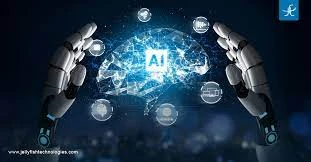

In the realm of healthcare, technology is constantly evolving to enhance patient outcomes, improve diagnosis accuracy, and streamline treatment processes. Among the many technological advancements, Artificial Intelligence (AI) stands out as a game-changer. AI development services have revolutionized the healthcare industry by integrating AI algorithms into various aspects of patient care, research, and administration. From aiding in disease diagnosis to assisting in treatment decisions, AI in healthcare has proven to be a powerful tool. In this blog, we will explore the remarkable ways AI is advancing healthcare, the role of AI development services in this transformation, and the potential of AI in shaping the future of medicine.
1. The Emergence of AI in Healthcare
1.1 Understanding AI in Healthcare
AI in healthcare refers to the use of algorithms and machine learning to analyze medical data, identify patterns, and make predictions. These AI technologies aid healthcare professionals in decision-making processes, enabling more accurate diagnoses and personalized treatment plans.
1.2 The Evolution of AI in Medicine
AI development services have been instrumental in the growth of AI applications in healthcare. From rule-based systems to sophisticated deep learning algorithms, AI has come a long way in the medical domain. Today, AI is utilized in medical imaging analysis, drug discovery, virtual health assistants, and much more.
2. AI in Diagnosis: Augmenting Accuracy and Speed
2.1 AI-driven Medical Imaging
AI has significantly improved medical imaging analysis by automating the detection of anomalies and assisting radiologists in interpreting results. AI algorithms can process vast amounts of medical images with incredible accuracy, enabling early detection of diseases and reducing diagnostic errors.
2.2 Early Disease Detection
AI in healthcare has the potential to revolutionize early disease detection by analyzing patient data, such as genetic information and lifestyle factors. These AI models can identify high-risk individuals and recommend proactive screening and prevention strategies.
2.3 AI-powered Diagnostics
AI development services have led to the creation of AI-powered diagnostic tools that can rapidly analyze patient data, medical history, and symptoms to provide accurate and timely diagnoses. This expedites the diagnostic process, leading to better patient outcomes.
3. AI in Treatment: Personalization and Optimization
3.1 Personalized Treatment Plans
AI in healthcare enables the development of personalized treatment plans based on individual patient characteristics and medical history. AI algorithms analyze patient data to determine the most effective treatment options with reduced risks of adverse effects.
3.2 Drug Discovery and Development
AI has transformed the drug discovery process by expediting the identification of potential drug candidates. AI algorithms analyze vast datasets to predict drug interactions, identify novel therapeutic targets, and streamline the drug development pipeline.
3.3 Precision Medicine
AI development services are at the forefront of precision medicine, where treatments are tailored to individual patients based on their genetic makeup and response to therapies. AI-powered models can predict patient responses to specific treatments, leading to more targeted and effective interventions.
4. AI in Medical Research: Accelerating Discoveries
4.1 High-Throughput Data Analysis
AI development services have played a crucial role in medical research by enabling high-throughput analysis of complex biological data. AI algorithms can process vast genomic and proteomic datasets, leading to new insights and discoveries.
4.2 Disease Prediction Models
AI in healthcare has led to the development of disease prediction models that can identify individuals at risk of developing certain conditions. These models aid in early intervention and targeted prevention strategies.
4.3 Clinical Trial Optimization
AI is transforming clinical trials by optimizing participant recruitment, monitoring treatment efficacy, and analyzing trial outcomes. These advancements can accelerate the drug development process and bring new treatments to patients faster.
5. AI in Healthcare Administration: Improving Efficiency
5.1 AI-powered Healthcare Management Systems
AI development services are instrumental in creating AI-powered healthcare management systems. These systems can optimize hospital operations, resource allocation, and patient flow to enhance overall efficiency.
5.2 Virtual Health Assistants
AI-driven virtual health assistants and chatbots are being deployed to provide personalized medical information, schedule appointments, and offer support to patients, improving access to healthcare services.
5.3 Fraud Detection and Prevention
AI algorithms can analyze healthcare data to identify fraudulent activities, such as false insurance claims and billing discrepancies, leading to significant cost savings for healthcare providers.
6. The Future of AI in Healthcare
6.1 AI-driven Remote Patient Monitoring
AI development services are continuously innovating remote patient monitoring technologies that can track patient health in real-time, enabling timely interventions and reducing hospital readmissions.
6.2 AI-powered Medical Robotics
The integration of AI with medical robotics is poised to revolutionize surgical procedures, making them more precise and less invasive. AI-powered robotic systems can assist surgeons in complex surgeries, leading to better patient outcomes.
6.3 Ethical Considerations
As AI becomes more pervasive in healthcare, ethical considerations around data privacy, algorithm bias, and patient autonomy come to the forefront. AI development services are actively addressing these concerns to ensure responsible AI integration.
Conclusion
AI development services have transformed healthcare by revolutionizing diagnostics, treatment, medical research, and administration. AI algorithms have augmented the accuracy and speed of diagnosis, leading to improved patient outcomes. Additionally, personalized treatment plans and precision medicine have become a reality, providing patients with tailored therapies. In medical research, AI has accelerated discoveries, paving the way for novel treatments and interventions. Moreover, AI's integration in healthcare administration has improved operational efficiency and patient engagement.
As AI technology continues to evolve, the future of healthcare holds great promise. AI development services will drive further innovations, leading to AI-powered remote patient monitoring, medical robotics, and enhanced healthcare management systems. However, with these advancements come ethical considerations that must be carefully addressed to ensure the responsible and equitable use of AI in healthcare. By harnessing the power of AI, healthcare professionals and AI development services can collaborate to create a more advanced, efficient, and patient-centric healthcare system that positively impacts the lives of millions around the world.





















Sign in to leave a comment.