
Introduction:
Quantum Computing is rapidly moving from research labs into real-world conversations, and it’s changing how we think about solving the toughest computational problems. If you’re still relying only on classical systems, you may be missing out on a new layer of computational power that can redefine speed, scale, and efficiency. From cybersecurity to drug discovery, this technology is already shaping future innovation.
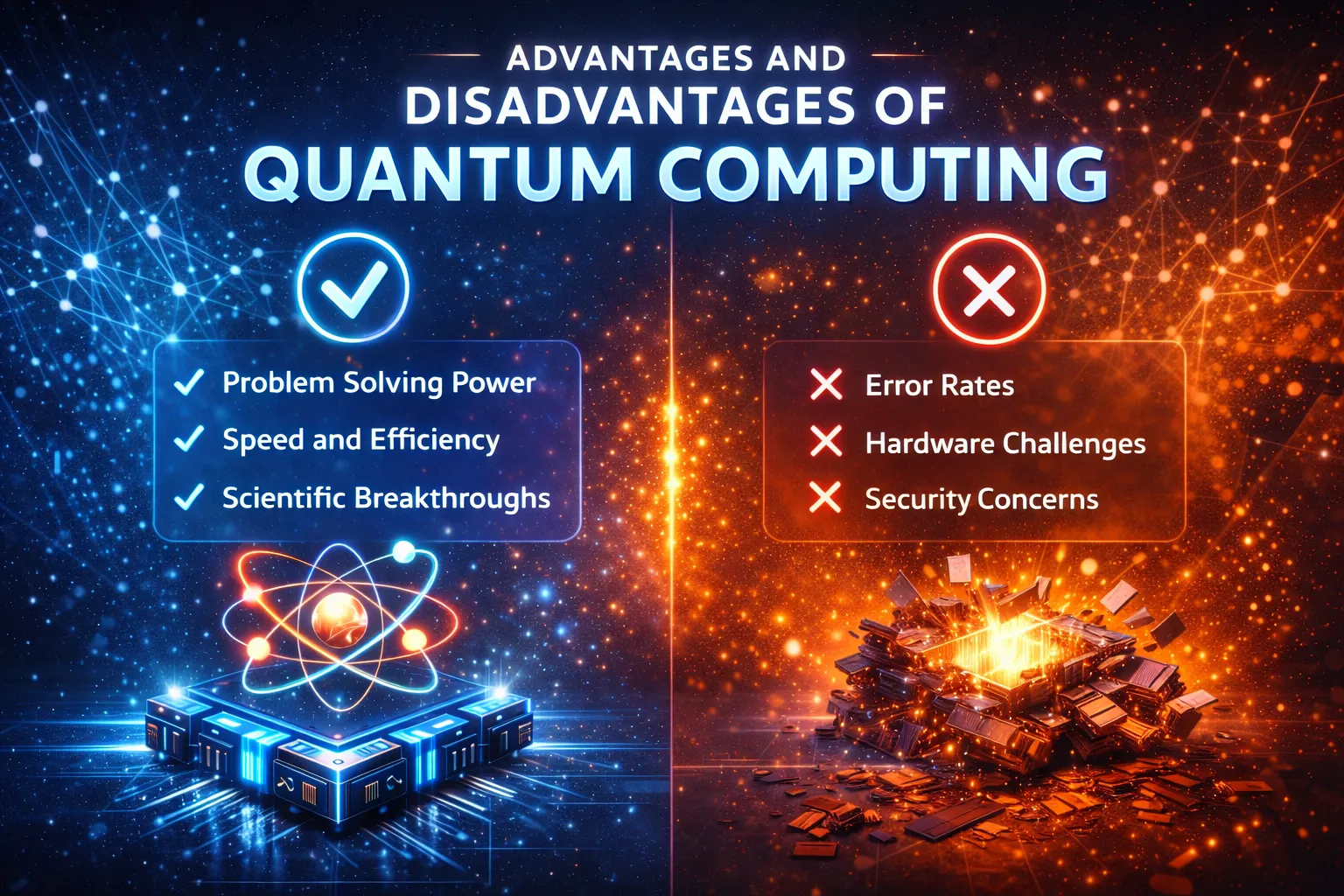
At the same time, Quantum Computing is not a magic solution; it comes with serious technical and practical limitations. Understanding both the advantages and disadvantages is essential, especially for developers and tech professionals exploring next-generation systems. In this article, you’ll get a clear, practical breakdown of how it works, where it excels, and where it still struggles.
What Is Quantum Computing?
Quantum Computing is a computational approach that uses qubits instead of traditional bits. Unlike bits that exist as either 0 or 1, qubits can exist in multiple states simultaneously, allowing quantum systems to process vast amounts of possibilities at once. This makes Quantum Computing especially powerful for complex, multi-variable problems.
Today, the technology is still in its early stages but progressing quickly due to investments from major tech companies and governments. It’s particularly relevant for fields like Artificial Intelligence, optimization, and cryptography, where classical computing reaches its limits.
Key Highlights:
- Uses qubits instead of classical bits
- Leverages superposition and entanglement
- Designed for complex problem-solving
- Still in early but rapidly evolving stage
How Quantum Computing Works
At its core, Quantum Computing relies on two main principles: superposition and entanglement. Superposition allows qubits to exist in multiple states at once, while entanglement connects qubits so that the state of one directly affects another. Together, these principles enable quantum systems to explore multiple solutions simultaneously.
To simplify, think of a classical computer as checking one path at a time, while a quantum computer evaluates many paths at once. This makes it particularly valuable in areas like Artificial Intelligence, where large datasets and probabilistic models require massive computational effort.
Core Concepts:
- Superposition enables parallel processing
- Entanglement links qubit behavior
- Quantum interference refines outcomes
- Ideal for high-complexity calculations
Advantages of Quantum Computing
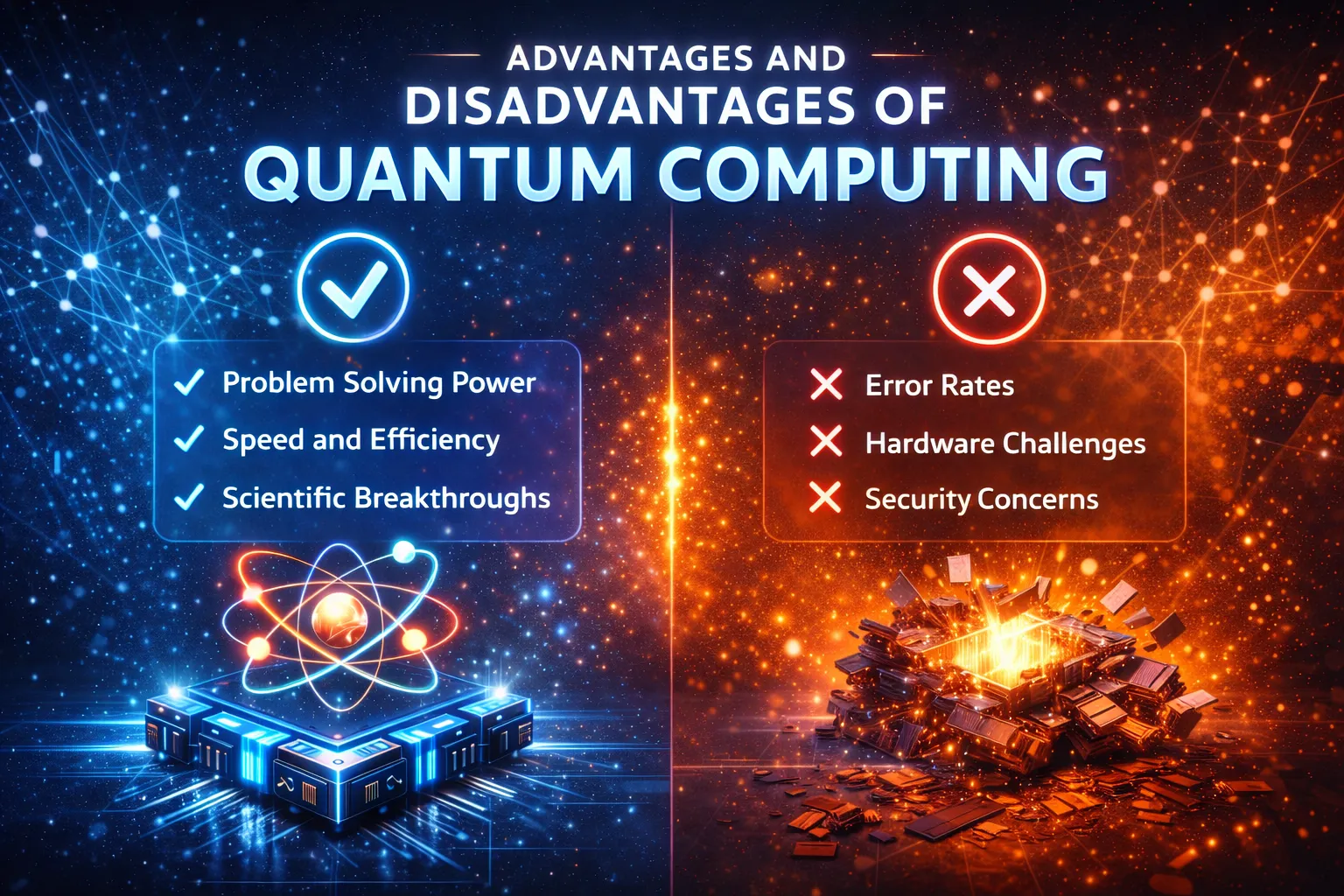
Quantum Computing offers a level of processing power that classical systems simply cannot match. It can solve highly complex problems exponentially faster, making it ideal for industries dealing with massive datasets and intricate calculations. This opens new doors for innovation in science, finance, and technology.
Another major advantage is its impact on Artificial Intelligence. Quantum systems can significantly accelerate machine learning models and optimization processes, enabling faster training and more accurate predictions. This could reshape how AI systems are developed and deployed in the coming years.
Key Advantages:
- Exponential computational speed
- Accelerated Artificial Intelligence models
- Advanced optimization capabilities
- Breakthroughs in scientific simulations
- Potential for quantum-safe encryption
Disadvantages of Quantum Computing
Despite its promise, Quantum Computing comes with serious limitations that cannot be ignored. One of the biggest challenges is that quantum systems require extremely controlled environments, including temperatures close to absolute zero. This makes them expensive and difficult to maintain.
Additionally, quantum systems are highly unstable. Qubits are sensitive to environmental interference, leading to errors in calculations. Combined with a shortage of skilled professionals, this makes widespread adoption difficult in the near future.
Key Disadvantages:
- Extremely high cost of infrastructure
- High error rates and instability
- Limited real-world applications (currently)
- Requires specialized expertise
- Potential to break existing encryption systems
Quantum Computing vs Classical Computing
Classical and quantum computing serve very different purposes, and understanding their differences is critical. Classical systems are reliable, affordable, and widely used for everyday computing tasks. In contrast, Quantum Computing is designed for highly complex problems that classical systems struggle to solve.
Rather than replacing classical computing, quantum systems are expected to complement them. Developers will likely use hybrid models, combining both approaches to achieve the best performance depending on the task.
Comparison Snapshot:
- Classical computing uses bits; quantum uses qubits
- Classical is stable; quantum is error-prone
- Classical is cost-effective; quantum is expensive
- Quantum excels in complex computations
Real-World Applications (2026 Trends)
Quantum Computing is slowly moving beyond theory into real-world applications. Industries such as pharmaceuticals and finance are already experimenting with quantum models to improve efficiency and innovation. These early use cases highlight the technology’s potential to solve problems previously considered impossible.
At the same time, governments and enterprises are investing heavily in research and development. The integration of Quantum Computing with Artificial Intelligence is one of the most exciting trends, as it combines computational power with intelligent decision-making.
Industry Data & Trends:
- Global market expected to exceed $10 billion by 2030
- Annual growth rate projected above 30%
- Major investments from IBM, Google, Microsoft
- Increasing adoption in finance, healthcare, and logistics
How Developers Can Get Started with Quantum Computing
Getting started with Quantum Computing doesn’t require immediate access to quantum hardware. Many platforms offer cloud-based simulators that allow developers to experiment with quantum algorithms in a practical environment. This makes it easier to learn and build foundational skills.
Developers should focus on understanding the basics first, then gradually move toward hands-on experimentation. Combining classical and quantum approaches is currently the most practical strategy, especially when working with real-world applications.
Getting Started Steps:
- Learn core quantum concepts
- Use tools like Qiskit or Cirq
- Experiment with simulators
- Explore hybrid computing models
- Stay updated with latest research
Future Outlook: What’s Next for Quantum Computing
The future of Quantum Computing looks promising, but it will take time to mature. Researchers are actively working on improving qubit stability, reducing error rates, and making systems more accessible. These advancements will determine how quickly the technology moves into mainstream adoption.
The rise of cutting-edge quantum computing innovations signals a shift in how industries approach complex problem-solving. While it won’t replace classical systems, it will become a powerful companion technology, especially when combined with Artificial Intelligence.
Future Expectations:
- Improved qubit stability and reliability
- Wider commercial adoption
- Stronger integration with AI systems
- Development of quantum-safe security standards
FAQs
1. What is Quantum Computing in simple terms?
Quantum Computing is a type of computing that uses qubits instead of bits, allowing it to process multiple possibilities at once. This makes it far more powerful for complex calculations compared to traditional systems.
2. How does Quantum Computing work?
It works using quantum principles like superposition and entanglement. These allow qubits to exist in multiple states and interact with each other, enabling faster and more complex computations.
3. What are the benefits of Quantum Computing?
The main benefits include faster processing, improved Artificial Intelligence capabilities, better optimization, and breakthroughs in scientific research like drug discovery.
4. What are the limitations of Quantum Computing?
Quantum systems are expensive, unstable, and require specialized expertise. They also have limited real-world applications at present.
5. How can developers start learning Quantum Computing?
Developers can start by learning the basics and using tools like Qiskit or Cirq. Cloud-based simulators make it easy to practice without needing physical quantum hardware.
6. Is Quantum Computing better than classical computing?
Not always. Quantum Computing is better for complex problems, while classical computing remains more practical for everyday tasks.
7. How does Quantum Computing impact Artificial Intelligence?
Quantum Computing can accelerate AI by improving data processing and optimization, enabling faster training and more efficient models.


























Sign in to leave a comment.